

Reviewed by Dr Vikas Kunnure on 8th July 2026.
The difference between a hair transplant that draws compliments and one that draws stares almost always comes down to one thing: hair line placement in hair transplant surgery. It is the decision about exactly where your new frontal hairline will sit, how the temple corners will be shaped, and how the graft angle and density will be built to create a natural, age-appropriate result.
For men and women in the UK dealing with hair loss or thinning and considering a permanent surgical solution, this guide explains how hairline placement is assessed, designed and carried out, why it has such a lasting effect on appearance and confidence, and what to look for in candidacy, aftercare and surgeon selection when planning your own hairline restoration.
What Hairline Placement Means for Your Hair Transplant
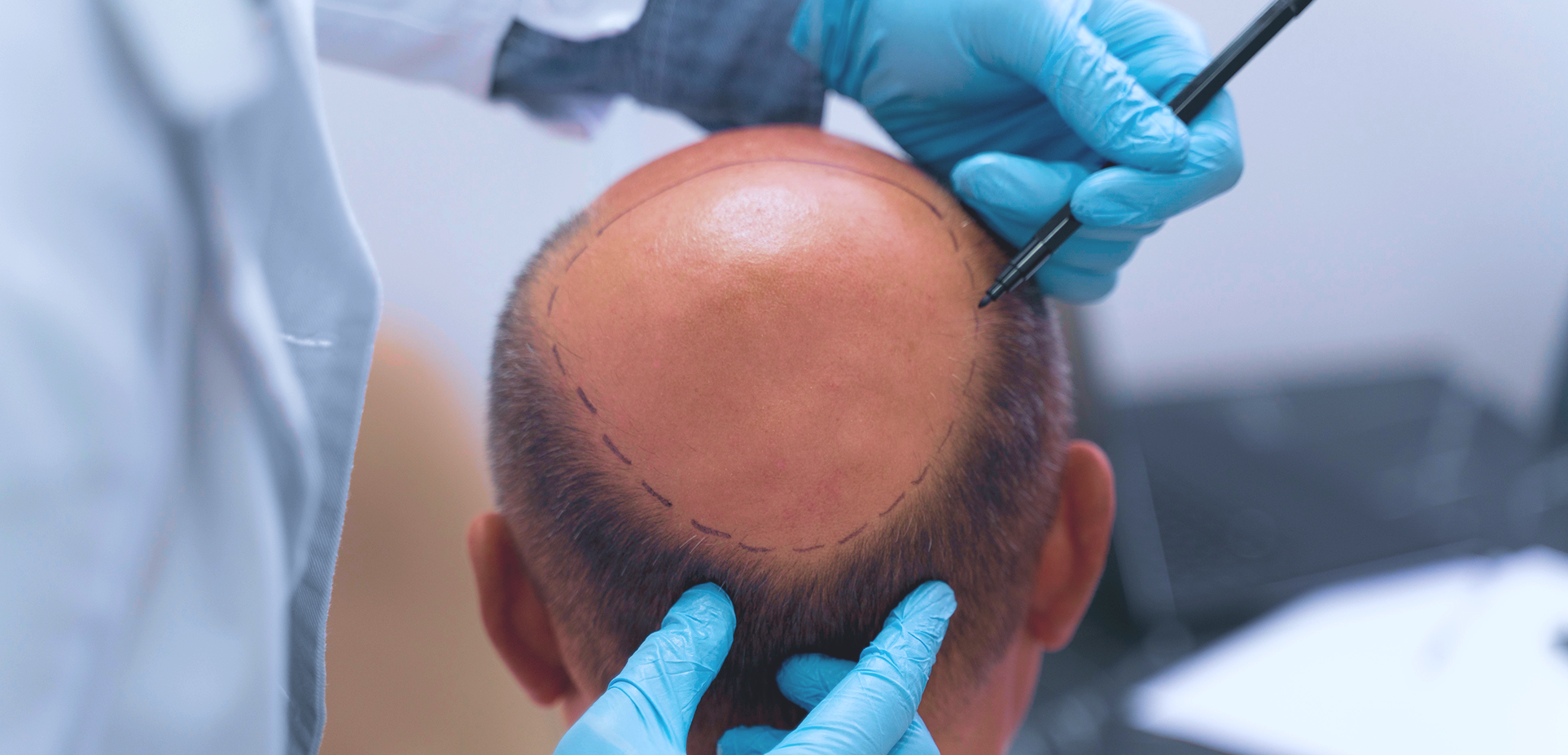
Hairline placement is the process of deciding exactly where, how, and at what density your new frontal hairline will be created during hair transplant surgery.
The following factors play an important roles in the is process
- It covers the height of the hairline on your forehead, the shape of the corners at the temples,
- The angle each hair exits the scalp. Angle being different in the frontal areas and on the sides.
- At the angle the hair has when it exits the skin . This is generally 15- 25 degrees to the skin surface and can be variable in the different sections of the same Hairline.
- The way density transitions from the very front edge into the thicker hair behind it. It is the single most visible element of any hair transplant, because the hairline is the first thing people see when they look at your face.
- A well placed hairline plays an important role as its the exact location on your forehead will make a significant and life lasting changes to not only your facial frame but also to your self esteem, confidence , family relationships and relationship with the outer world Socially , professionally and emotionally and how you interact.
Correct hairline design and placement determine whether hair transplantation looks completely natural at social distance-roughly one to two metres away. When the leading edge is soft, slightly irregular, and positioned at an age-appropriate height, the result blends so seamlessly that even close friends may not realise you had a surgical procedure.
At Dr. Kunnure Clinic in the UK, every hairline is designed personally by Dr. Vikas Kunnure after assessing facial proportions, your current hair loss pattern, and the quality of your donor hairs. In addition Dr Kunnure takes in to consideration any future potential hair loss and will suggest a hairline with a far more conservative approach than simply getting a quick fix. This surgeon-led approach exists because hairline design determines the natural appearance of a transplant, and it cannot be delegated to templates or guesswork or an untrained physician or technicians.
A poorly designed hairline-too low, too straight, placed at incorrect angles-is the main reason some hair transplants look artificial, even years later. Poor hairline design is a common reason for unnatural results. The rest of this article covers how to avoid that outcome: from planning the hairline, through key design principles, to surgical execution and realistic expectations over the next twelve to eighteen months.
Understanding Hairline Placement in Hair Transplant Surgery
Hairline placement is the planned position, shape, and density of the frontal hairline that will be built during transplant surgery. It is not simply a line drawn on your forehead. It accounts for the transition zone, the temple points, the density behind the front row, and how every graft relates to the surrounding hair.
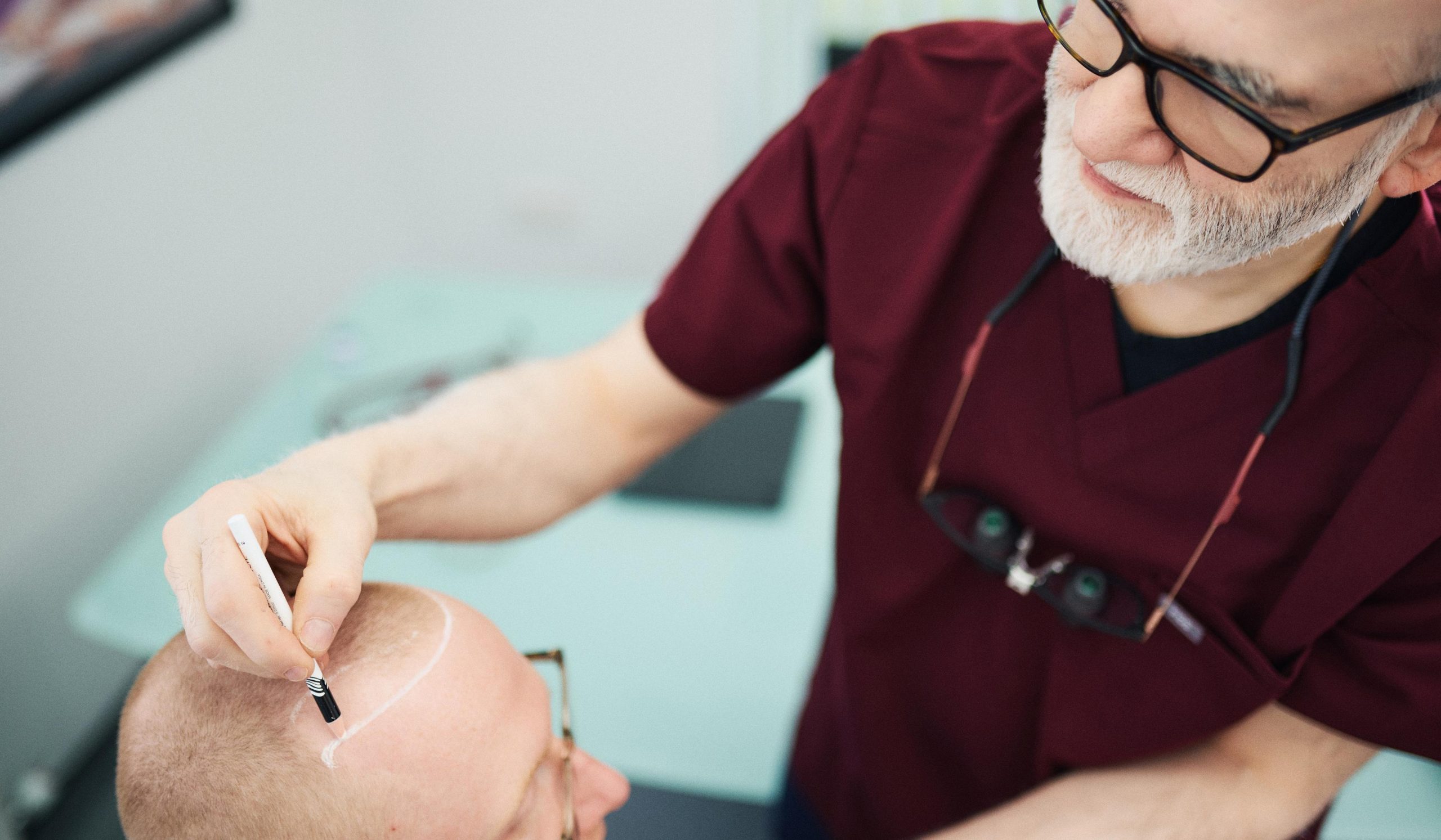
In typical male pattern hair loss, the frontal hairline recedes centrally and at the temples. The frontal hairline is the visible border across the forehead; the temporal recessions (or frontotemporal corners) are the lateral points that frame the upper face. Both must be designed together. Ignoring one while restoring the other produces an unbalanced, unnatural result. Many patients who had only their temples transplanted will inevitable end up having a second surgery to the frontal part of the hairline as often the frontal part will be lost eventually in Androgenic Alopecia, if it were to progress.
Modern hair transplant procedures-whether FUE or FUT (the strip method)-rely on individual follicular units containing one to four hairs. These replace the old-fashioned plug grafts that created the notorious “doll’s hair” appearance. The same principles apply whether you are restoring a receding hairline, lowering a naturally high forehead, or addressing female hairline shape. Critically, hairline placement must work with your existing hair loss pattern, scalp characteristics, and projected trajectory of further hair loss, not against them.
Key Principles of Natural Hairline Design and Placement
Natural hairline design rests on a set of reproducible principles used by experienced surgeons worldwide. These include organised irregularity, a density gradient, correct hair direction and angle, facial proportions, planning for future hair loss, gender and ethnicity considerations, and responsible donor supply management.
At Dr. Kunnure Clinic, these principles are applied before graft numbers are finalised, ensuring the design never exceeds the safe donor hair budget. Understanding them helps you set realistic expectations and evaluate whether any proposed hairline makes sense for the long term.
Organised Irregularity and Hairline Shape
Natural hairlines have slight irregularities and soft edges. They are never ruler-straight or perfectly symmetrical. Micro-zigzags along the front edge, small variations in height, and subtle irregularities create the look of hair that has always been there. These points form teh key principles of the Hairline design.
Single hair grafts are placed at the front for softness, forming a feathered transition rather than a blunt wall. This is the difference between a mature natural hairline (slightly higher, with gentle temporal recessions) and a juvenile one (very low, rounded). A well designed hairline mimics these natural growth patterns. By contrast, the “helmet” look from outdated techniques-uniform, dense, perfectly even-is immediately identifiable as surgical. single graft implants in teh front are followed by the gradual increase in the density as you go further back.
Density Gradient and Use of Different Graft Types
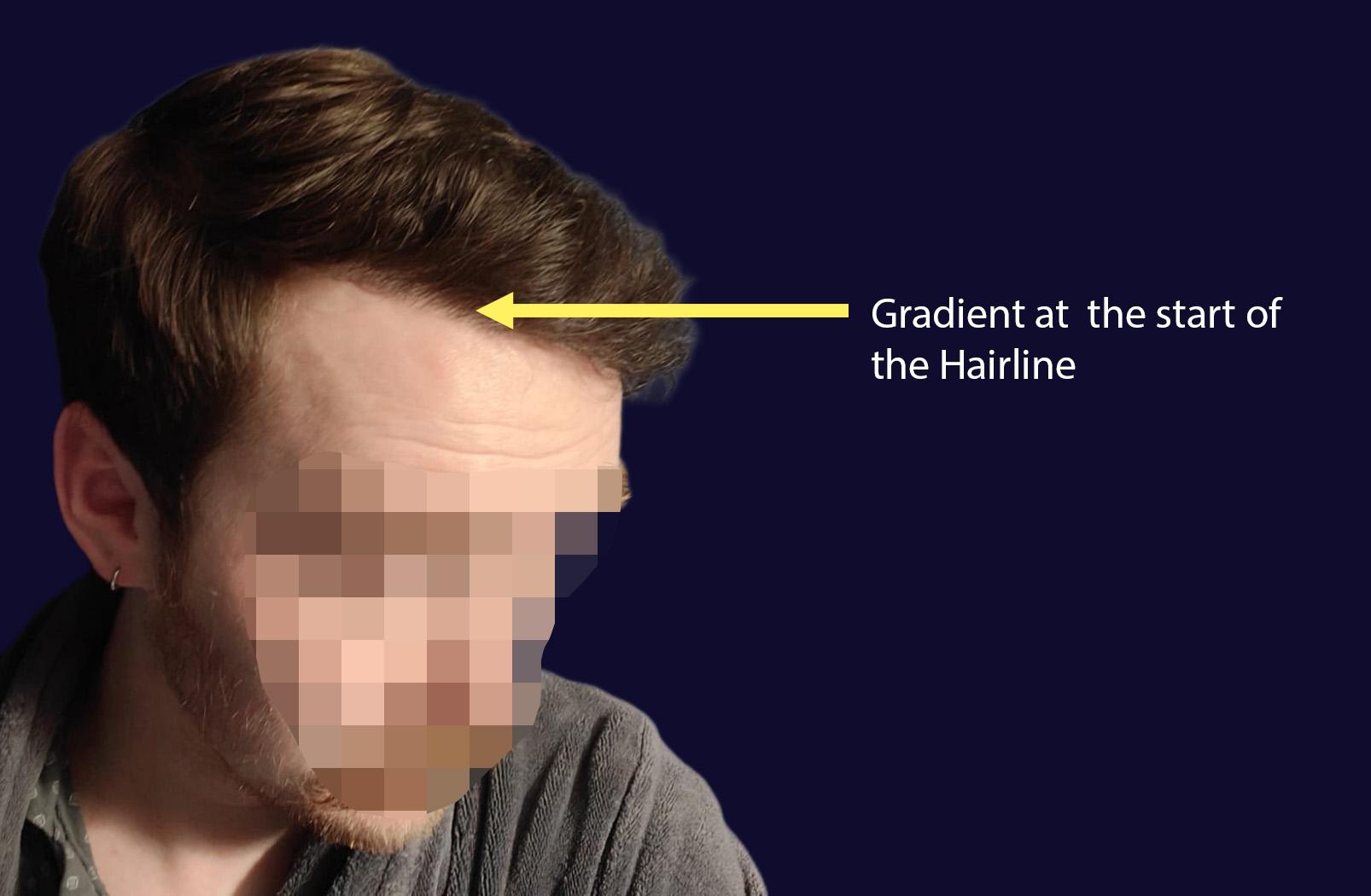
Density is intentionally lower at the very front of the hairline. Micro-grafts containing one to two hairs create a soft leading edge at around 25 to 30 grafts per square centimetre. Behind this transition zone, thicker grafts (two to three hair units) gradually increase density to 40 to 50 or more grafts per square centimetre over the first one to one and a half centimetres. This designs, with gradual density increase will create a natural appearance.
The density in the transition zone should be about 25-30 grafts per Sq cm and as yo go further back the density could be increased to 35-45 grafts. A higher density could be achieved but will depend on the types of hair follicles e.g., number of hairs per grafts and how many two’s / three / four follicle grafts are available from the donor area.
This density gradient prevents a thick, artificial wall of hair and allows transplanted hair to blend with existing hair behind it. Responsible planning must account for finite donor hairs: over-densifying the frontal zone with multi hair grafts can compromise your ability to treat future thinning in the mid-scalp or crown. Single-hair grafts create softness at the front of the hairline, while multi hair units build perceived volume further back.
Hair Direction, Exit Angle, and Flow
Hair grows at different angles across the scalp. At the front, hairs typically point forward and slightly to the side. Temple hairs lie flatter and sweep backward. Crown hairs spiral outward. Each graft must be placed to mimic these natural growth patterns, with exit angles of roughly 15 to 25 degrees to the surface of the skin. at the frontal hairline.
Incorrect angles-hairs sticking straight up rather than lying flat-are a common reason a hair transplant looks obviously surgical. At Dr. Kunnure Clinic, the hair transplant surgeon uses high-magnification loupes and fine blades to control each graft’s direction, ensuring natural growth and flow across every zone.
Facial Proportions and Forehead Height
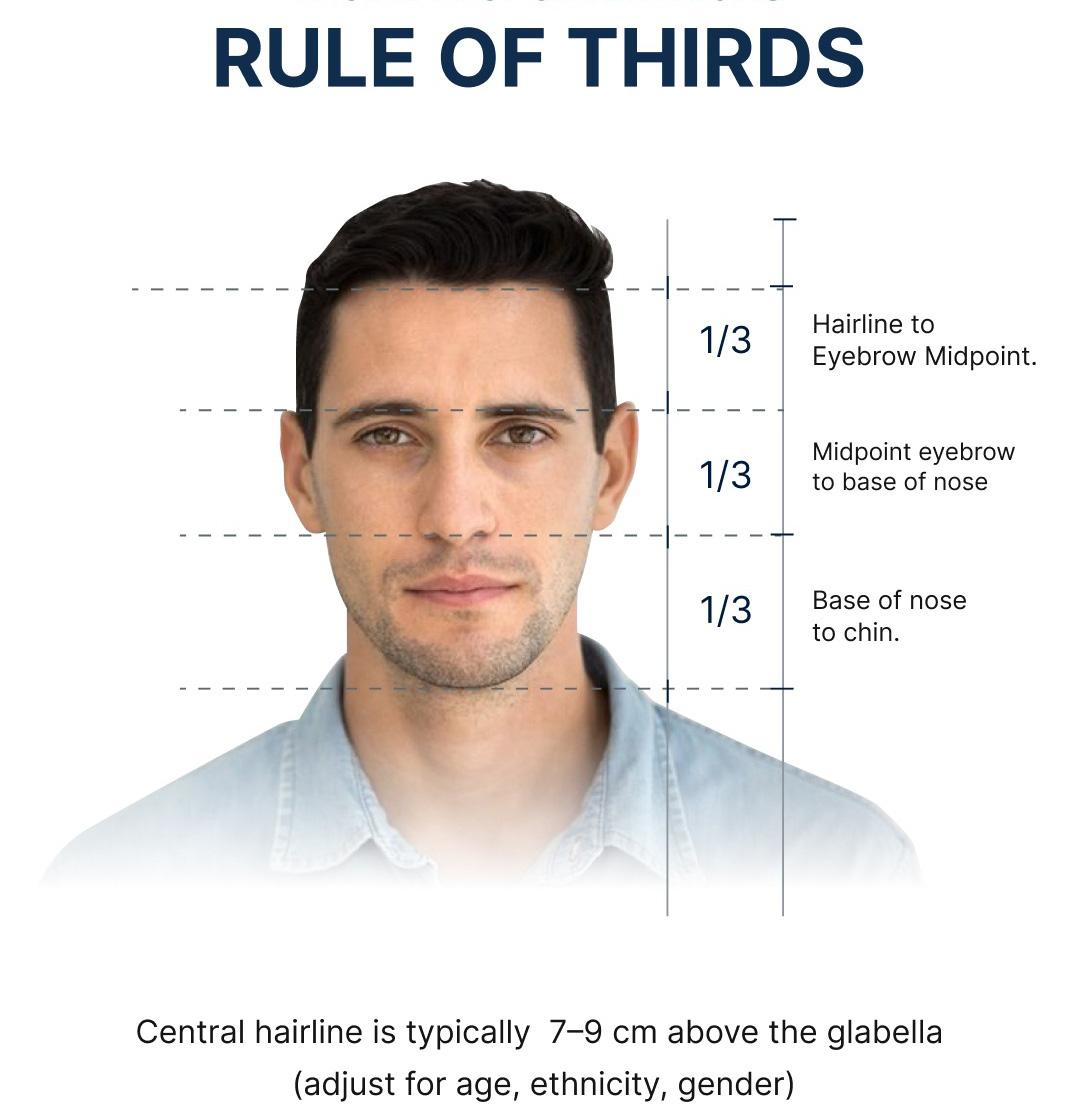
Surgeons use the rule of thirds to measure hairline placement: dividing the face into upper (hairline to brows), middle (brows to base of nose), and lower (nose to chin) sections. The midfrontal point is typically placed 7 to 10 cm above the glabella, adjusted for forehead height, brow position, and overall facial structure.
A well-placed hairline respects your own facial proportions rather than copying someone else’s face shape. The hairline should sit above the frontalis muscle for natural movement-if it sits too low, the forehead wrinkles above the hairline look unnatural. For an adult male in his 30s or 40s, placing a hairline too low may look inappropriate as the patient ages. Dr. Kunnure measures and marks options on the scalp with the patient sitting upright, so you can visually compare and agree on the final position.
The following diagram illustrate the rule of one thirds rule used for Hair line design. In addition to the rule a clinical judgement in necessary to reach a reasonable and appropriate hairline.
Age, Future Hair Loss, and Long-Term Planning
Conservative hairline placement is especially important for younger men with evolving genetic hair loss. Tools like the Norwood scale and family history help predict likely future recession. A well-designed hairline should look natural at every stage-not just the week after surgery.
Transplanting a low “teenage” hairline in a 25-year-old with aggressive pattern permanent hair loss often leads to unnatural “island” patterns later, when surrounding native hair recedes and leaves the transplanted front stranded. At Dr. Kunnure Clinic, hairline design is presented as a 10 to 20 year plan, accounting for how much hair you may lose over time and how your own hair will frame the transplanted zone as it matures.
At Dr Kunnure Clinic, we avoid placing the hairline low or tool in younger patients due to potential future hair loss and place emphasis on conservative management of hair loss and Hair line design.
Gender, Ethnicity, and Hair Characteristics
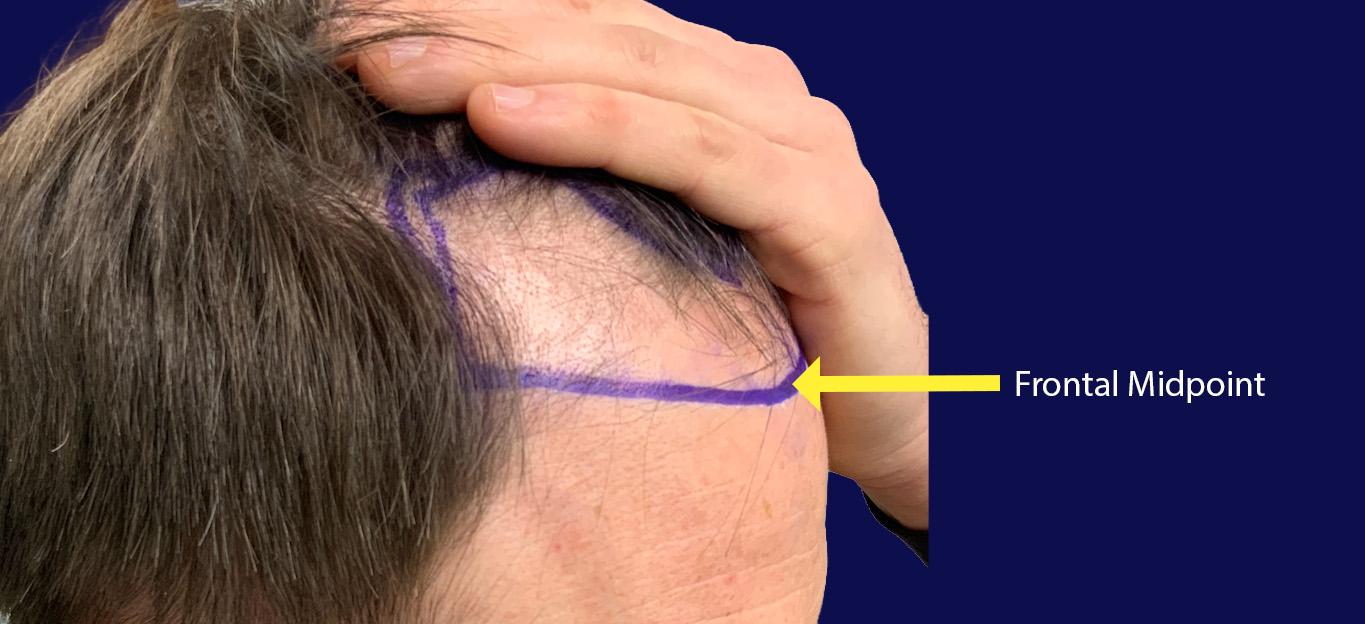
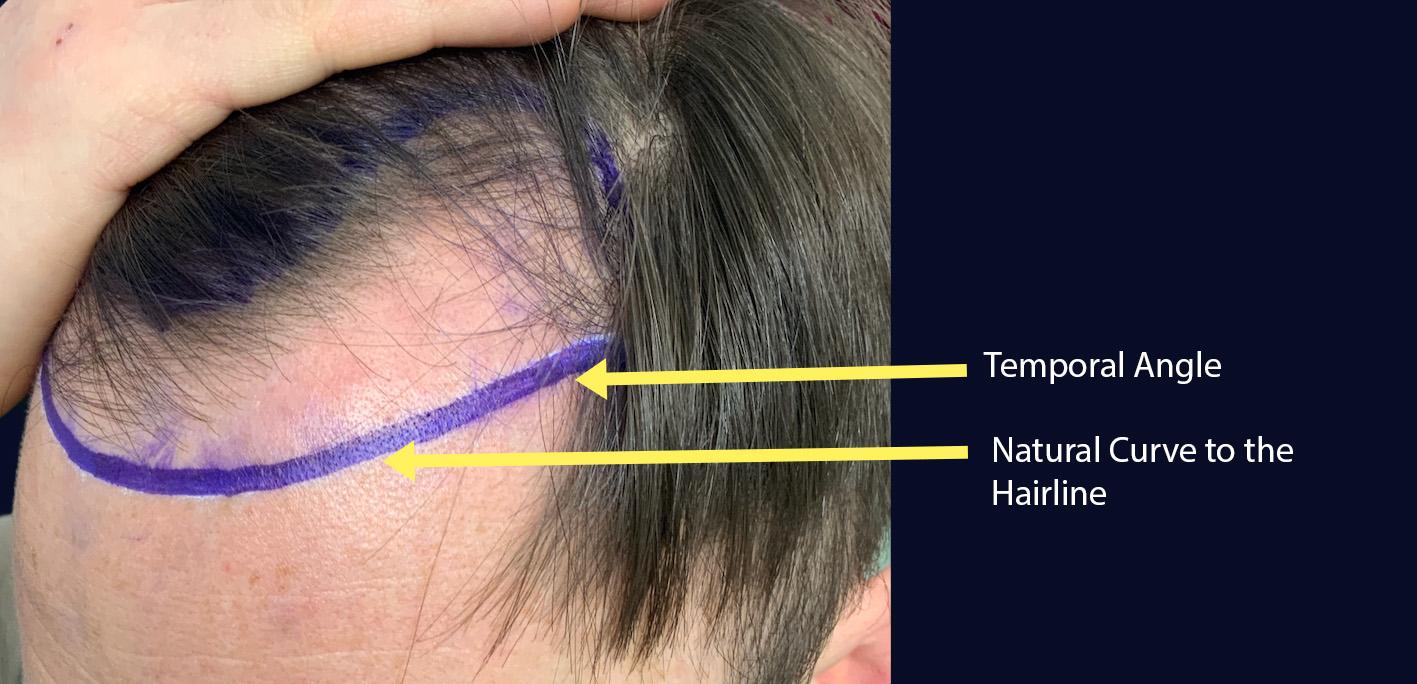
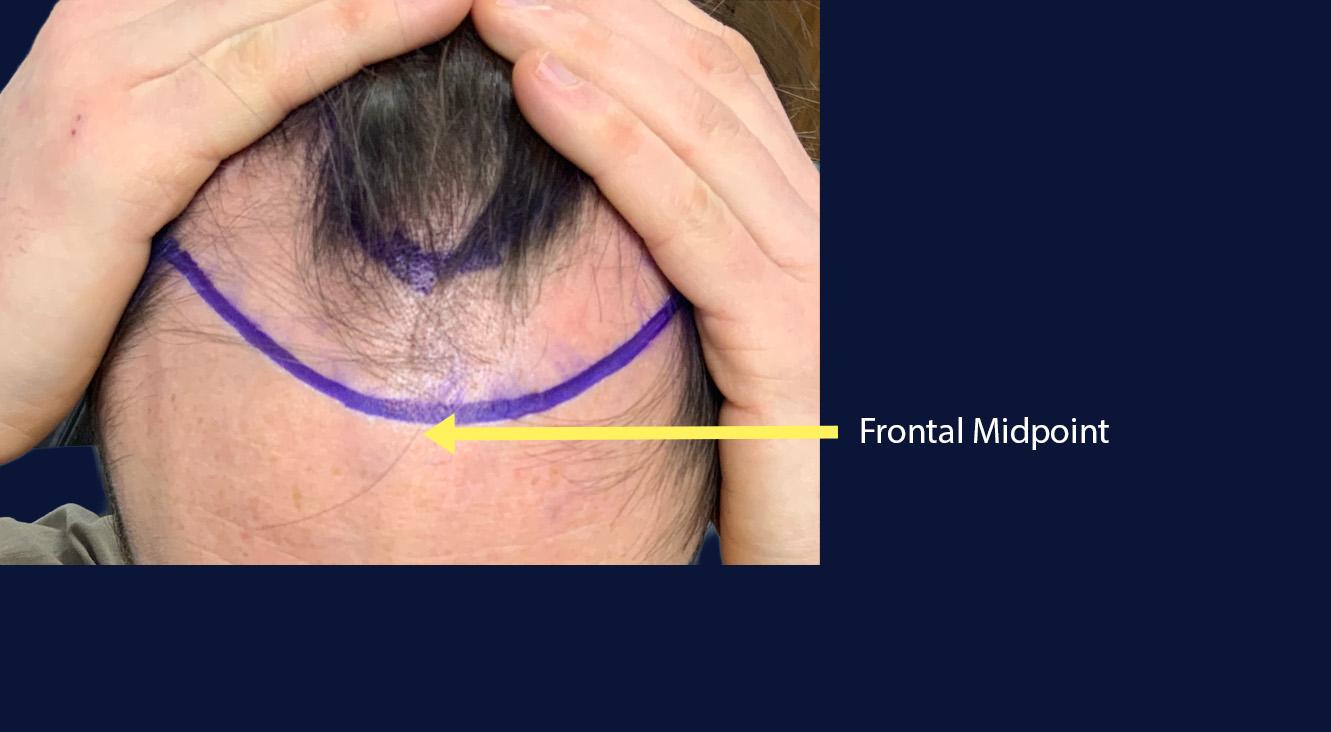
Male hairlines typically feature angular temporal recessions, while female hairlines tend to be softer and more rounded. These differences matter in hairline transplant design.
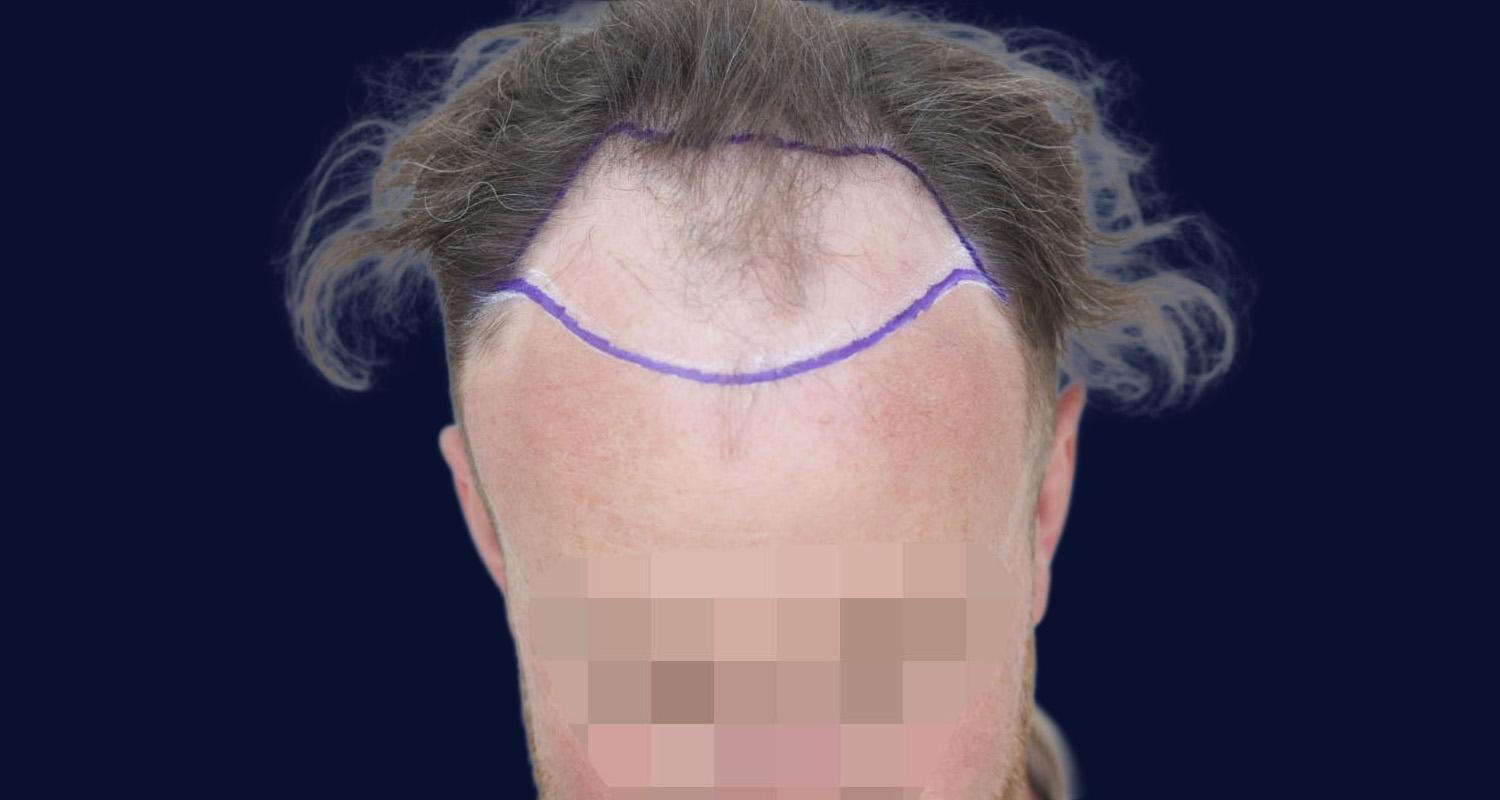
Example of a typical male hairlines
Another example of natural hairline
Female Hairline Examples
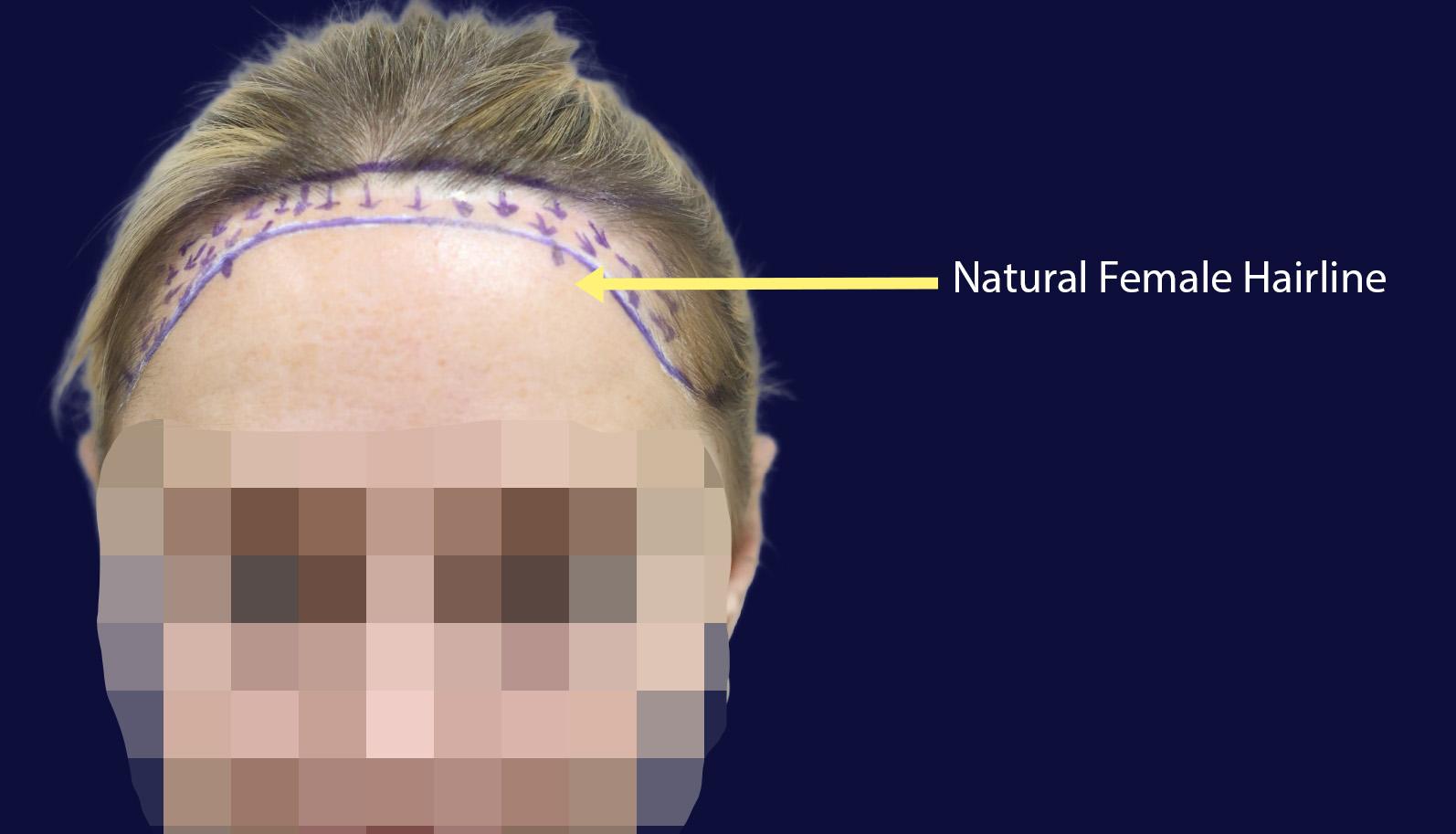
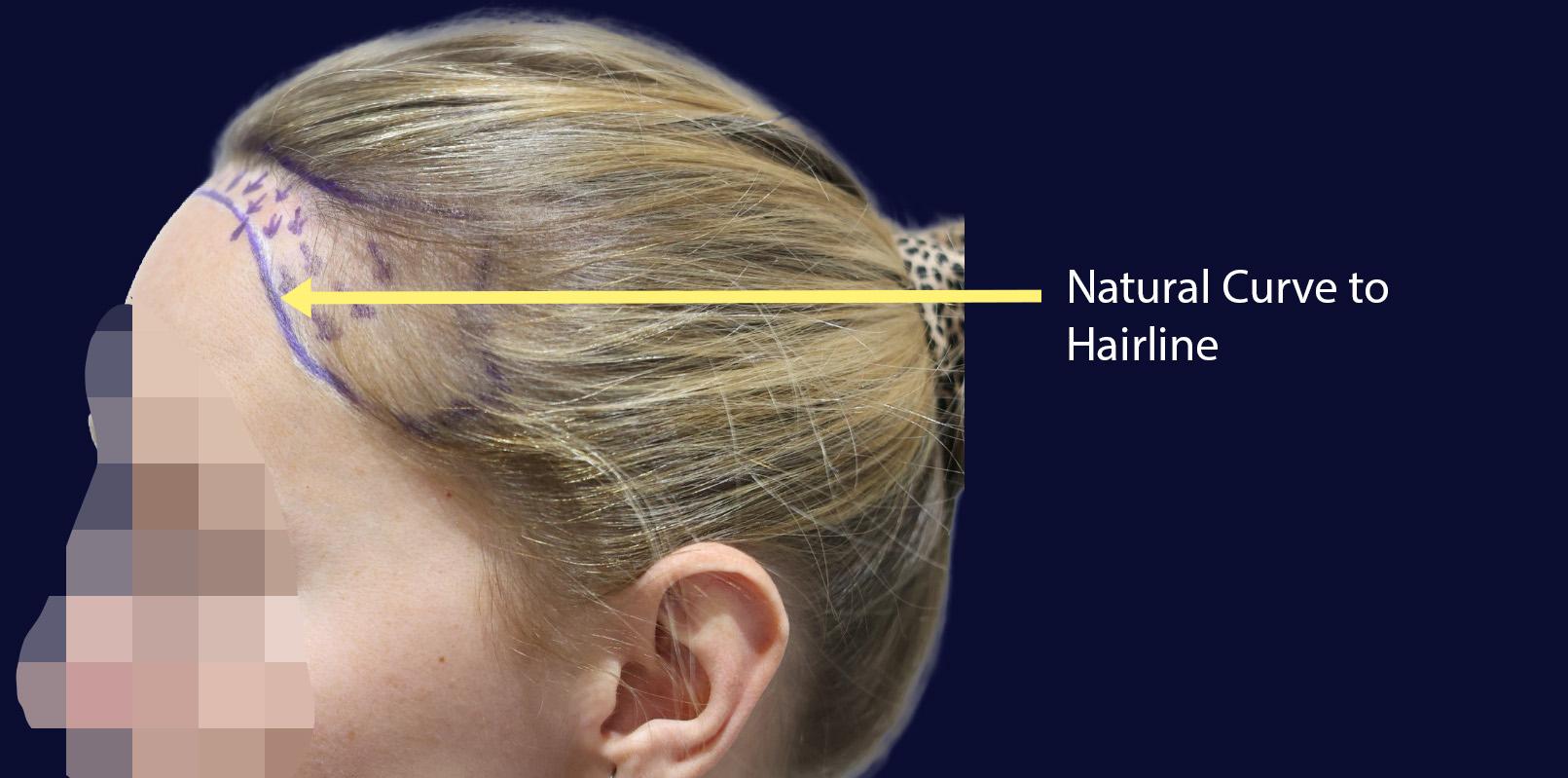
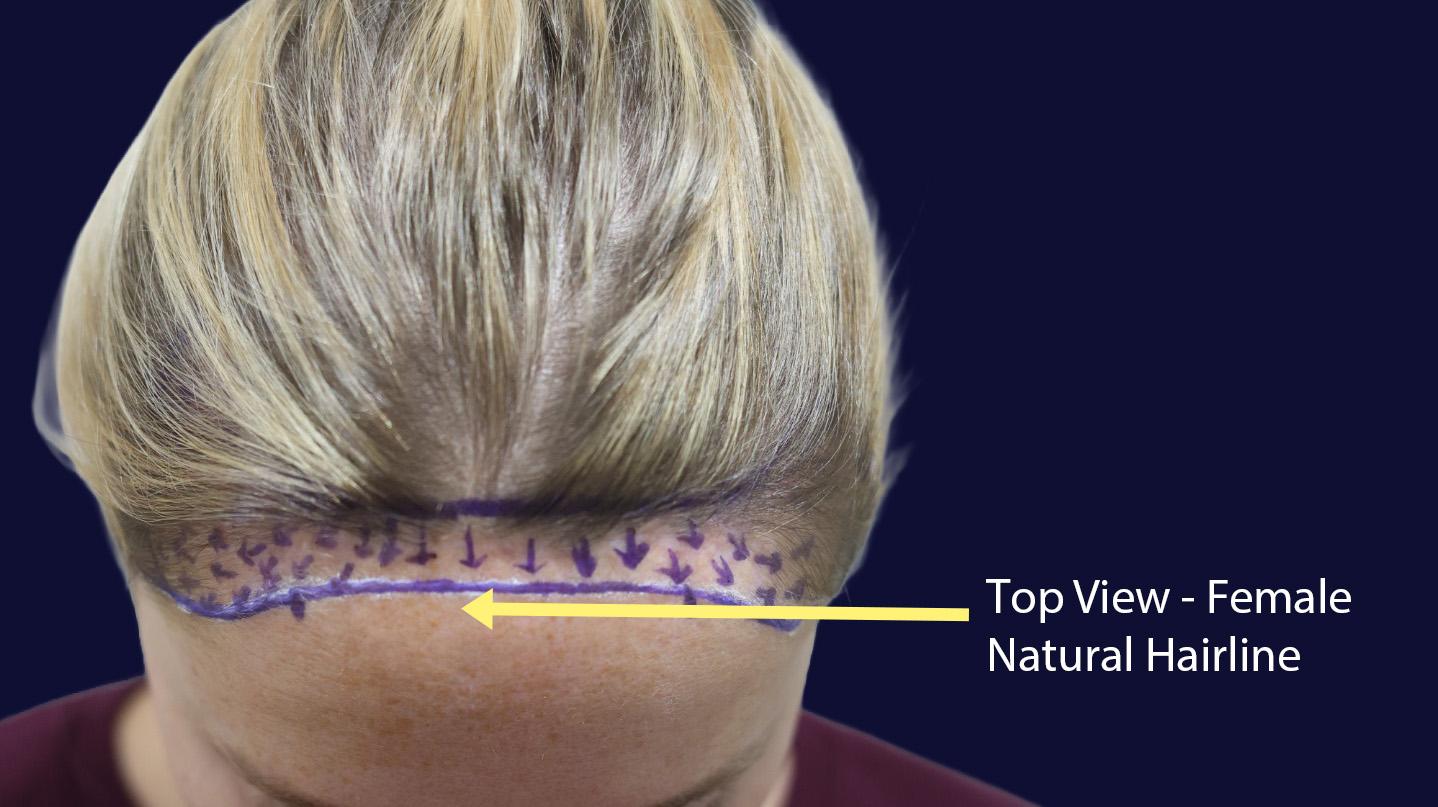
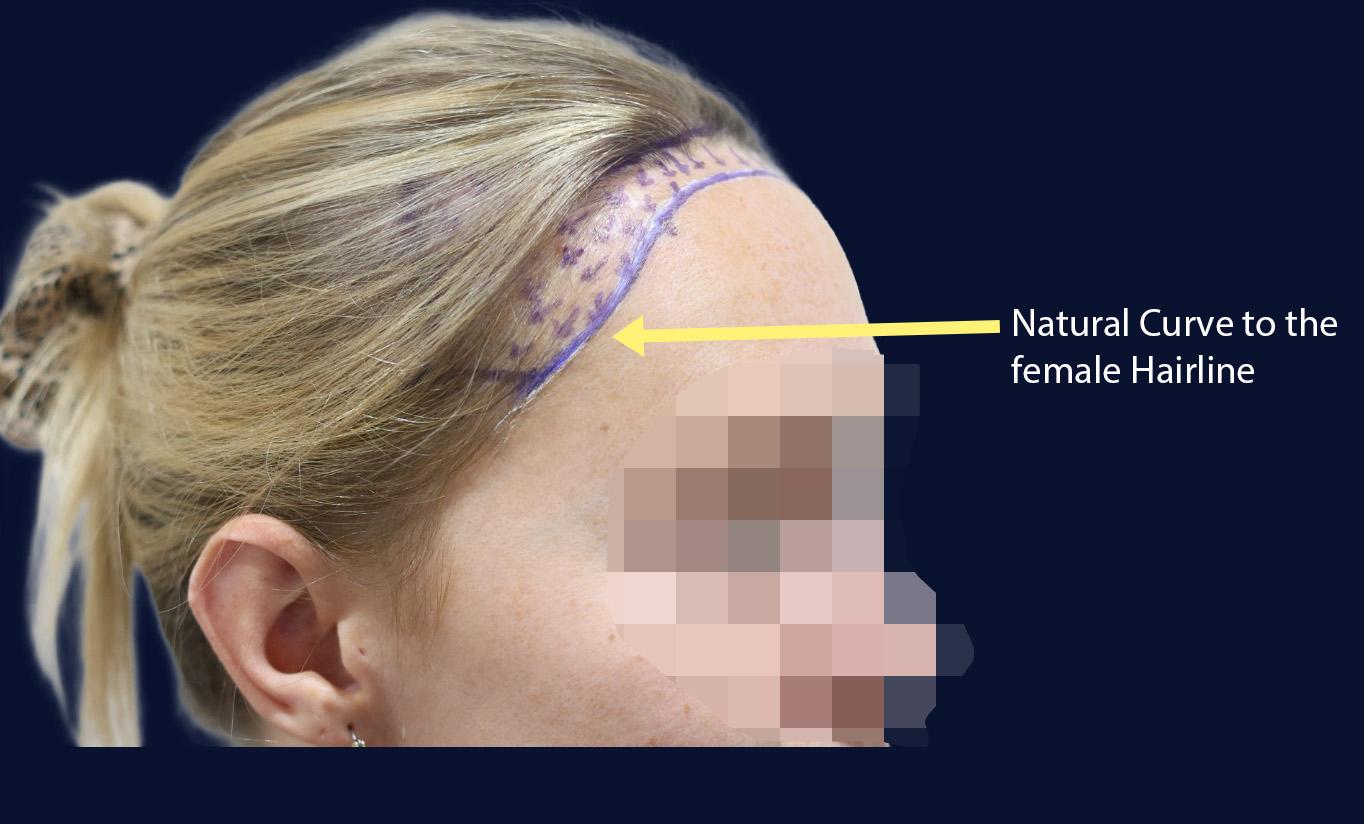
Ethnicity influences typical hairline shapes, density perception, and curl characteristics. For example, Afro-Caribbean hair often provides more visual coverage per graft due to curl volume, while fine, straight hair may require more grafts for the same perceived density. Coarse or thick hair provides better visual coverage than fine hair. Hair-to-skin colour contrast also affects how dense a hairline appears.
A one-size-fits-all template is inappropriate. Dr. Kunnure tailors hairline design to gender identity, heritage, and personal aesthetic preferences, ensuring a natural looking result that suits you specifically.
In female patients the hairline design needs to follow a natural female pattern which will avoid it looking unnatural and artificial. This is shown in pictures above.
Donor Supply and Responsible Use of Donor Hairs
The donor area-usually the back and sides of the scalp-contains a finite number of hair follicles resistant to genetic hair loss. Donor supply constraints limit the area that can be covered during hair transplants. FUE extracts individual follicular units via tiny punches, while FUT removes a strip of donor site tissue that is dissected into grafts under magnification.
An example of good donor area density
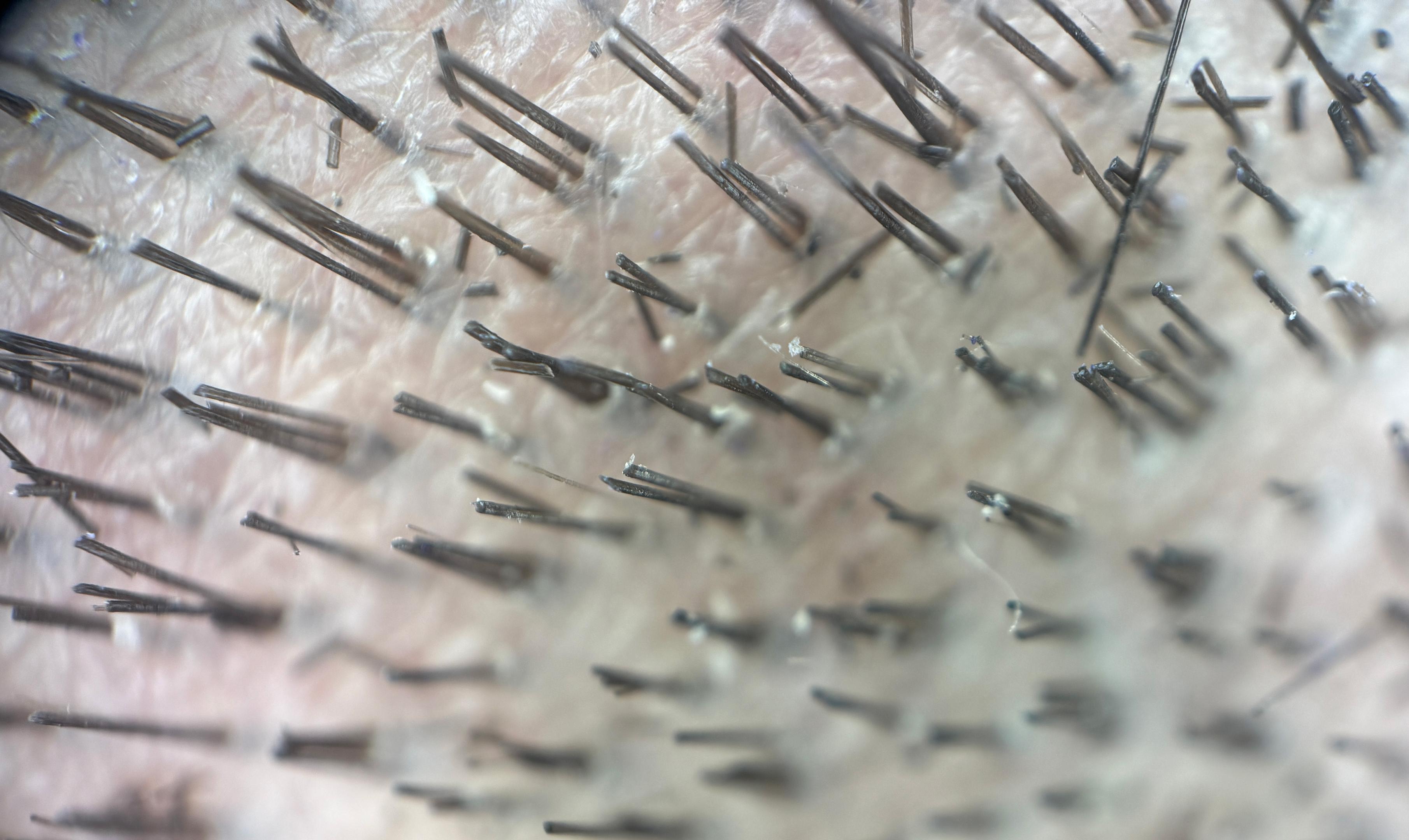
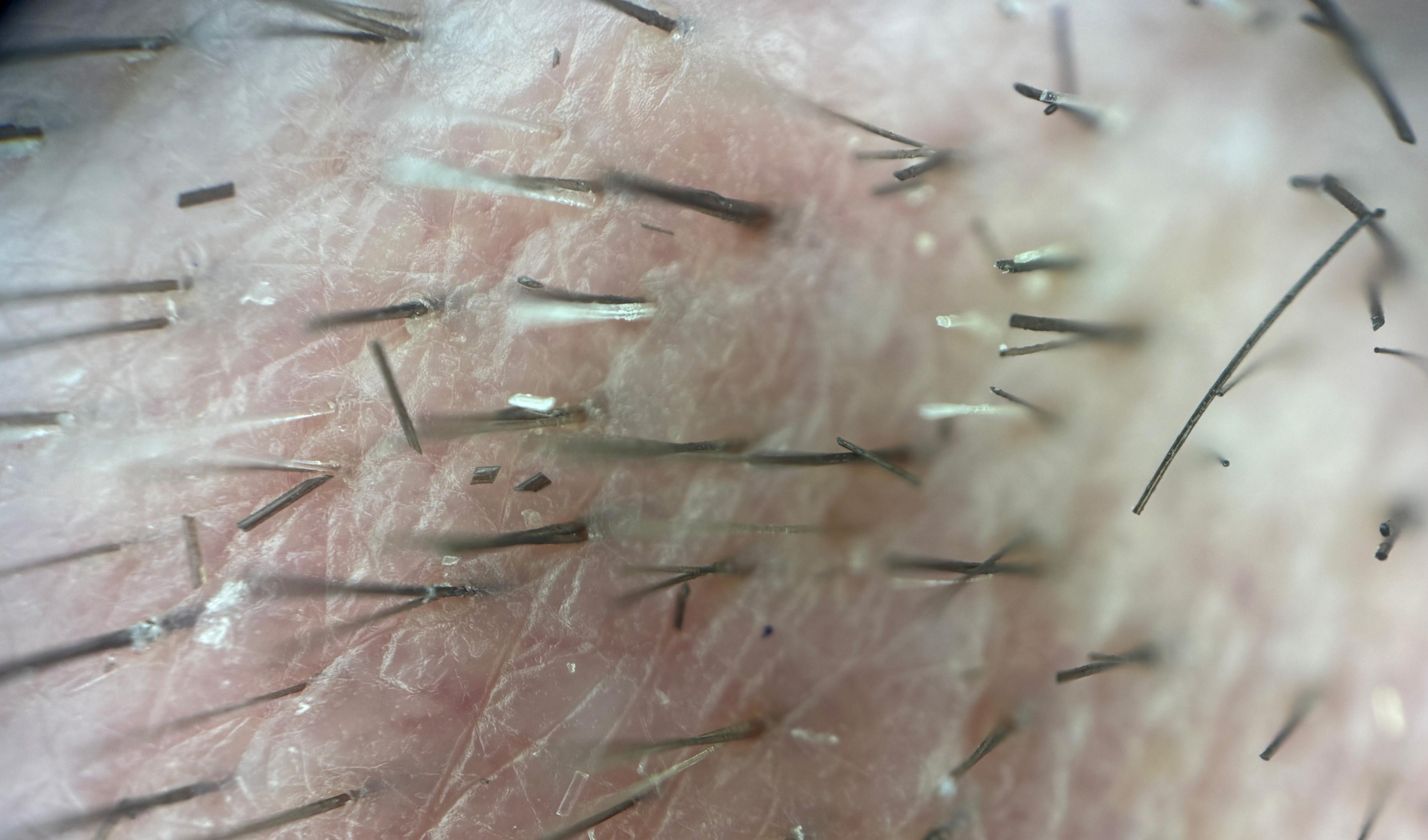
You can see in above photos of two different donor densities. The one with a good donor will provide you a better outcome in terms of density compared to the one with low density.
Aggressive low hairlines consume large numbers of hair grafts, limiting your ability to treat future thinning elsewhere. Responsible clinics, including Dr. Kunnure Clinic , will sometimes recommend a slightly higher or more conservative hairline to preserve donor reserves for the decades ahead.
How does donor density determines the Hairline placement
The donor density plays an important role. A good donor density gives you more options to have more than one hair transplant and also to achieve a great density in transplanted areas without compromising the donor residual donor density after multiple hair transplants.
How Surgeons Plan Hairline Placement: From Consultation to Surgical Map
Hairline placement begins well before transplant day, during a detailed medical and aesthetic assessment. The process begins at the initial consultation, where the surgical plan takes shape.
Consultations assess facial structure and hair loss pattern. This includes medical history, scalp examination, donor evaluation, and screening for conditions like androgenetic alopecia or alopecia areata. Surgeons determine hairline position during the consultation, and the planning may also include microscopic evaluation of donor density. Consultations help identify suitable candidates for hair transplants-and just as importantly, identify those who should wait or pursue other options first.
There are various types of facial frames and each hairline will have an individual variations to suit an individual face. Restoring an appropriate facial frame is important for each individual and hence a full consultation with Surgeon is essential part of your hair transplant surgery.
Assessing Hair Loss Pattern and Suitability
There is a critical difference between permanent hair loss from male or female pattern baldness and unstable conditions like active alopecia areata. Hair restoration surgery is generally not recommended for alopecia areata because of its unpredictable course, though it may suit stable scarring alopecia once the condition is inactive.
The surgeon evaluates how much hair has been lost at the temples and frontal band, whether the crown is involved, and the likely progression based on your current hair loss pattern. Some younger patients may be advised to defer a hair transplant and start medical therapy first to stabilise hair loss before any grafts are placed.
Discussing Goals, Photos, and Realistic Expectations
Patients are advised often to bring photos of themselves from their early twenties, or celebrity images, and these serve as discussion tools rather than templates. The key is aligning your goals-whether that means “bring my hairline forward one to two centimetres” or “re-frame the upper face”-with what donor supply and long-term planning allow.
At Dr. Kunnure Clinic in Nottingham, previous case photos with similar hair loss patterns help set realistic expectations on density, hairline height, and coverage. A crucial consultation outcome is agreeing not only on what will be done in the first procedure, but what may be sensibly possible if further hair loss occurs. This honest conversation is what separates responsible hair restoration from cosmetic surgery that prioritises short-term wow factor over long-term sustainability.
Marking and Confirming Hairline Position
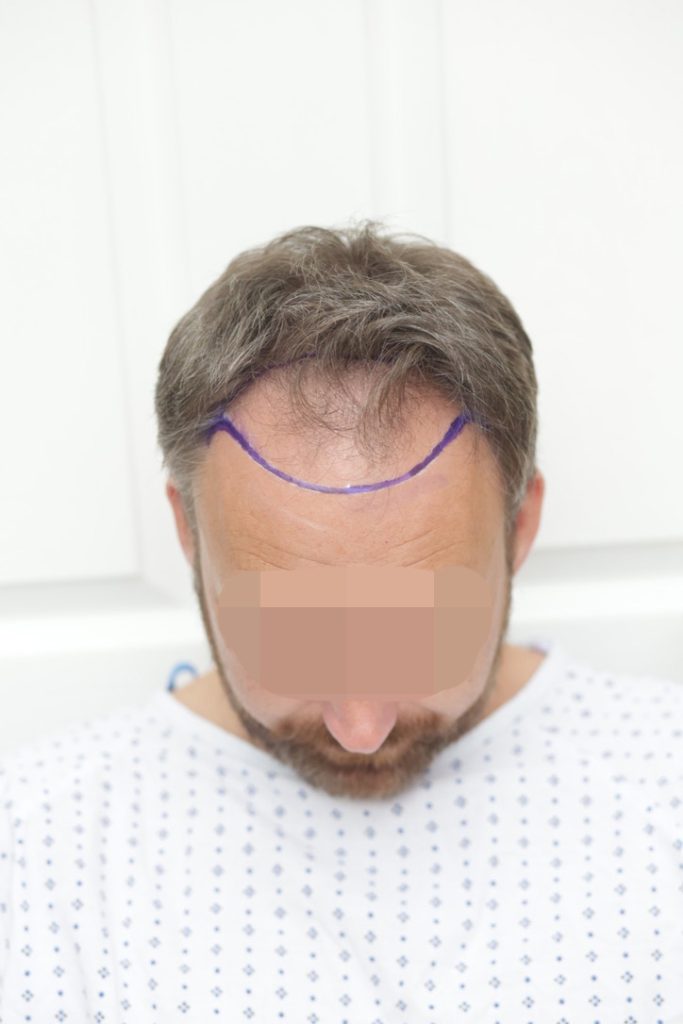
On the day of surgery, the surgeon draws proposed hairline options directly on the scalp while you sit upright. Small adjustments are made to height, contour, and temple points while you view yourself in a mirror. The final hairline should look appropriate with a neutral facial expression, raised eyebrows, and different head angles.
Photos of the agreed design are taken for the surgical plan and for before-and-after comparison at six and twelve months. This step transforms aesthetic judgment into a precise surgical map.
This is the most critical part before the surgery begins and almost irreversible and hence you should spend enough time just before the surgery and clarify any doubts with the surgeon.
Surgical Execution: Translating Hairline Design into a Transplant
Once the design is finalised, the surgical team’s role is to faithfully reproduce that plan graft by graft. A hair transplant involves local anaesthetic with patients awake, and most hairline cases are completed in a single day. Execution covers three broad steps: anaesthesia and site creation, extraction of donor hair, and implantation at the hairline.
Excision of Grafts from Donor areas
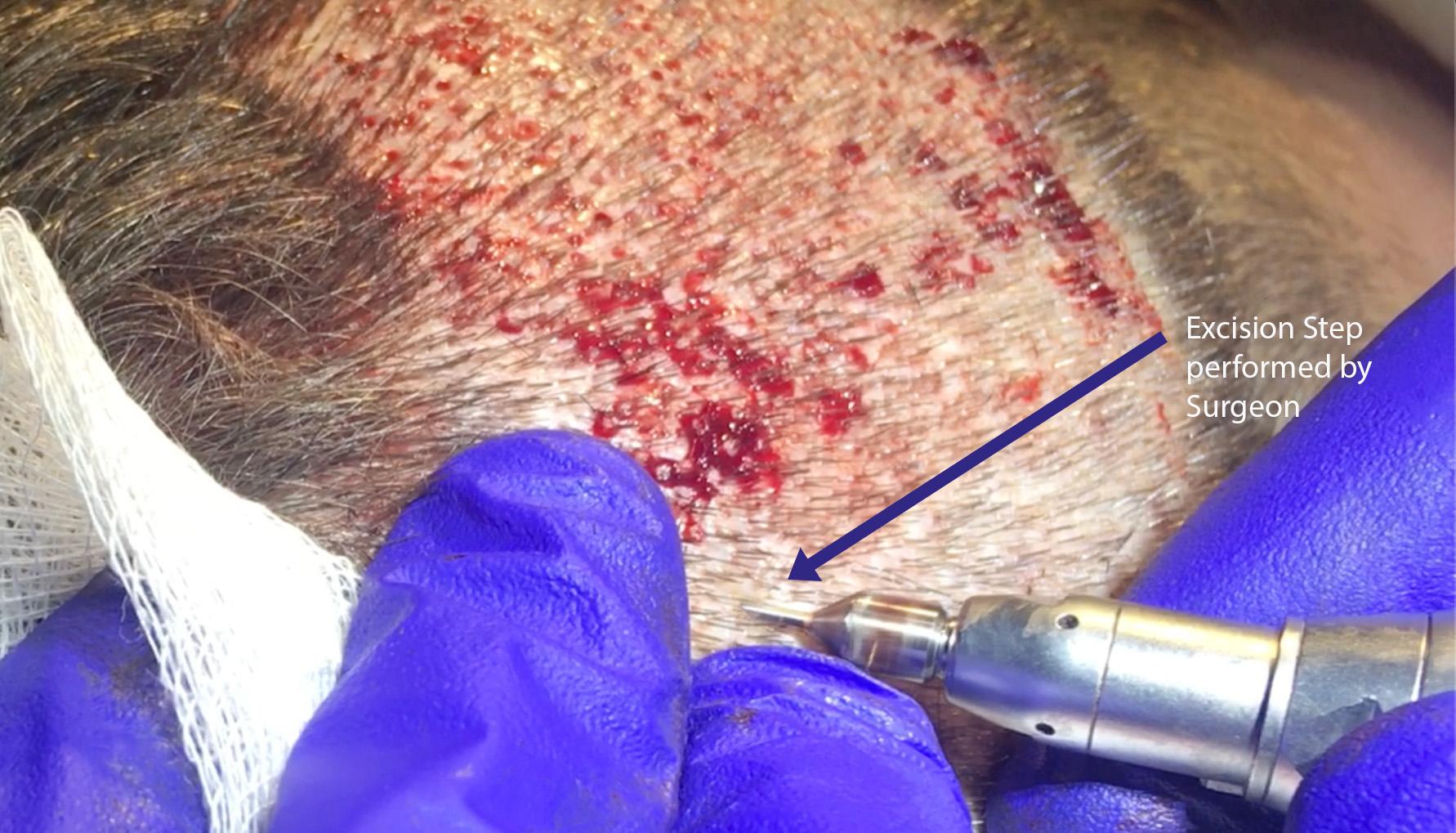
Extraction of teh excised Grafts
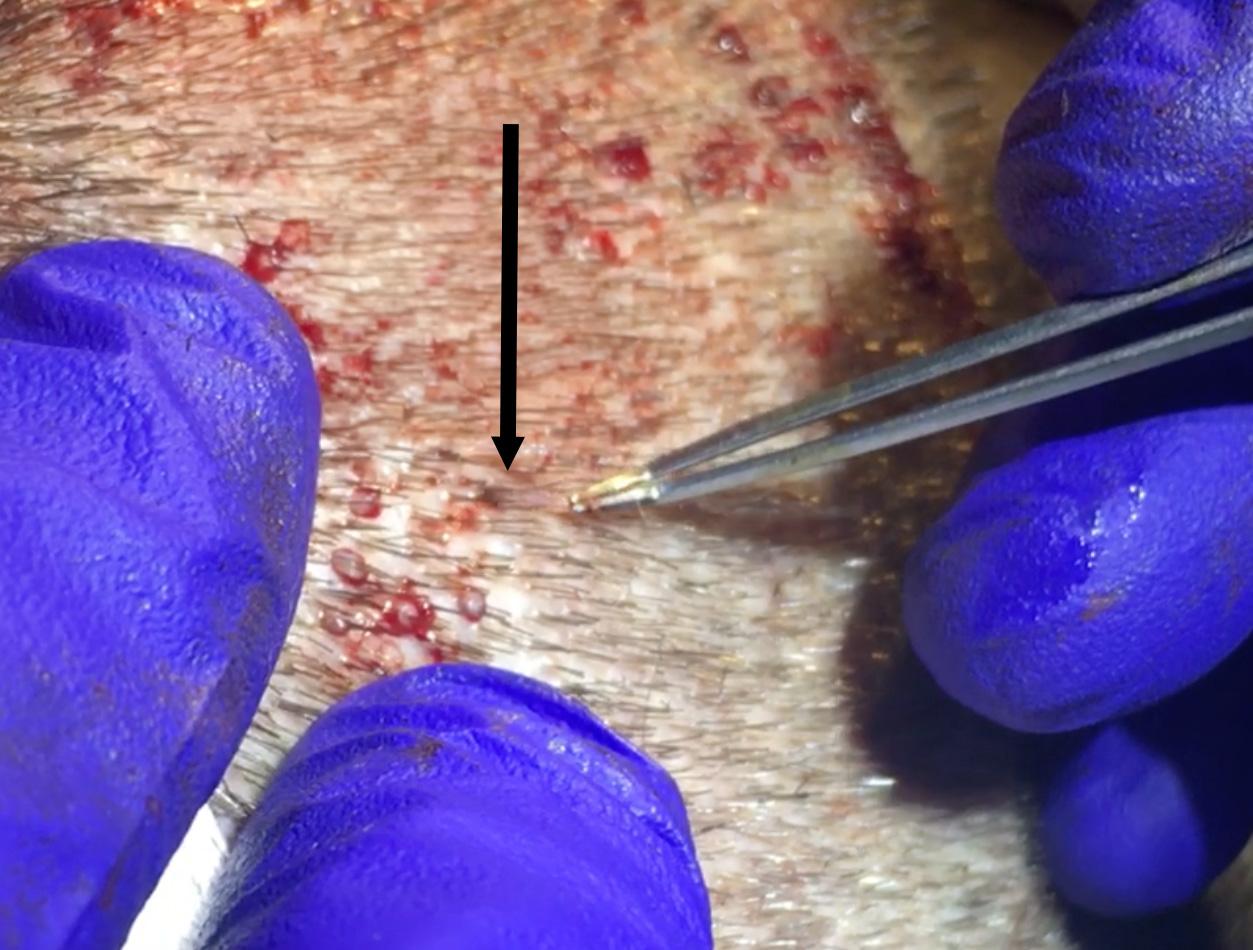
At Dr. Kunnure Clinic, both FUE and FUT are offered, with the technique chosen based on hair characteristics, donor supply, and patient preference.
Choosing Between FUE and FUT for Hairline Work
In a fue hair transplant (follicular unit extraction), surgeons extract individual follicular units via tiny punches, leaving minimal visible scarring. FUT can treat larger areas of thinning hair in one session by removing a strip from the donor area, which is then dissected into grafts under magnification.
FUE is often preferred for patients who want short hairstyles and no linear scar. FUT can be advantageous when a large graft count is needed from a strong donor area. For refined frontal hairline work, both techniques deliver excellent grafts when the surgeon who will perform hair transplant surgery has the experience to execute either properly. Dr. Kunnure discusses the pros and cons of each method-including scarring, downtime, and future procedure planning-at consultation.
In some patients a combination of FUT and FUE is most suitable. Especially in patients with Norwood 7 or more severe degree of hair loss it is important to consider a combination treatment if donor density permits.
Creating Recipient Sites in the Hairline
The surgeon uses fine blades, needles, or implanter tools to create tiny incisions (often less than one millimetre) at the planned hairline. Each incision is oriented to match the desired hair direction and angle, following the mapped density gradient.
The most technically demanding part is the first one to two rows of the hairline, where angle, spacing, and irregularity must all be precisely controlled. At Dr. Kunnure Clinic, the surgeon-not technicians-creates all recipient sites at the hairline to maintain artistic and medical control over this critical zone.
We at Dr Kunnure Clinic , create a precise transitional zone at the start of the hairline which will give you an excellent results.
Hairline Incisions
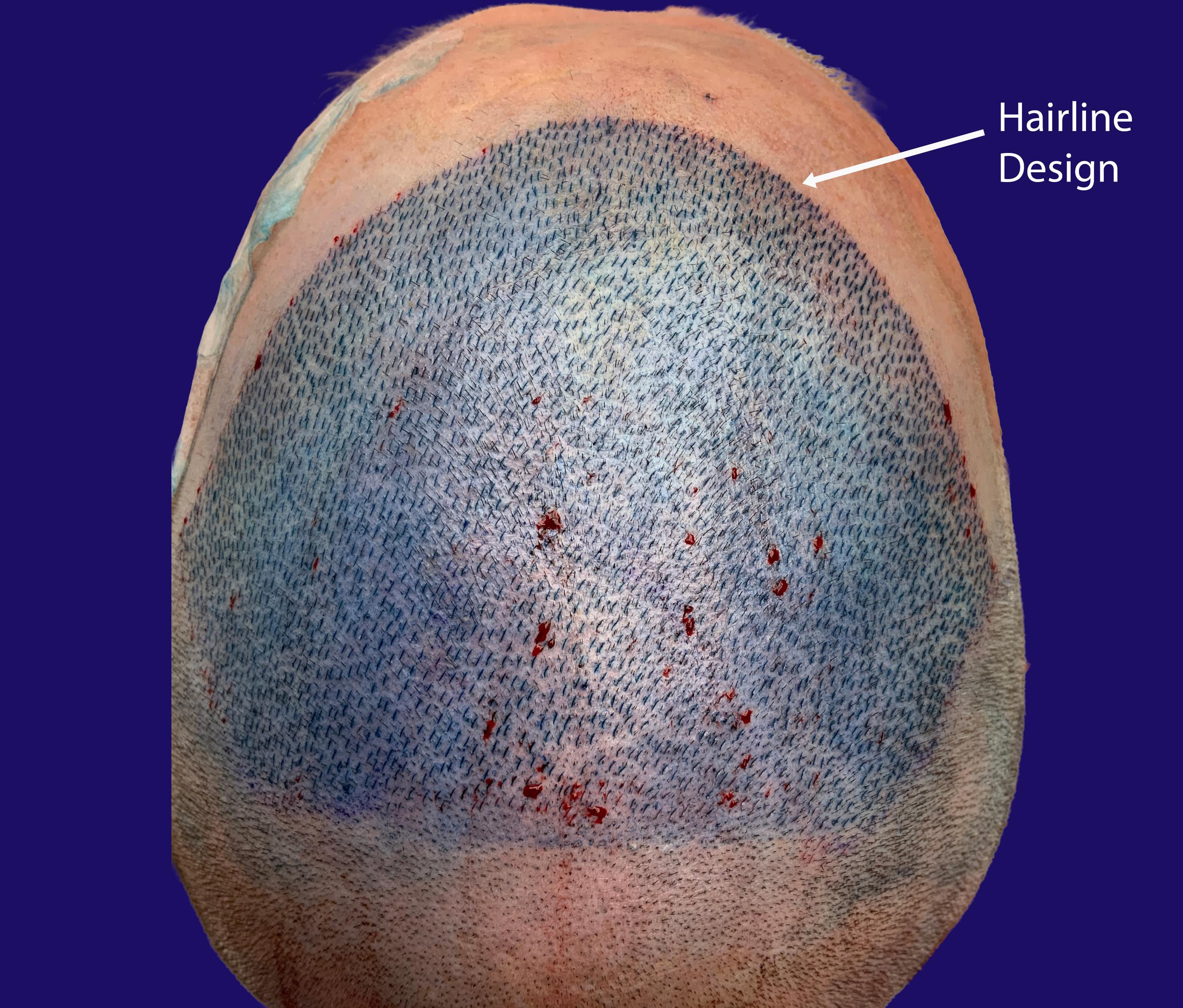
Implanting Donor Grafts into the Hairline
Single hair grafts are reserved for the frontal edge, producing the soft, wispy look of a natural hairline. Behind that, two to four hair grafts build density. Gentle handling and minimal out-of-body time protect graft survival, with experienced teams targeting 90 to 95 percent or higher survival rates.
Staff follow the surgeon’s map carefully, often working under magnification. Once implantation is complete, the area is dressed, and you receive clear aftercare instructions tailored to hairline work. Hair transplant results aim for a soft and natural-looking coastline at the front, not a harsh border.
Transition zone design and implementation is ideal as this allows to implant the grafts at a gradient from first line going back.
What Can Go Wrong with Hairline Placement-and How to Avoid It
Most unsatisfactory results arise from design or planning errors at the hairline, not just graft survival issues. Common problems include hairlines placed too low, too straight, at the wrong angle, with an over-dense leading edge, or without accounting for future hair loss.
Revision hairline surgery is more complex than primary hair restoration surgery. It may involve removing or redistributing badly placed grafts-a process that is more costly, more invasive, and more emotionally draining than getting it right the first time.
In inexperienced hands the hair line design can be less than expected standards and could lead to further more corrective surgeries and often with another Surgeon which could increase the costs significantly.
Examples of Unnatural Hairline Design Errors
A perfectly straight, symmetrical line across the forehead can betray a transplant even from across a room. Placing multi hair units directly on the front edge leads to visible tufts instead of a soft, wispy transition. A natural looking hairline needs those subtle irregularities, not perfect precision.
Consider a scenario: a 28-year-old has a low hairline transplanted at Norwood 2. By his early 40s, the surrounding native hair has receded significantly, leaving a stranded fringe of transplanted hair with obvious thinning behind it. At Dr. Kunnure Clinic in Leeds, such pitfalls are specifically addressed at consultation. Conservative, age-appropriate designs are recommended to produce a natural result that holds up over time.
As discussed above a more conservative approach is needed for younger patients and that can be achieved by Dr Kunnure , an experienced Surgeon.
Medical and Technical Factors Affecting Hairline Outcomes
Smoking, uncontrolled medical conditions, allergic reaction to medications, or poor aftercare can all compromise graft survival even when the design is excellent. Conditions like active alopecia areata or unstable scarring alopecia can cause loss of both transplanted and surrounding hair around the hairline.
No ethical clinic will guarantee 100 percent graft take. But experienced teams consistently achieve high survival rates. Honest discussion of risks-including scarring, infection, or the potential need for future procedures-should be part of every UK consultation. Other historical techniques like scalp reduction (which removes bald skin and pulls hair-bearing skin over it) and flap surgery (moving a section of hair-bearing scalp to bald areas) exist but are rarely used for frontal hairline work today because follicular unit transplantation produces far more natural results.
A poor after care advice or execution is also an important factor in failure of grafts uptake and final results.
Recovery, Timeline, and How a New Hairline Matures
The typical post-operative course runs from initial healing in seven to fourteen days, through a shedding phase, to early hair growth at three to four months and maturation up to twelve to eighteen months. Full results of a hair transplant are visible after 12 months, though transplanted hairs may improve in quality for up to 18 months. In some cases , you may need up to 2 years to get a good hair growth and final results.
Hairline areas are especially visible, so aftercare matters more here than almost anywhere else on the scalp. Most UK patients take about one to two weeks off work, and while swelling or redness at the frontal hairline usually settles within a few days, visible settling continues over the next few weeks.
At Dr Kunnure Clinic we will provide you with a detailed written post op advice and you will have direct access to Surgeon following your Surgery.
Early Post-Operative Period (First Two Weeks)
Tiny scabs form around each hairline graft and usually fall off within seven to ten days with proper care. Common advice includes sleeping with your head elevated, avoiding touching or scratching the hairline, and using clinic-provided sprays or shampoos. Styling products should be used cautiously during early healing.
Mild swelling on the forehead and around the eyes can occur, typically resolving within a few days. Most patients can resume hair grooming after two weeks, but haircuts near the transplant area should wait three to four weeks. At Dr. Kunnure Clinic, patients have scheduled check-ins-in-person or online-to monitor early healing.
First two weeks after the surgery are important and we advise a specific sleeping position purely to avoid any physical damage to the grafts.
Shedding, Regrowth, and Maturation of the Hairline
Most transplanted hairs at the hairline shed during the first few weeks, usually between weeks two and six. This is normal and does not mean the grafts have failed. New hair begins emerging from month three to four-transplanted hairs typically start to grow after 3-4 months-initially fine and sometimes irregular.
Between months six and nine, density and texture improve significantly, with most patients seeing major cosmetic benefit. The final refinement-curl, wave, thickness, and blending with surrounding hair-continues up to twelve to eighteen months. A well-designed hairline looks natural at every stage of this process, from the awkward early months through to full maturation, because the underlying architecture was planned correctly from the start.
Shock loss following Hair Transplant Surgery.
Shock loss is not very common but may occur in both donor and recipient areas and areas adjacent to these. The hairs start to thin and appear as if they have been affected by DHT and may appear miniaturised, This is an entirely reversible process in almost all patients.
Who Is-and Isn’t-a Good Candidate for Hairline Transplant Surgery?
Not everyone experiencing a receding hairline is a good candidate for hair transplant surgery right now. Candidacy depends on a stable hair loss pattern, adequate donor hair, overall health, and realistic expectations about what hairline design can achieve. Both men and women can be suitable for frontal hairline restoration.
Dr. Kunnure offers a free consultation-consultations can be conducted online or in person-to assess individual suitability and design options for UK patients.
Dr Kunnure , during consultation will go through a detailed medical history and hair loss history family history of hair loss and after donor examination will provide you with a bespoke hair treatment plan.
Ideal Candidates for Hairline Placement Surgery
Typical ideal profiles include men with stable male pattern hair loss (Norwood 2 to 4) and good donor density, and women with a naturally high hairline or stable female pattern thinning at the front. Many surgeons prefer to operate once hair loss has shown a predictable pattern, often from the mid-twenties onwards.
Overall health matters: non-smoking status (or willingness to stop), commitment to aftercare, and acceptance that a hair transplant will not restore teenage-thick density across the entire scalp are all important. If you want to grow hair where it has stopped growing, the question is whether your donor area and loss pattern support a lasting, natural appearance-not just a short-term improvement.
When Hairline Surgery May Not Be Appropriate
Active alopecia areata, rapidly progressive hair loss, or untreated scalp diseases often make hair transplantation risky or ineffective. Patients with very limited donor supply, extensive scarring, or unrealistic expectations may be better served with non-surgical options such as medical therapy.
Some younger individuals benefit more from starting finasteride or minoxidil before considering surgery, to stabilise how much hair they are losing and clarify their long-term hair loss pattern. Ethical clinics like Dr. Kunnure Clinic in Bristol will sometimes advise against surgery if long-term results cannot be sustained-because a natural result ten years from now matters more than a dramatic change next month.
Patient with specific conditions like diffuse hair loss, FFA and many with autoimmune conditions are not suitable for Hair transplant surgery.
Choosing a Clinic and Surgeon for Hairline Placement in the UK
The artistry and aesthetic judgment of the surgeon matter more for hairline placement than the brand of device or size of clinic. In England, clinics must be registered with the Care Quality Commission, and surgeons must hold a GMC licence to practise.
Compare not only price but surgeon involvement, previous hairline cases, and aftercare structure. Dr. Kunnure Clinic is a surgeon-led hair restoration centre focused on bespoke hairline design, transparent planning, and comprehensive follow-up across locations including Leicester.
Questions to Ask About Hairline Design Before Booking
Patients should prepare questions for their consultation. A practical checklist:
- Who will draw my hairline, and will that person also create the recipient sites?
- How do you account for my age and future hair loss when choosing hairline height?
- Who performs the excision of the grafts ?
- Who will make incisions and implant the grafts ?
- How many grafts are planned for the hairline specifically versus other areas?
- What is your experience with patients of my ethnicity, gender, and hair type?
- How do you handle revisions if a hairline settles differently than planned?
- Could I see previous patients outcomes?
- Could I Speak to your previous patients ?
Dr. Kunnure welcomes detailed questions and often sketches different design options to involve patients in decision-making, because your hairline is yours to live with.
Next Steps: Planning Your Own Hairline Placement with Dr. Kunnure Clinic
If you are concerned about a receding hairline or a high forehead, the most productive step is exploring your options with someone qualified to assess them-not guessing based on forum posts or before-and-after photos alone.
A successful hairline transplant requires stable hair loss, careful design respecting facial proportions, responsible use of donor hairs, and precise surgical execution by a hair transplant surgeon who treats hairline placement as both a science and an art.
Booking a free consultation with Dr. Kunnure Clinic is straightforward: use the website form or call directly. Consultations are available online or in person at UK clinic locations. Bring photos, bring your questions, and bring your own ideas about hairline shape. The goal is a personalised, long-term plan that gives you a natural looking hairline you can trust for the next two decades-not just the next two months.
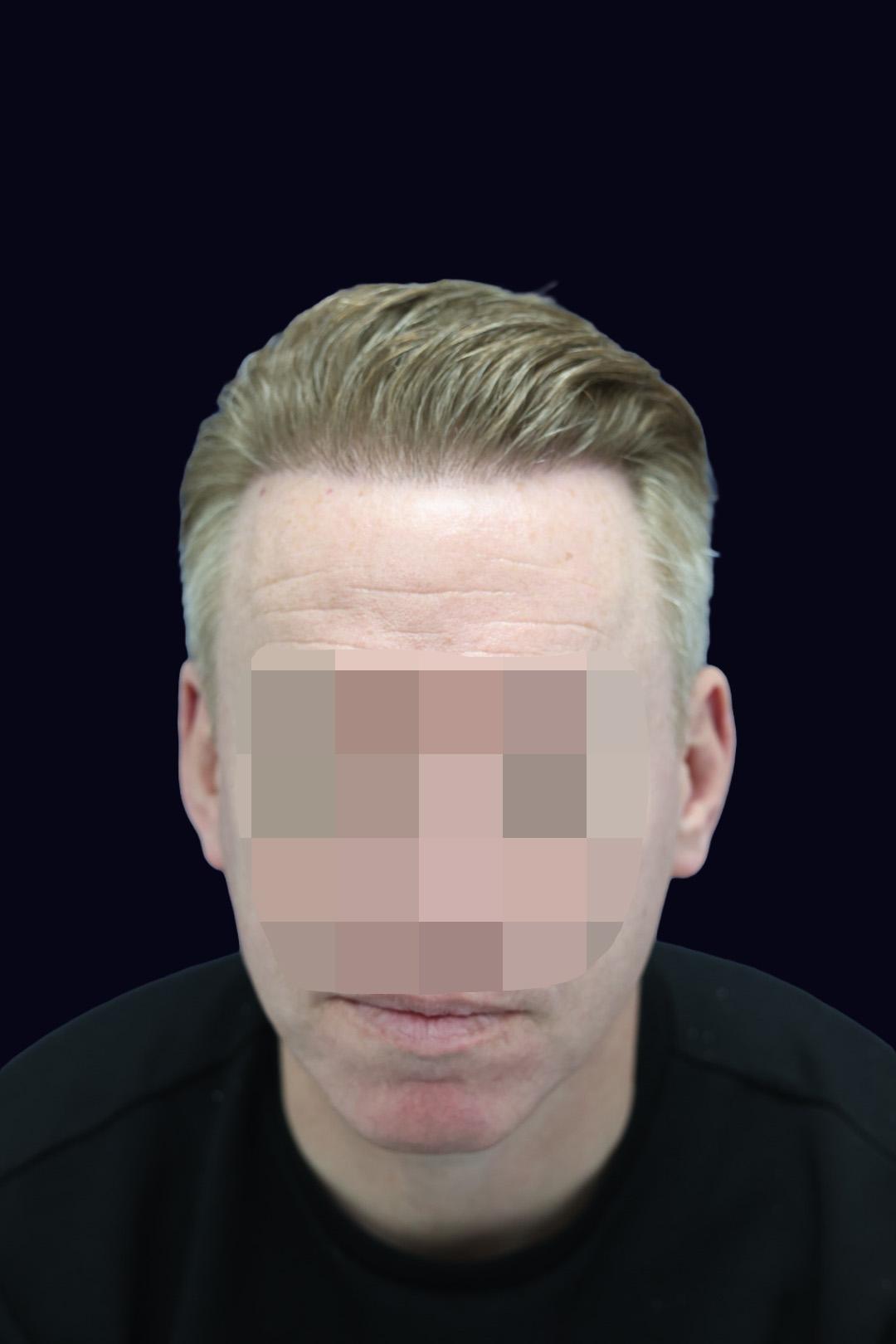
An example of Results at Dr Kunnure Clinic
Image showing before Hairline Surgery at Dr Kunnure Clinic
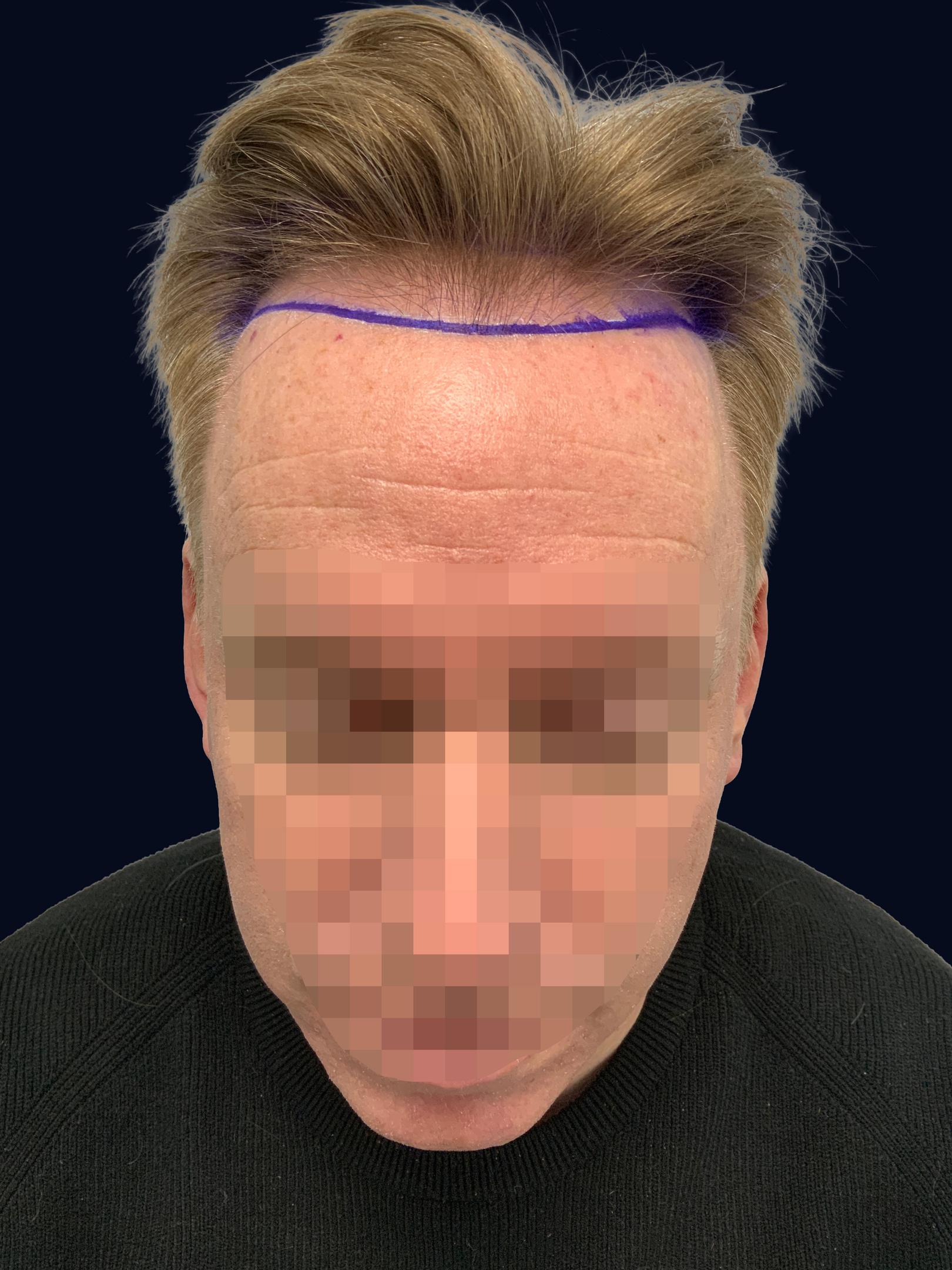
Image showing After Hairline Transplant at Dr Kunnure Clinic
Frequently Asked Questions
FAQ
- Why Hairline placement is so significant ?
The Hairline plays a critical role in defining your facial frame and personality. It boosts your confidence, social and professional communication and your self esteem. Hence placing a hairline at correct level is important. Moreover this is a permeant procedure which must be done with an experienced Surgeon.
- I want to fill up temporal angles and bring it forward what would you suggest?
The temporal angle hair loss can be variable and sometimes will happen independent of the hairline. Correcting these areas aggressively can result in an abnormal looking hairline which may otherwise give a good outcome. This is the reason we advise not to do sides and wait for hair loss pattern to establish in these areas.
- I have a straight hairline and I want to correct it. What can I do ?
It is unfortunate that you ended up having a straight line. This could have been avoided by an ethical surgeon and who is GMC registered. I do not have your photos so I would suggest to see the Surgeon and request a review. I am certain the Surgeon will address your concerns. in your case , depending upon the problem, correction may involve taking the grafts out and removing them and implanting with single grafts to make fine and smooth hairline.
- I have average donor density and Norwood 7 type hair loss, what are my options ?
In your case, subject to face 2 face consultation with the operating surgeon, and donor density, you can have a higher hairline to create a reasonable facial frame and a slight diffuse hair distribution to achieve overall results. Your expectations from hair transplant surgery need to be viewed with more detail information about the donor density. In some patients a creation of frontal forelock may be an option.
- I am 21 yrs and have suffered severe hair loss in front and mid scalp area what are my options?
Considering your age and severity of hair loss I would take a more conservative approach and place your hairline slightly higher than what I explained in rule of thirds. A detail examination and assessment of donor density is required. A family history of hair loss and severity of hair loss in your family is also important and will need to be taken into account.

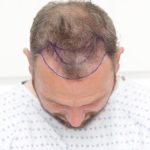

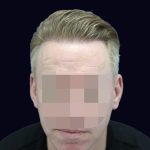


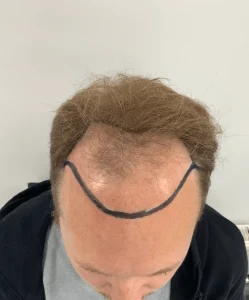 Before the surgery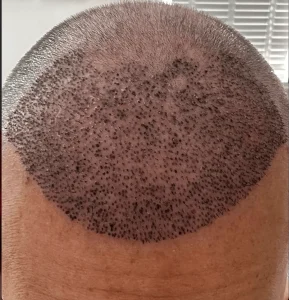
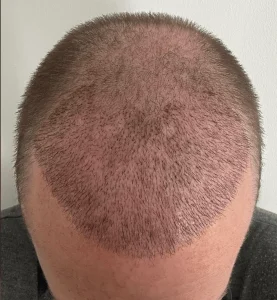
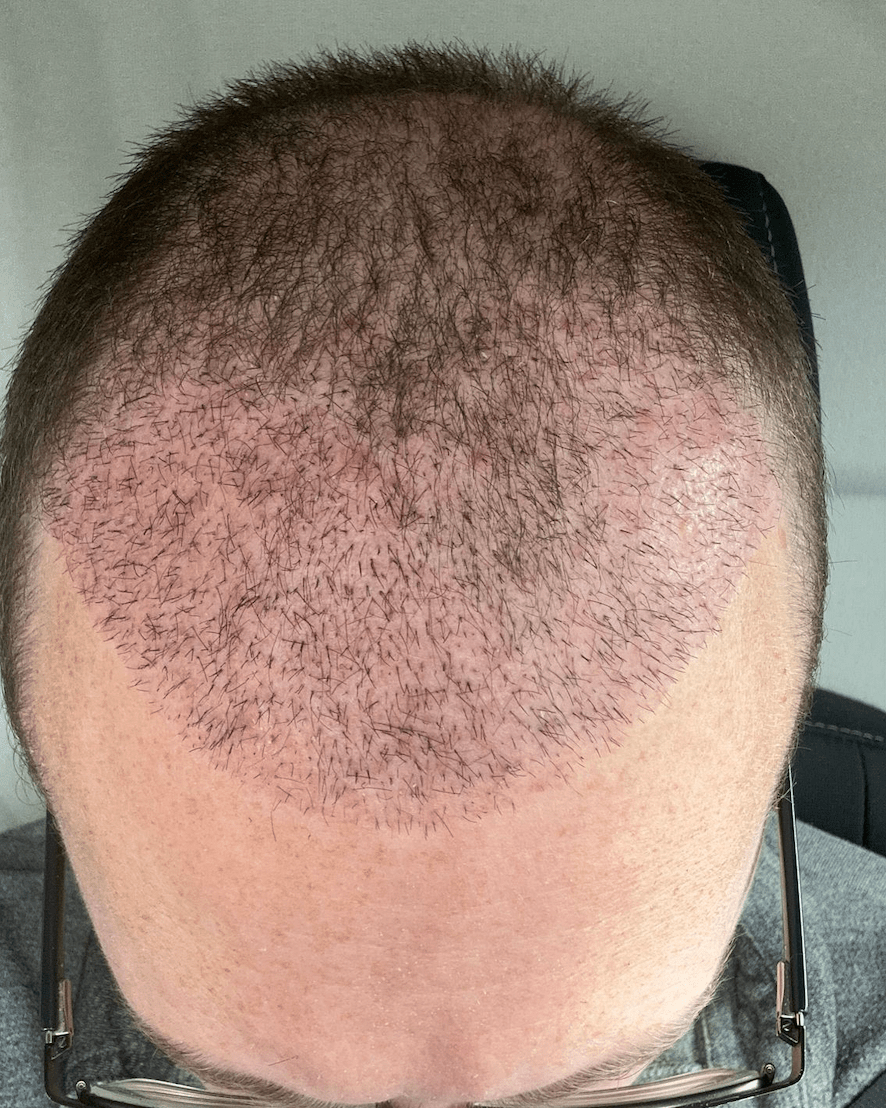 6 weeks after Surgery
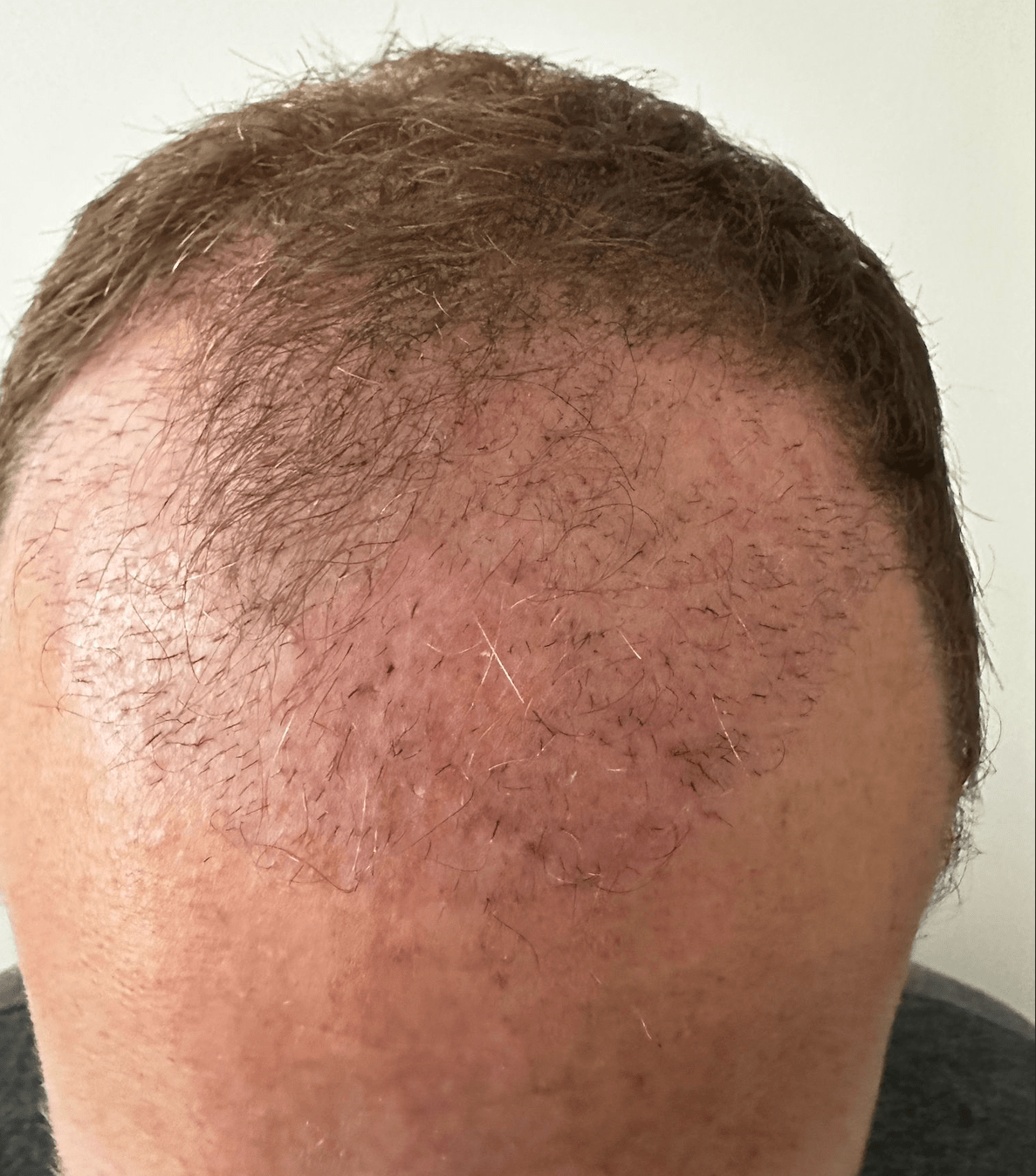 3 months after Surgery
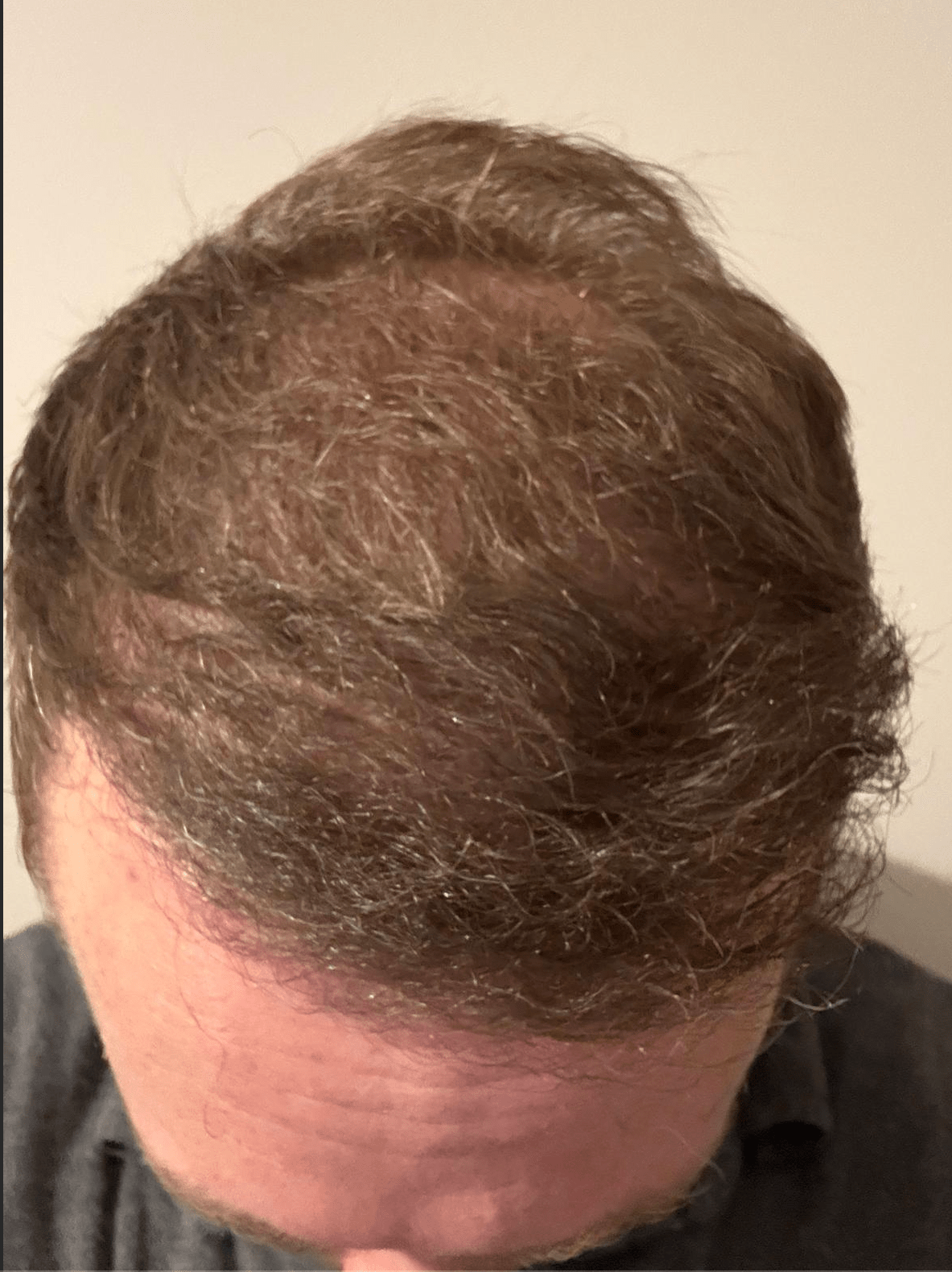 10 months after Surgery
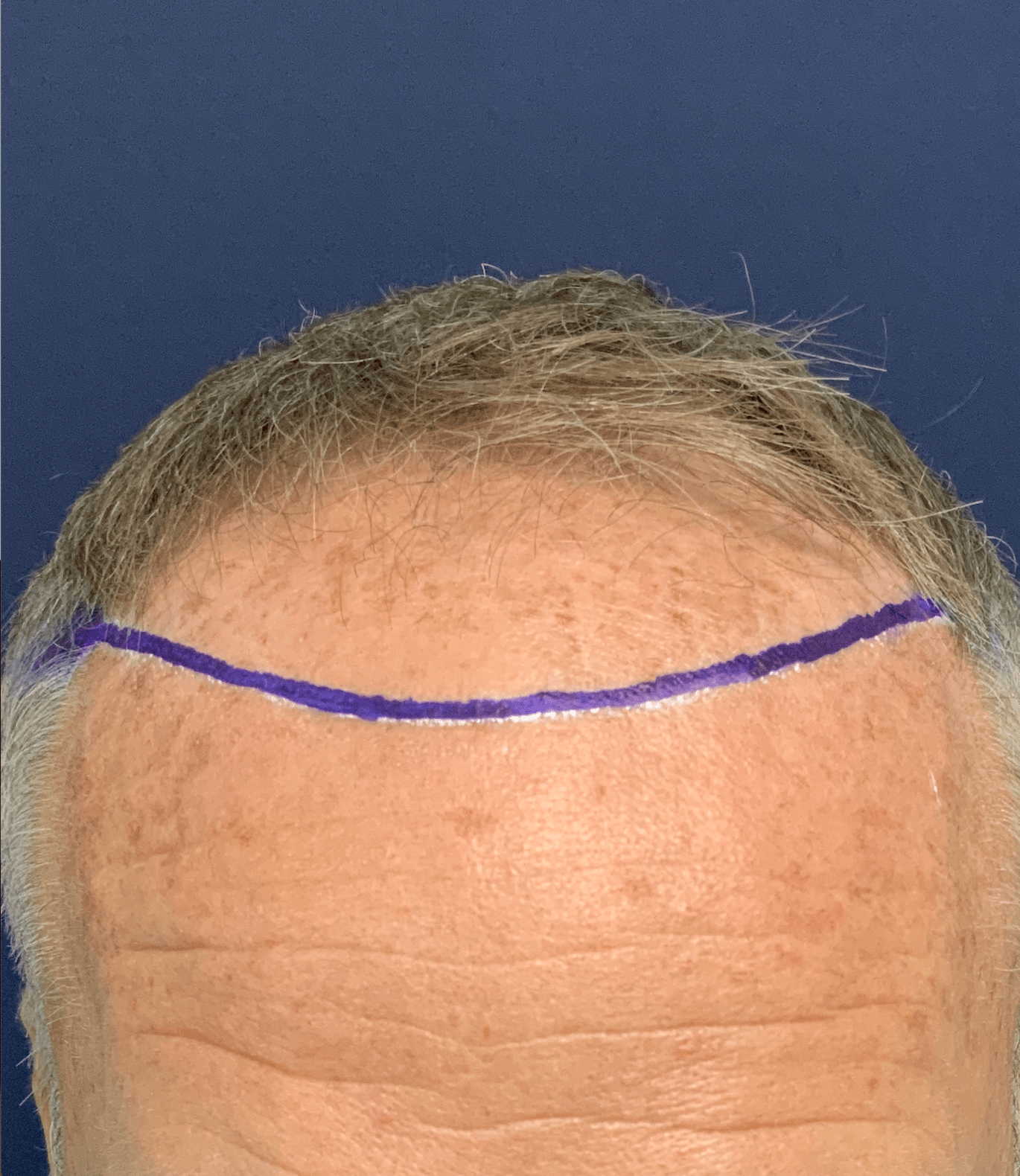 Before the surgery
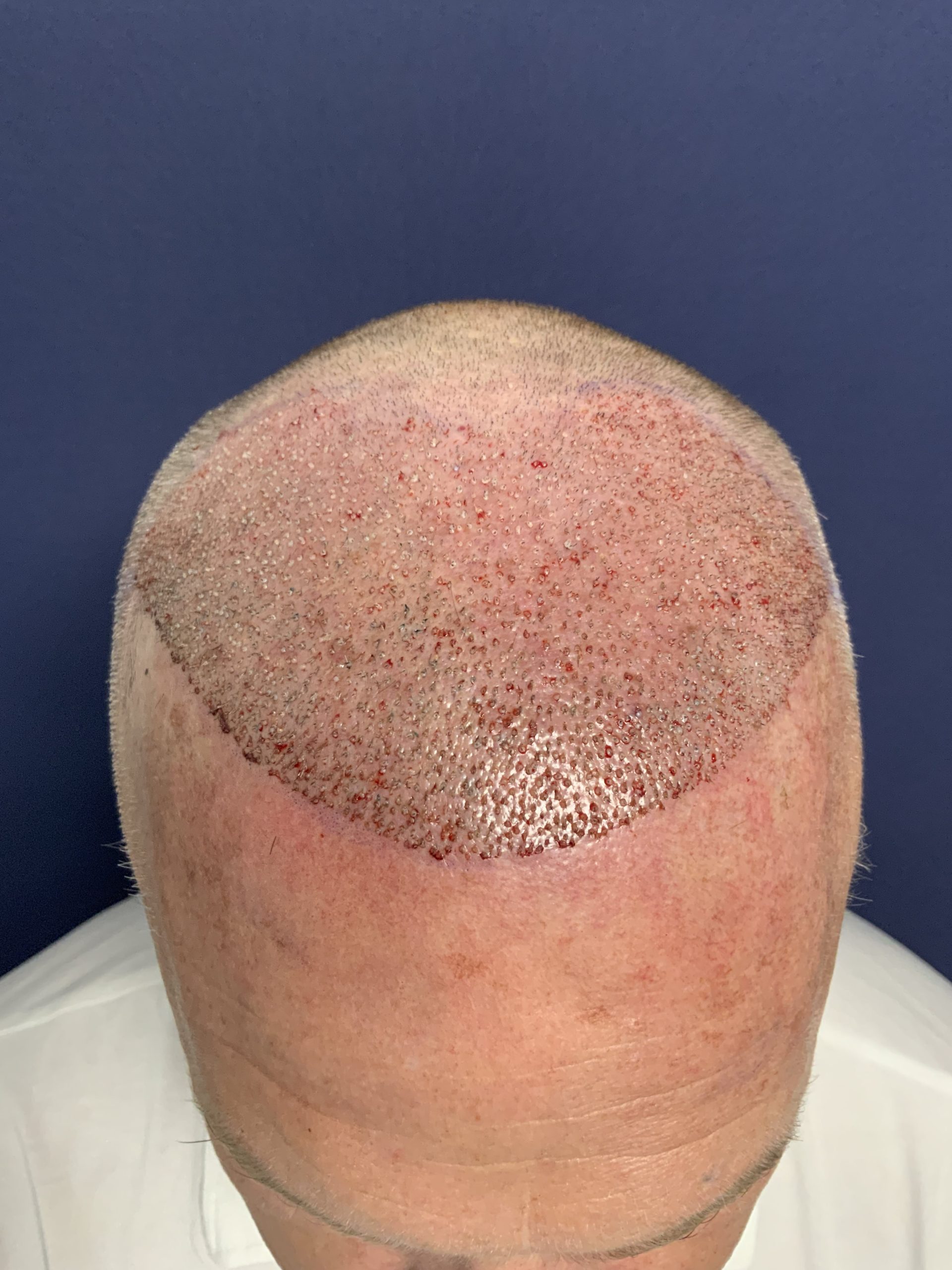 Day of the Surgery
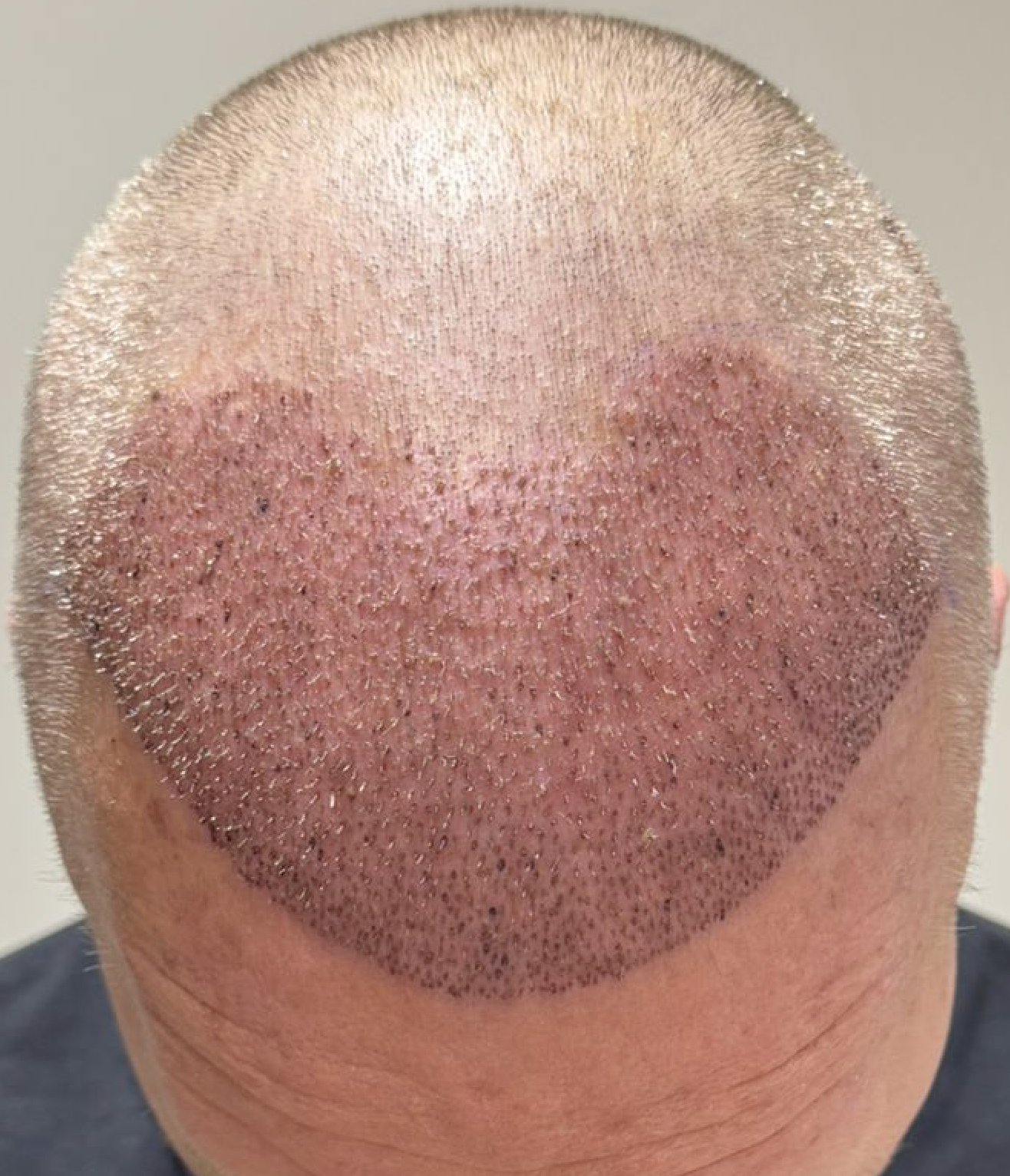 7 days After the Surgery
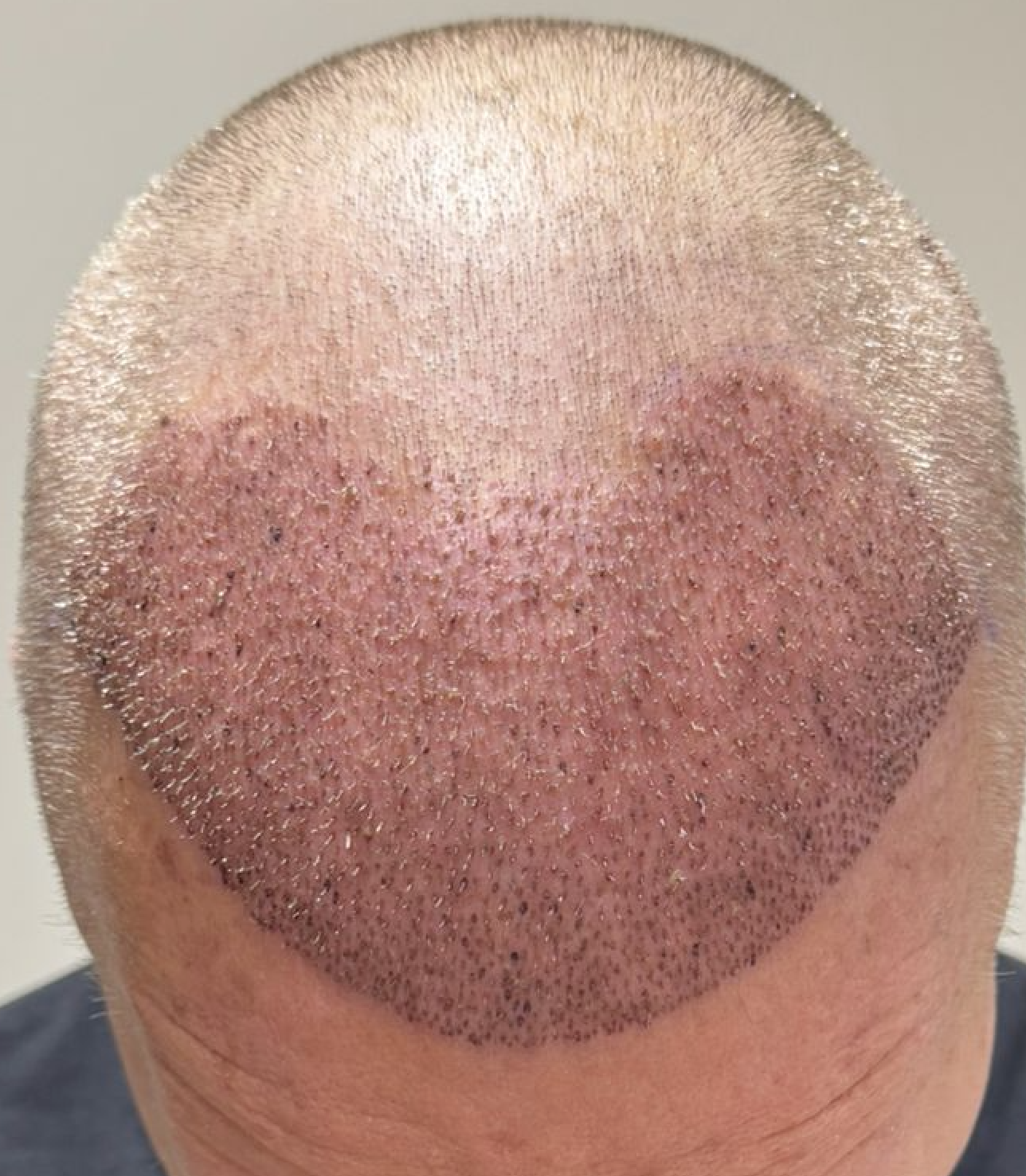 10 days After the Surgery
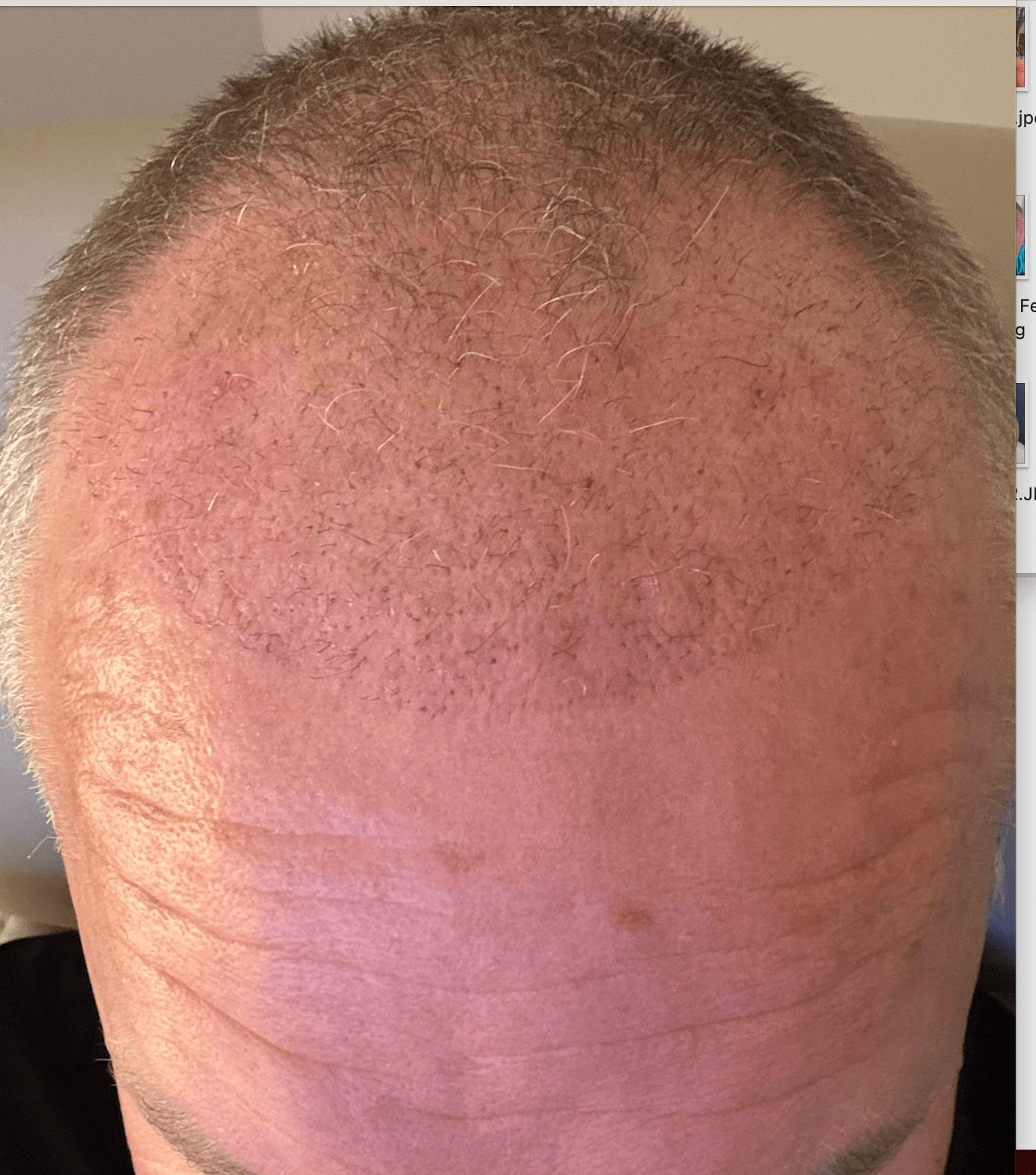 30 days After the Surgery
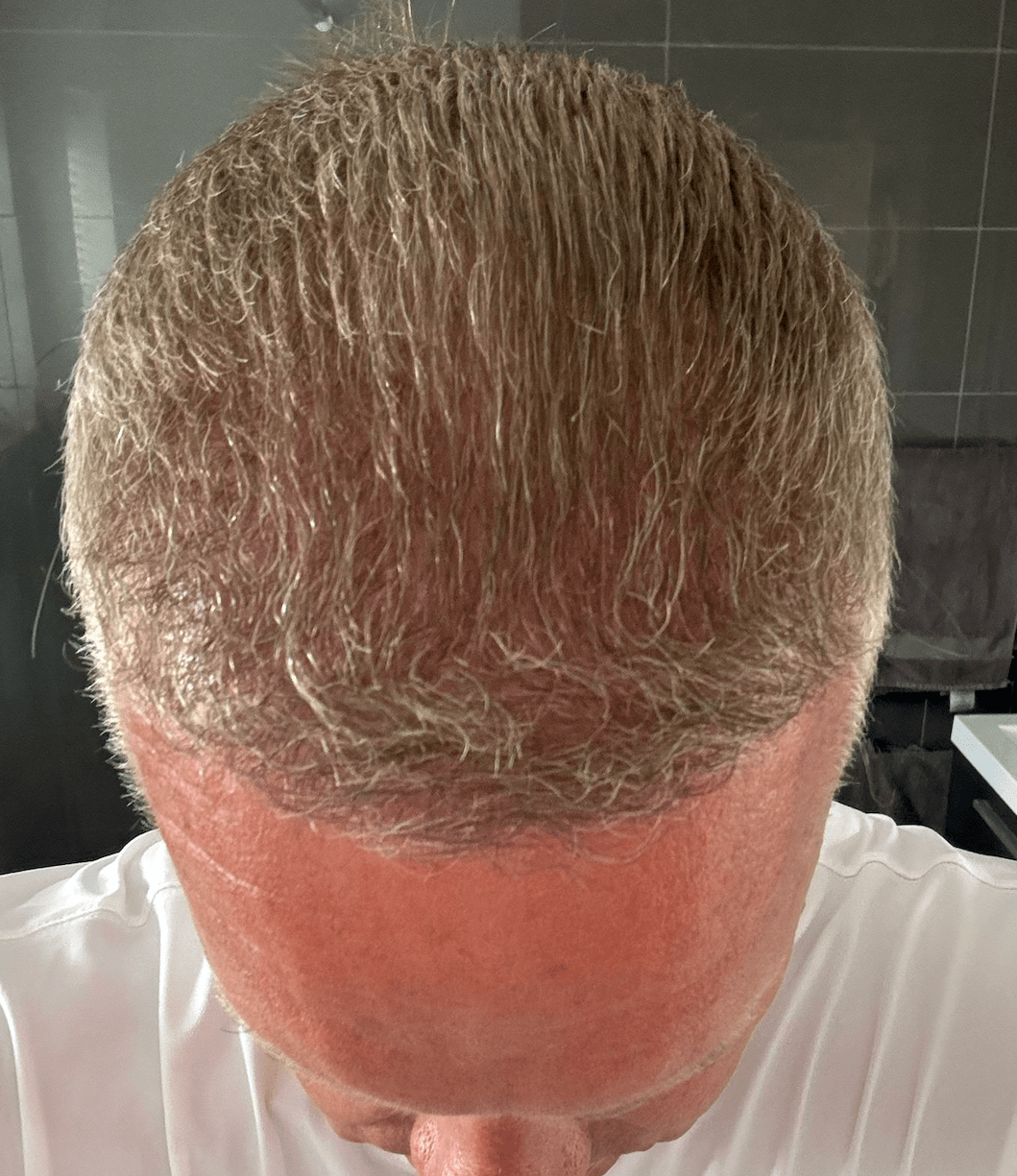 After 12 months
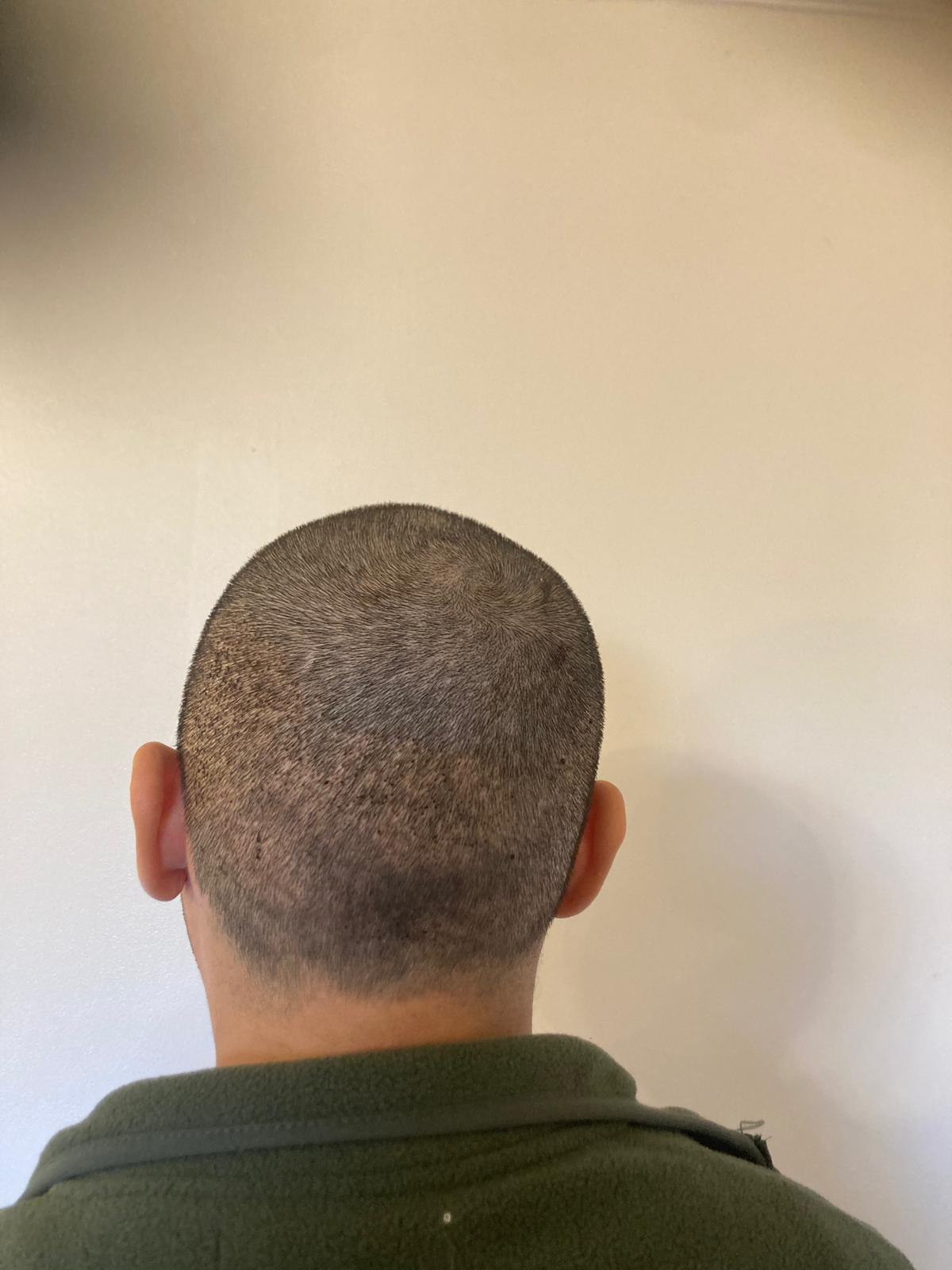
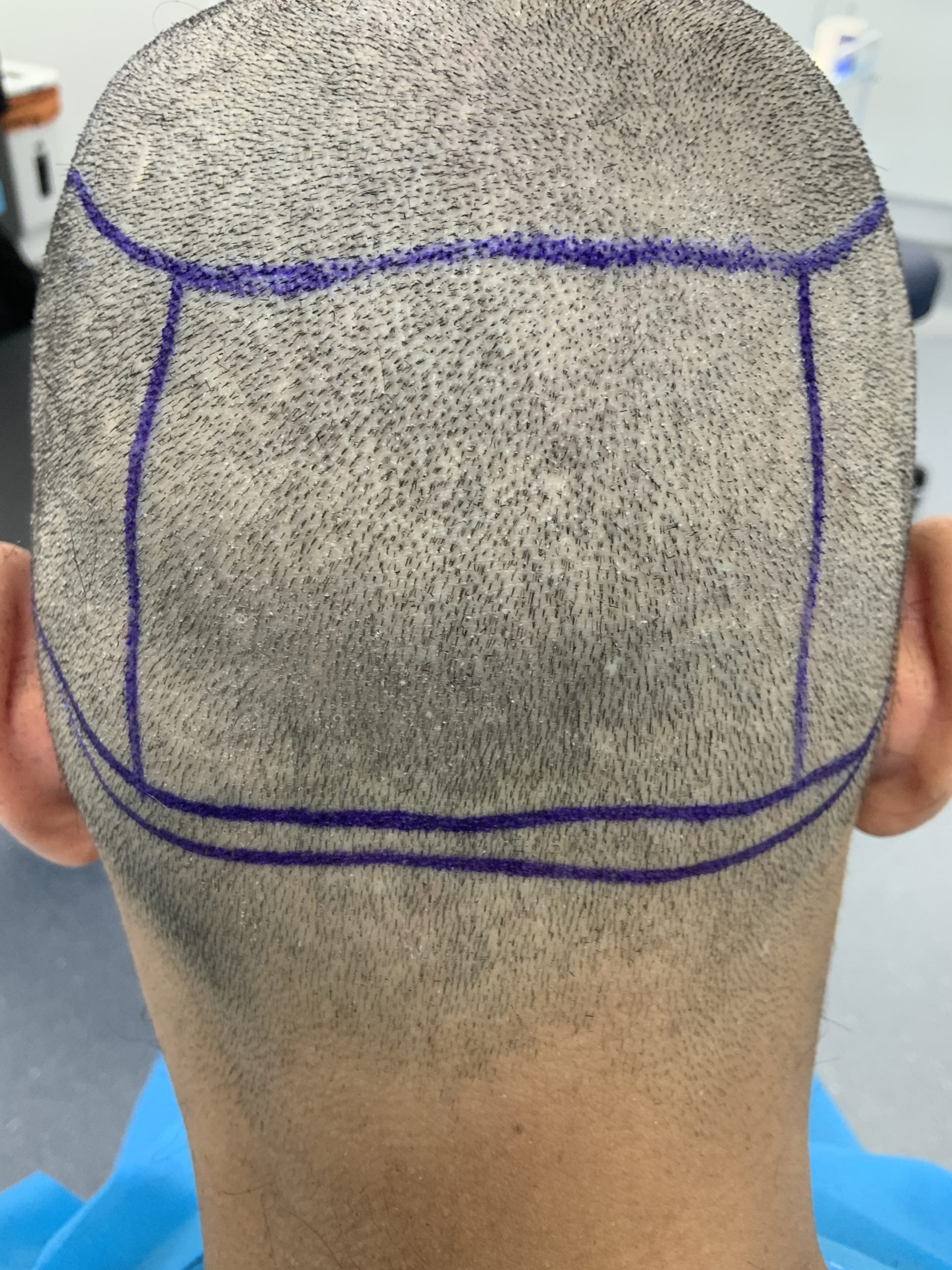 Before the surgery
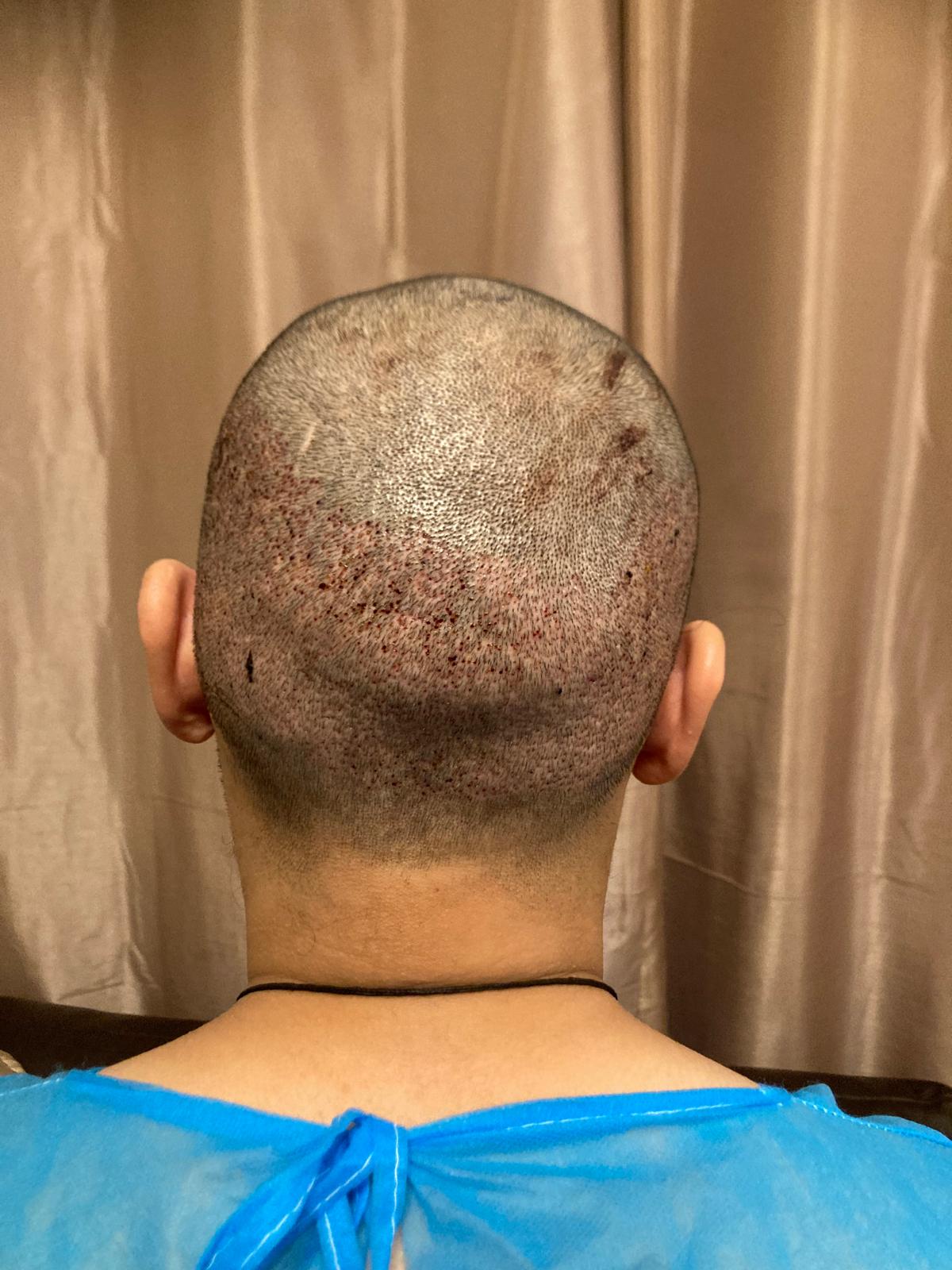 After 2 Days of Surgery
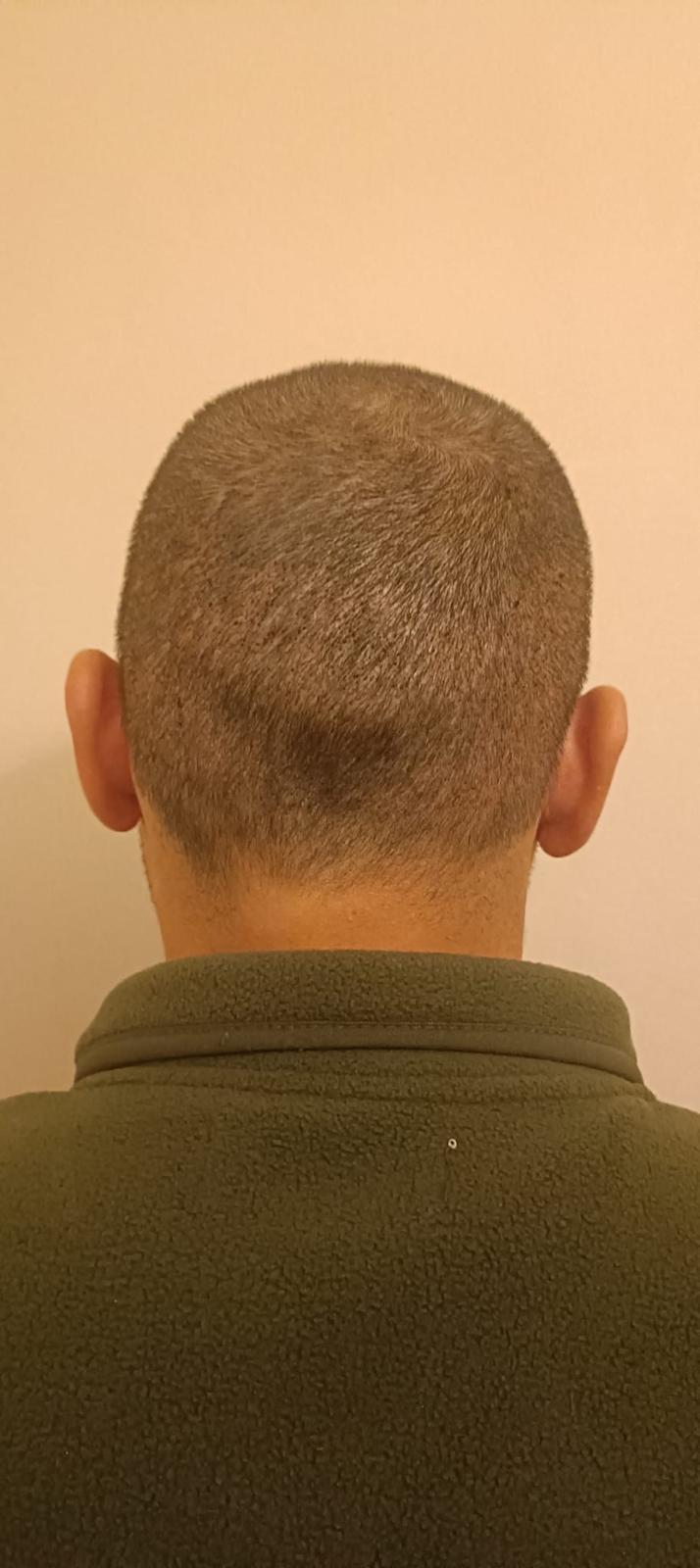
 After 4 Days of Surgery
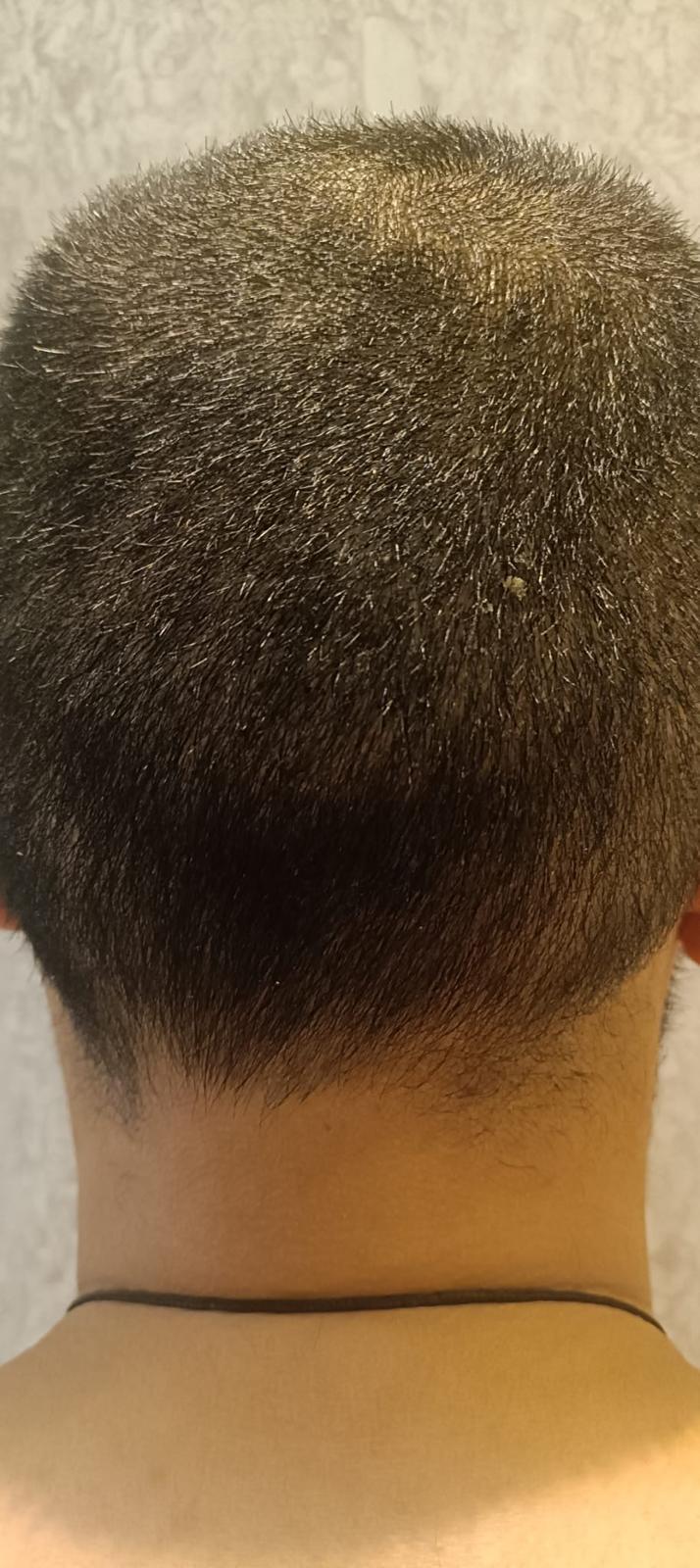
 After 8 Days of Surgery
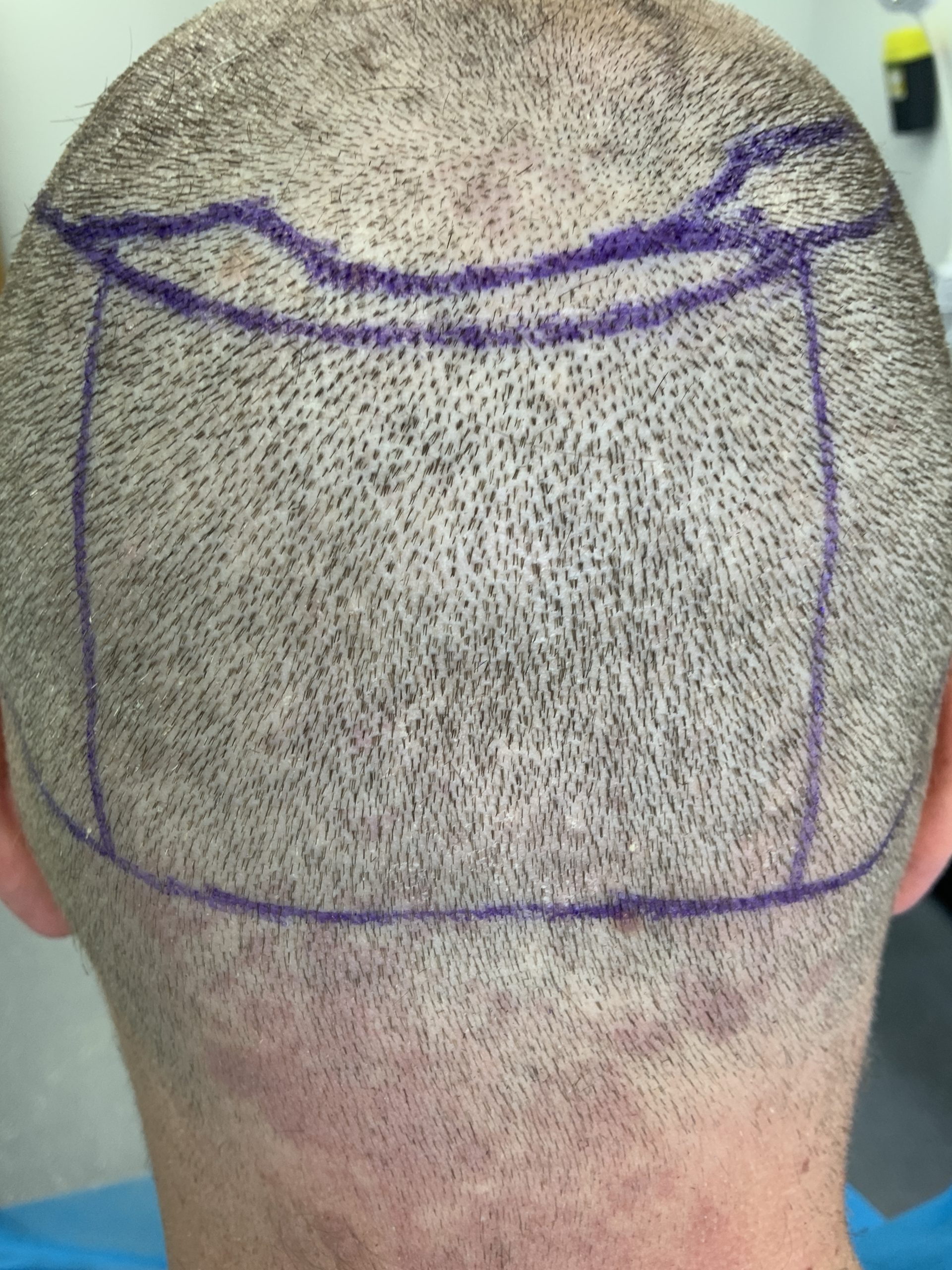
 After 28 Days of Surgery
 Before the surgery
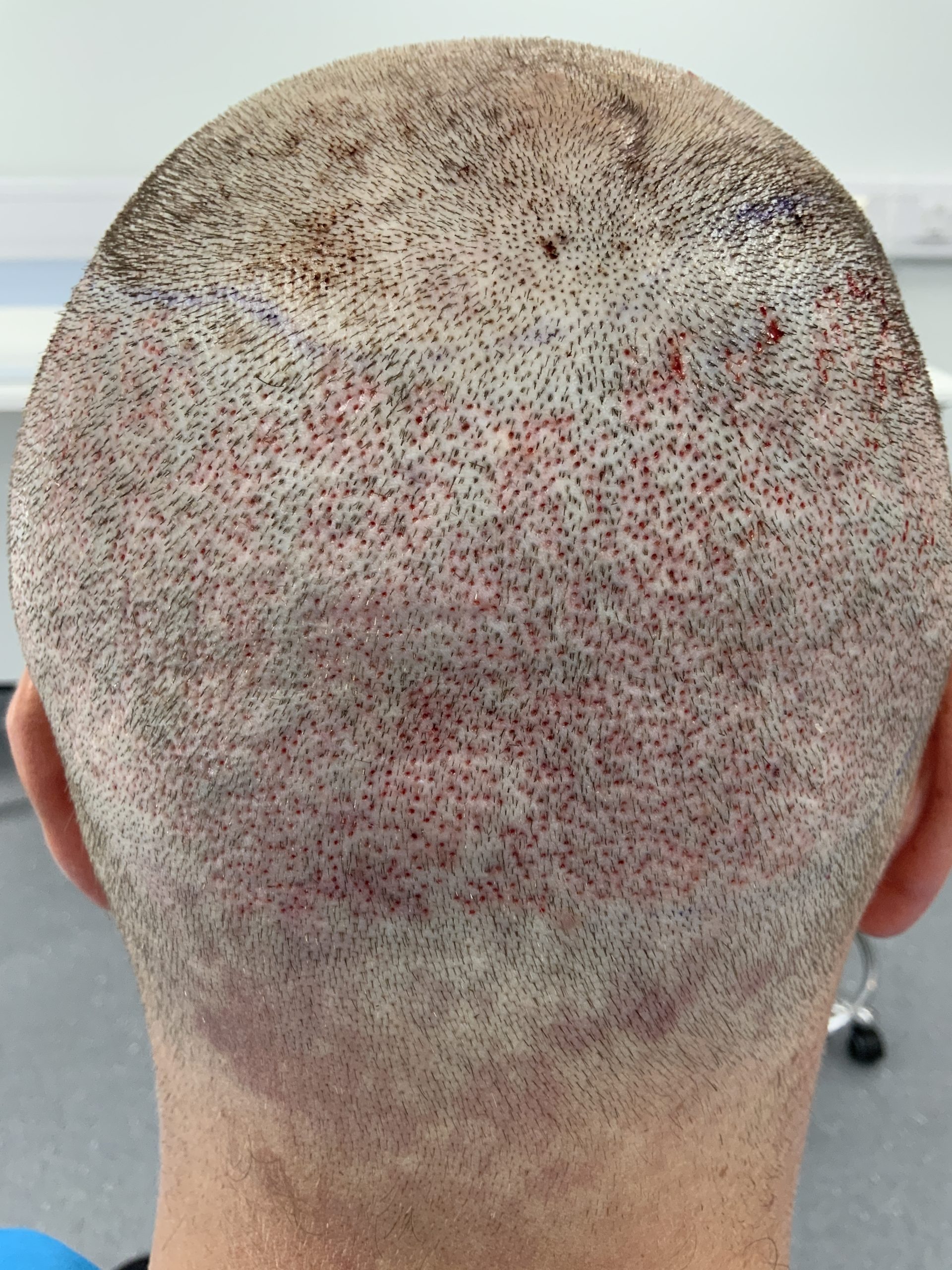 Day of the surgery 1
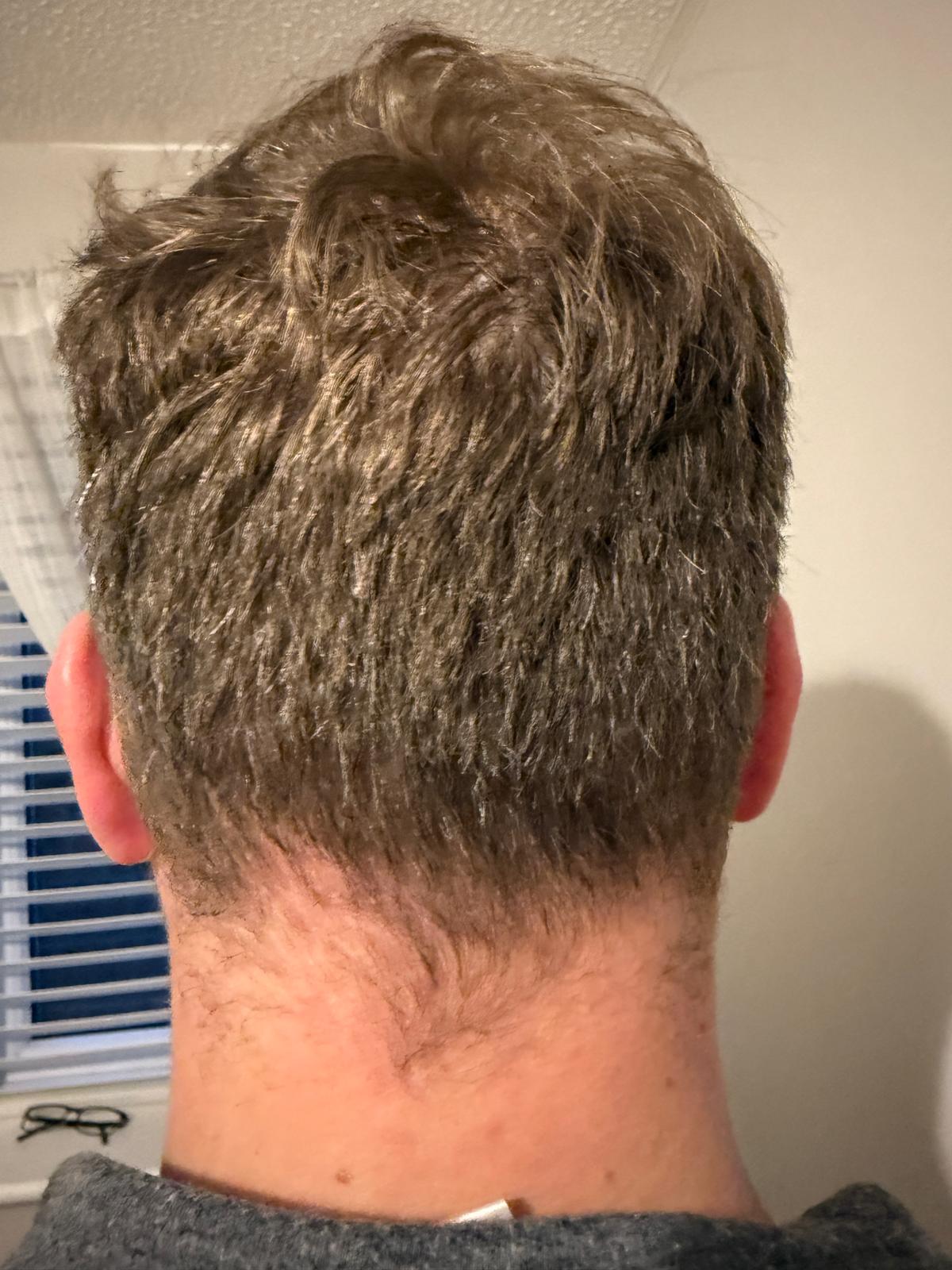 12 Months after the surgery
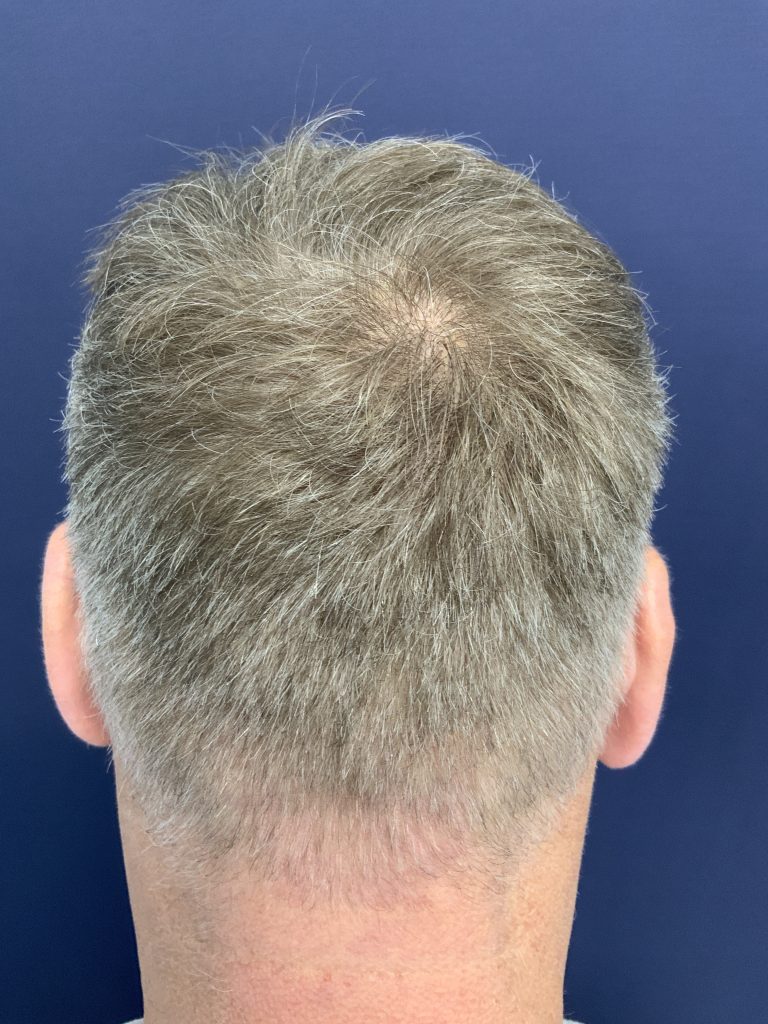 Before Donor
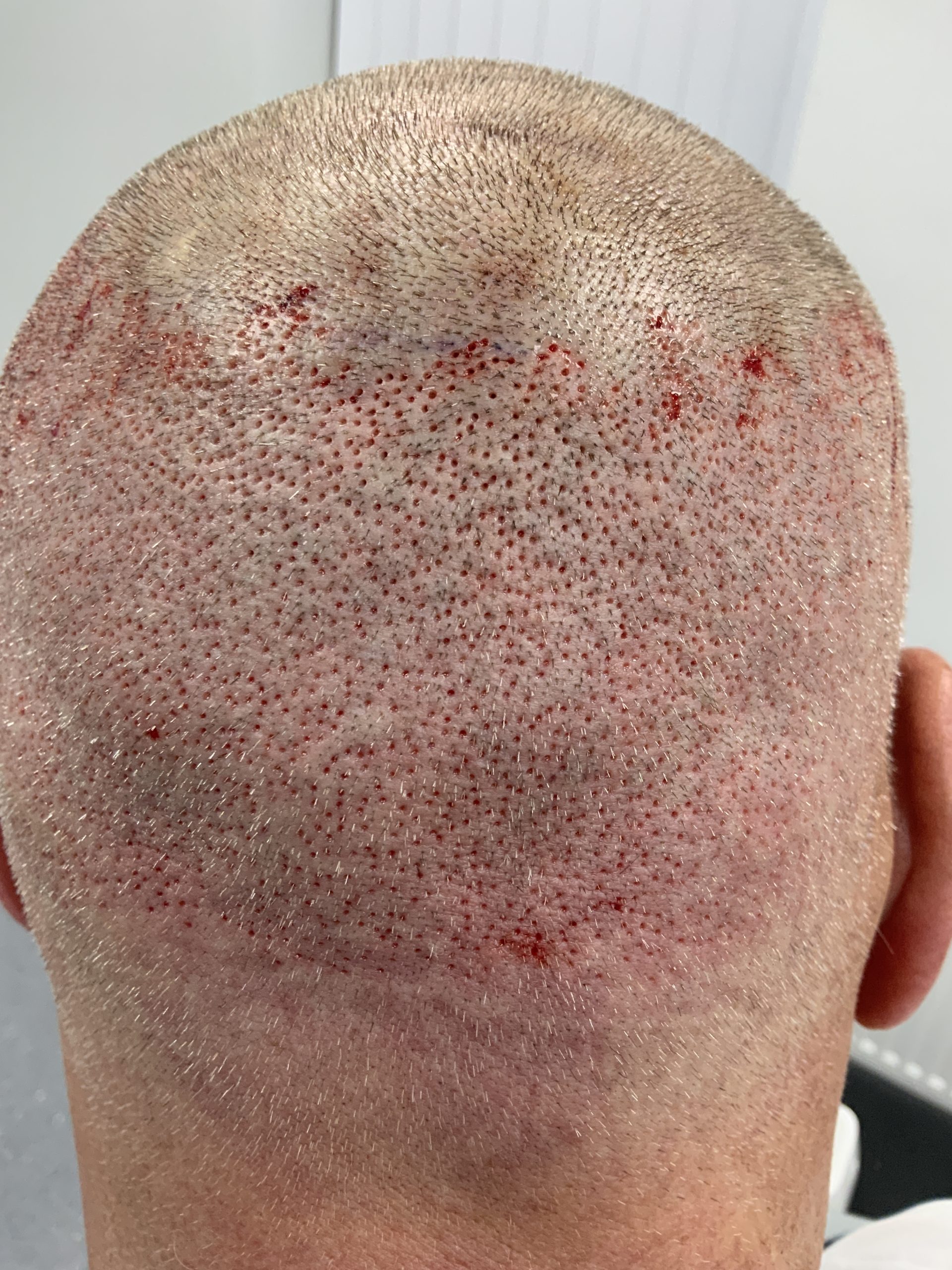 Day 1
Day 1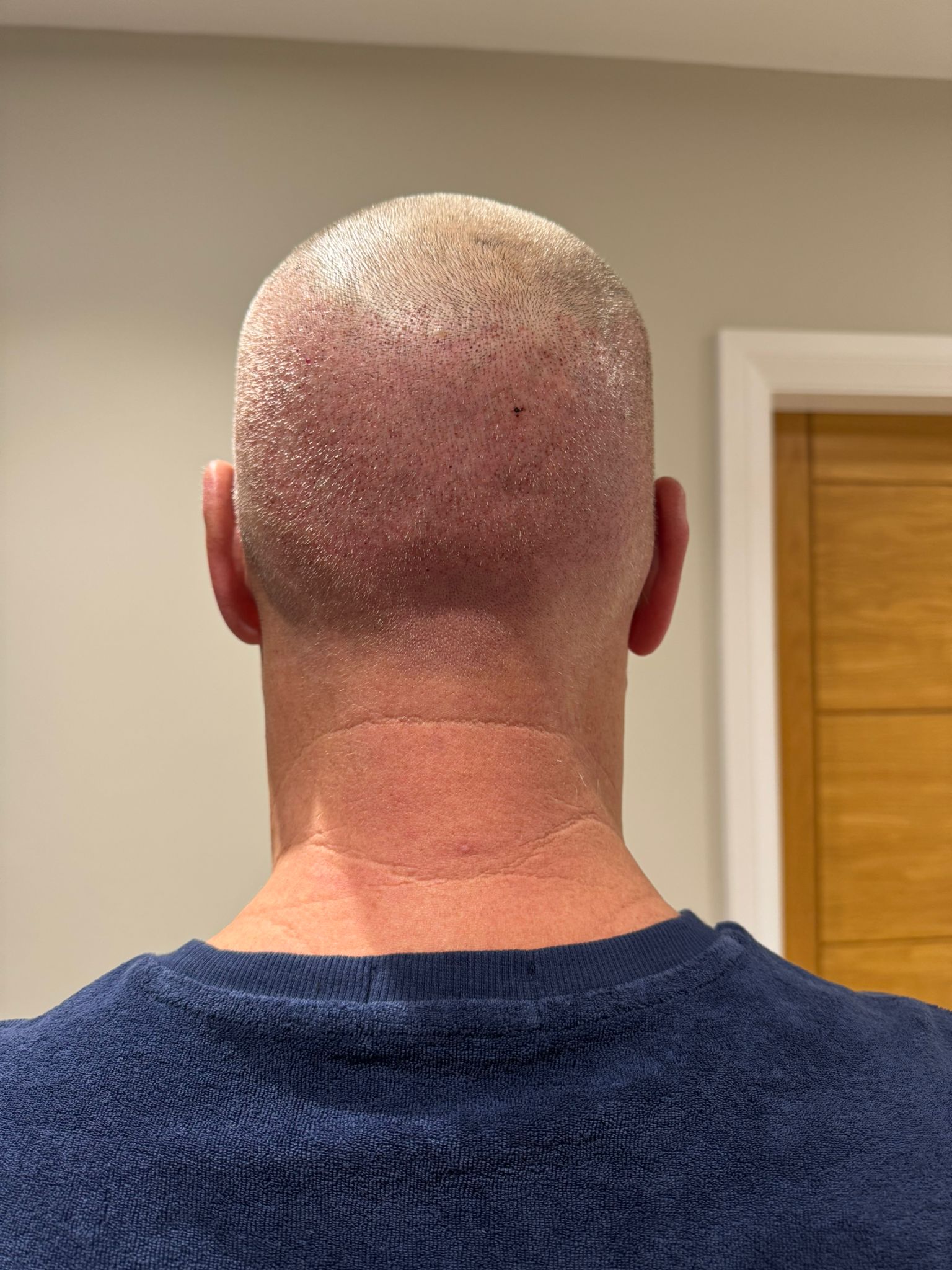 Day 7
Day 7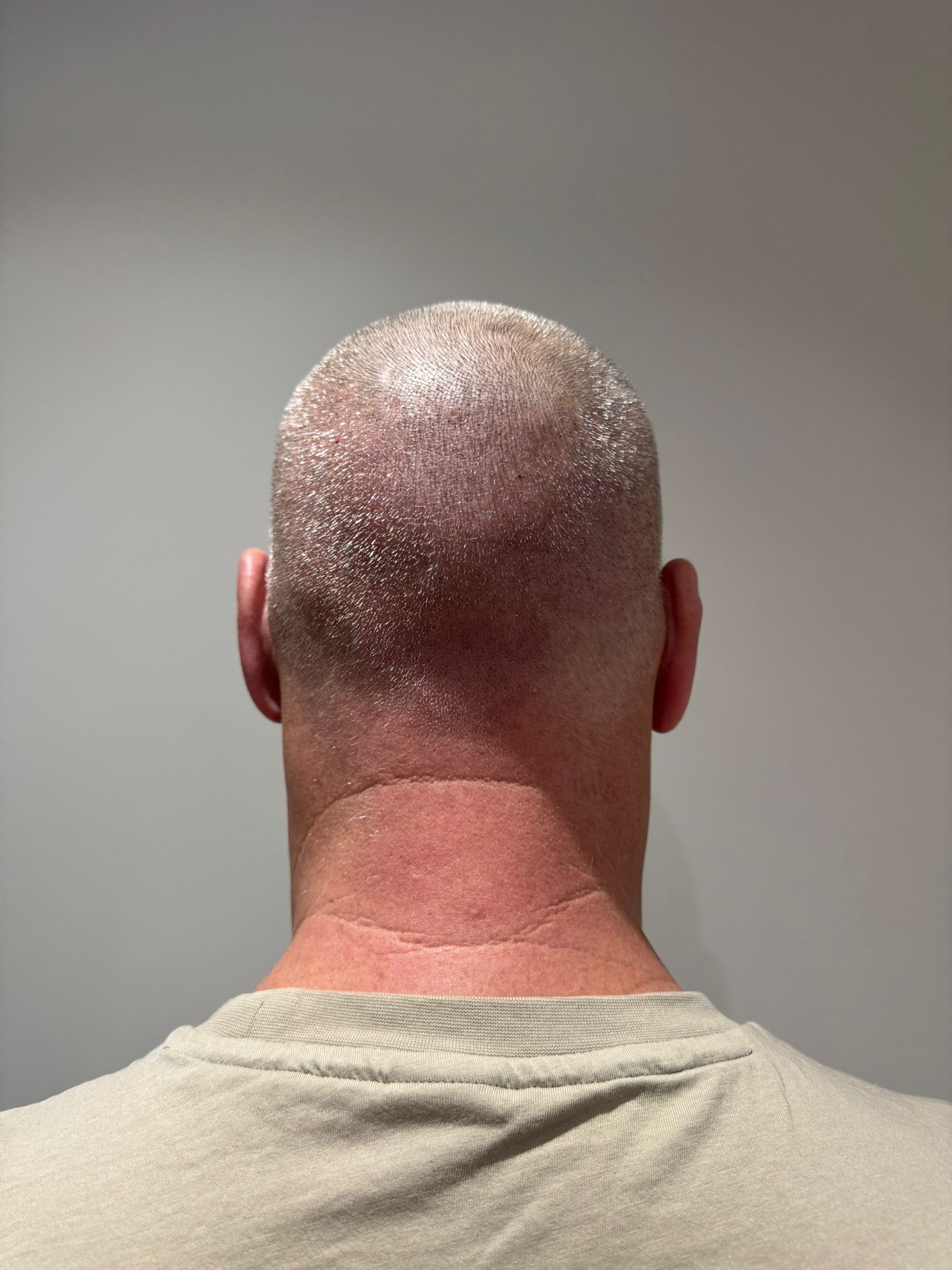 4 Weeks
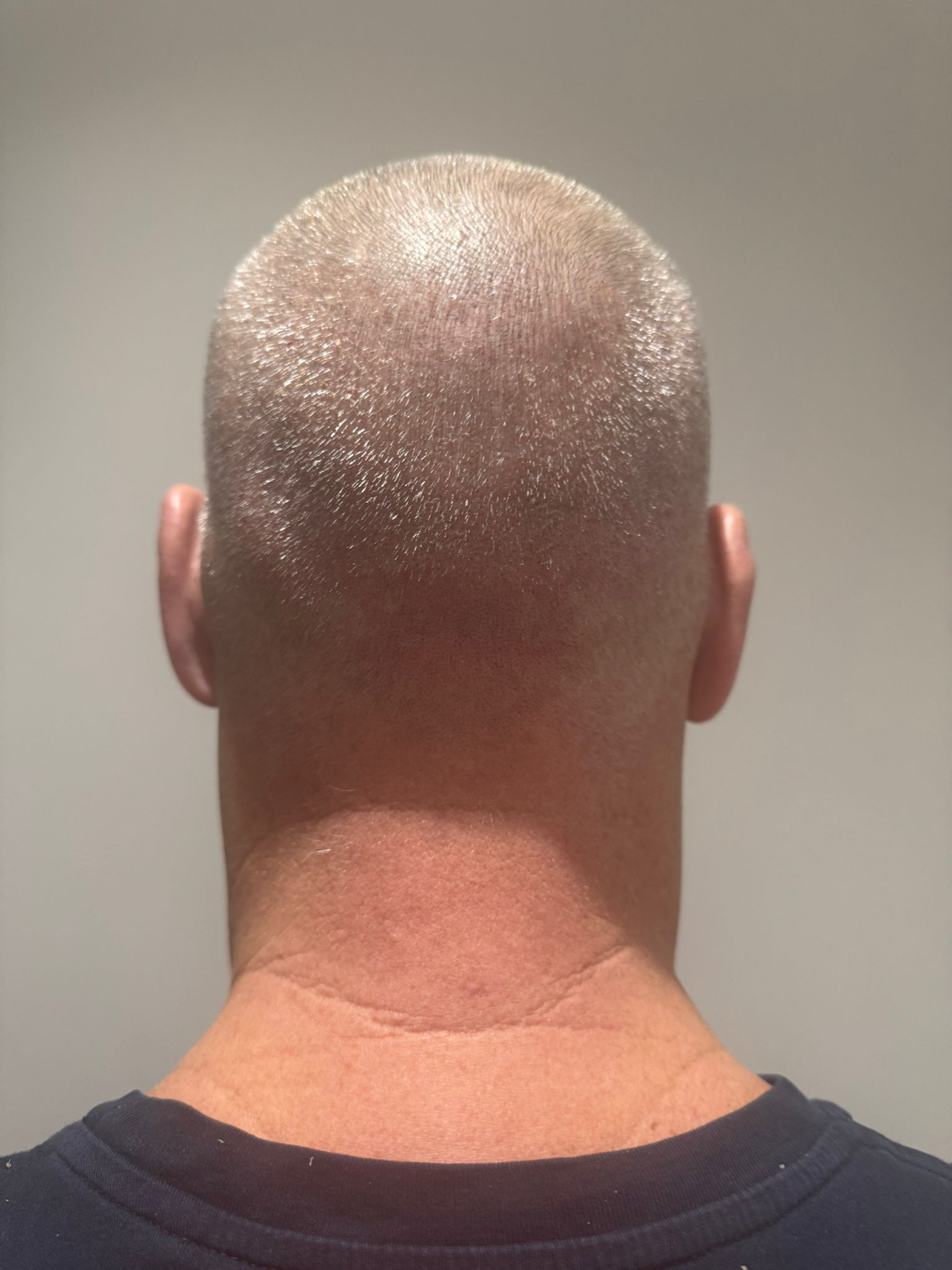 6 Weeks
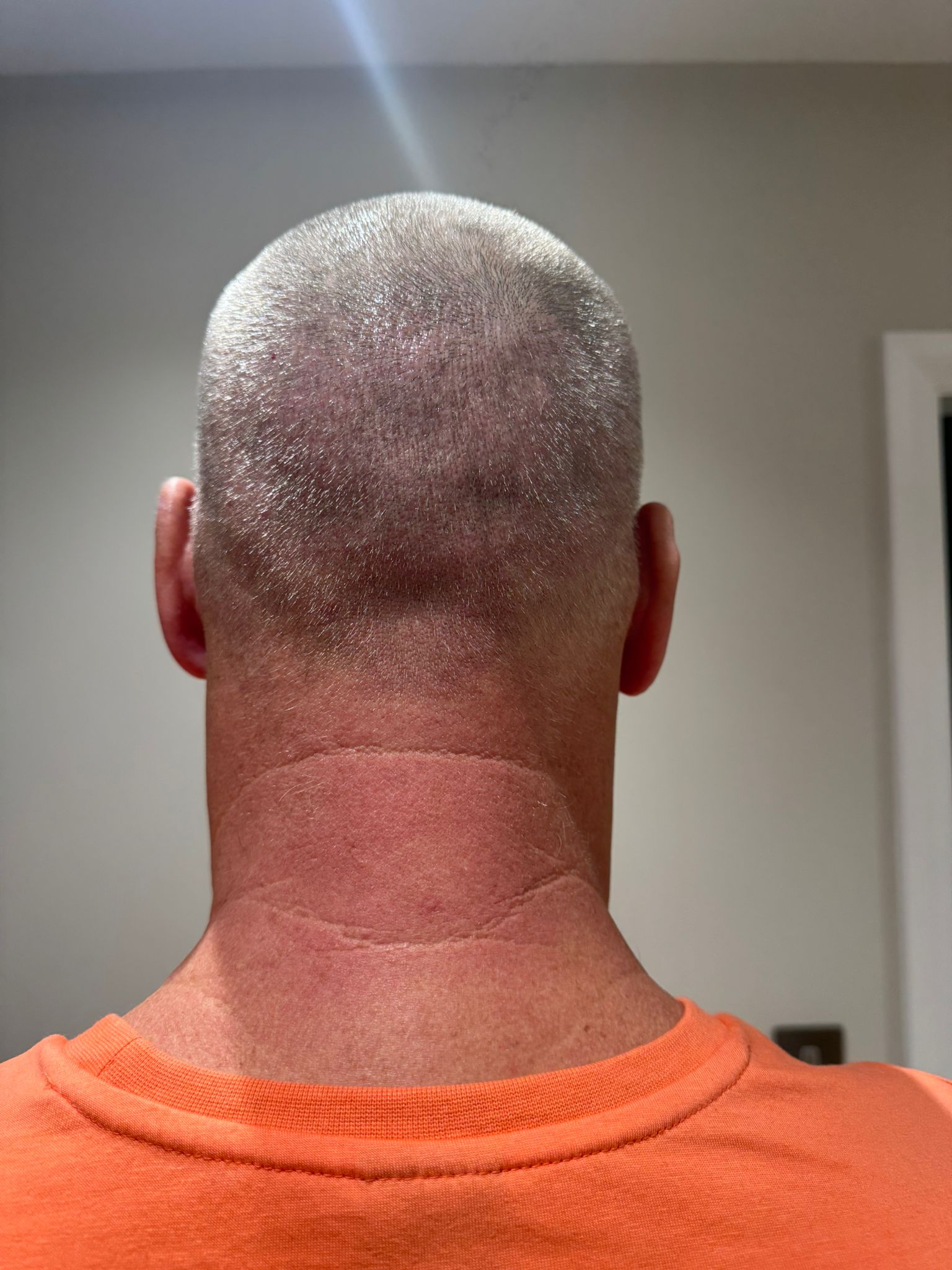 8 Weeks
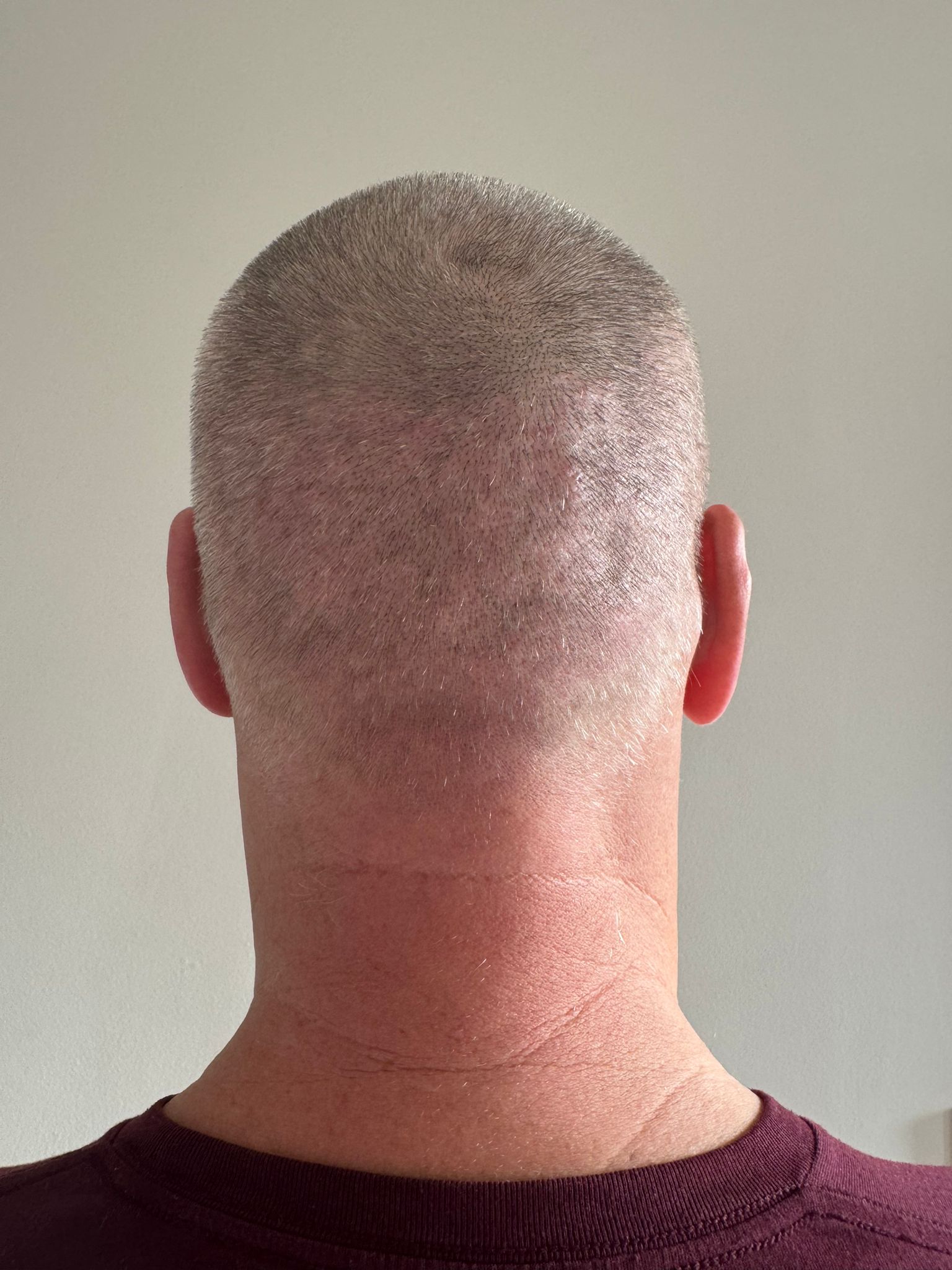 12 Weeks
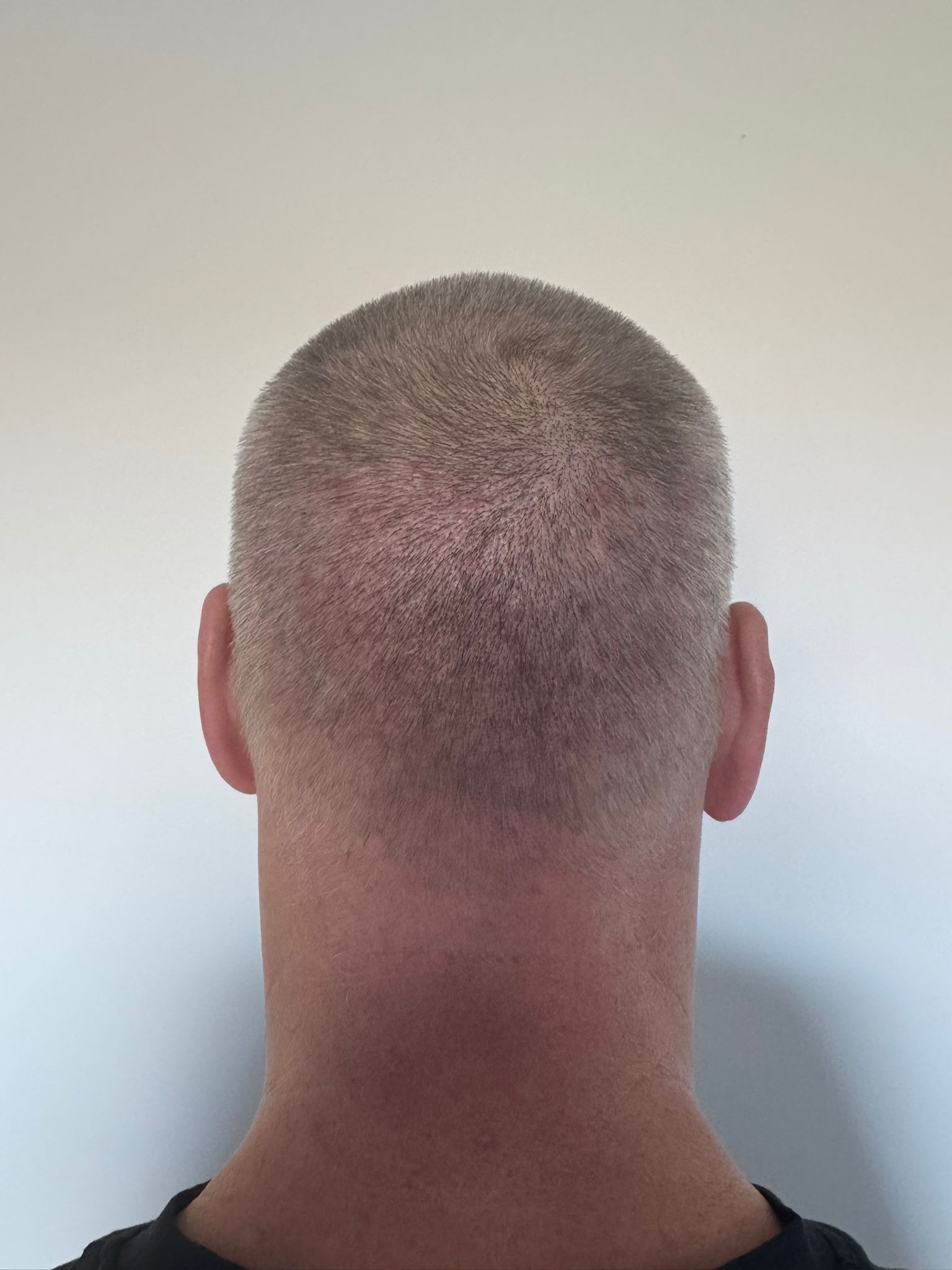 20 Weeks
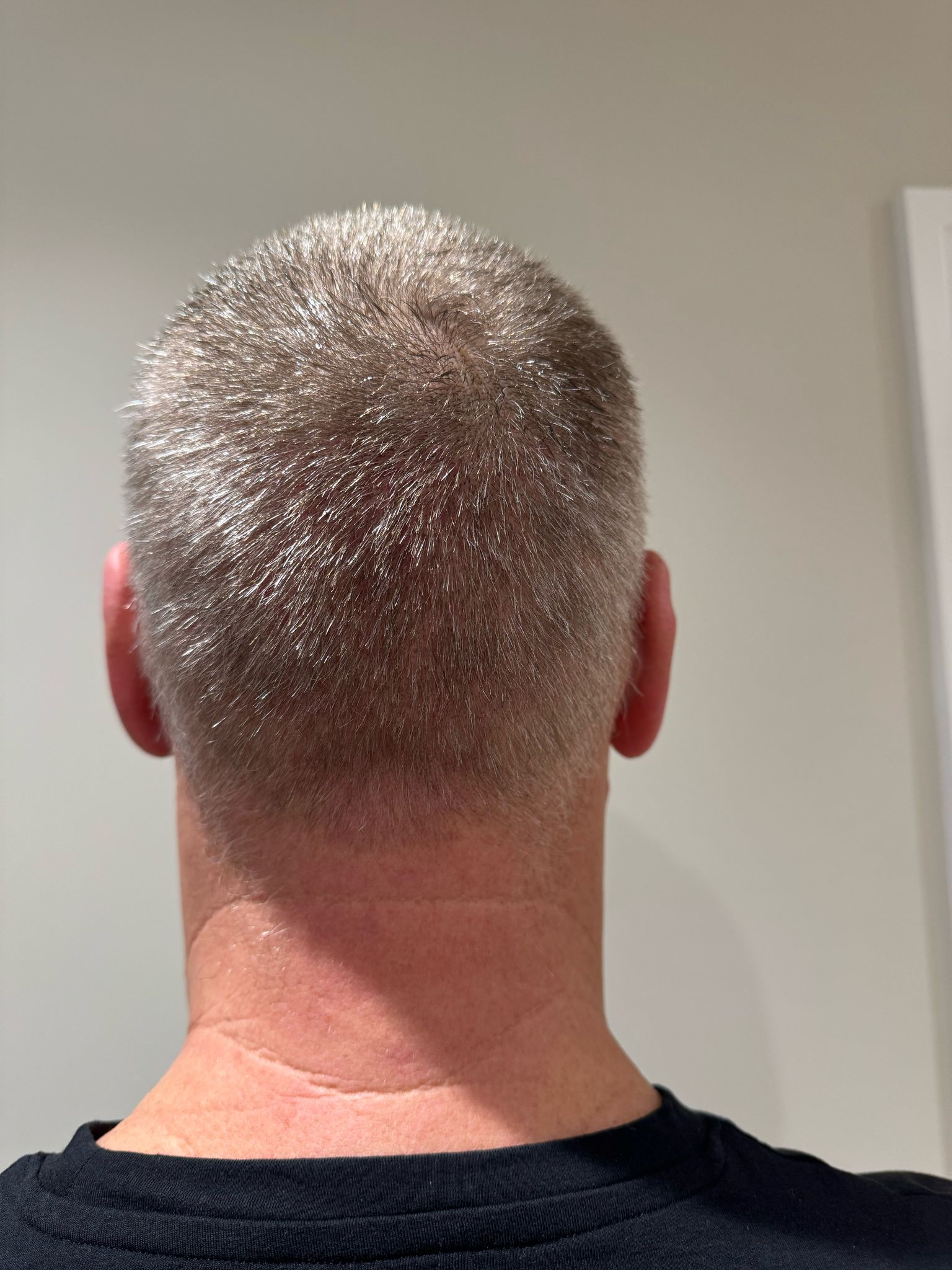 28 Weeks
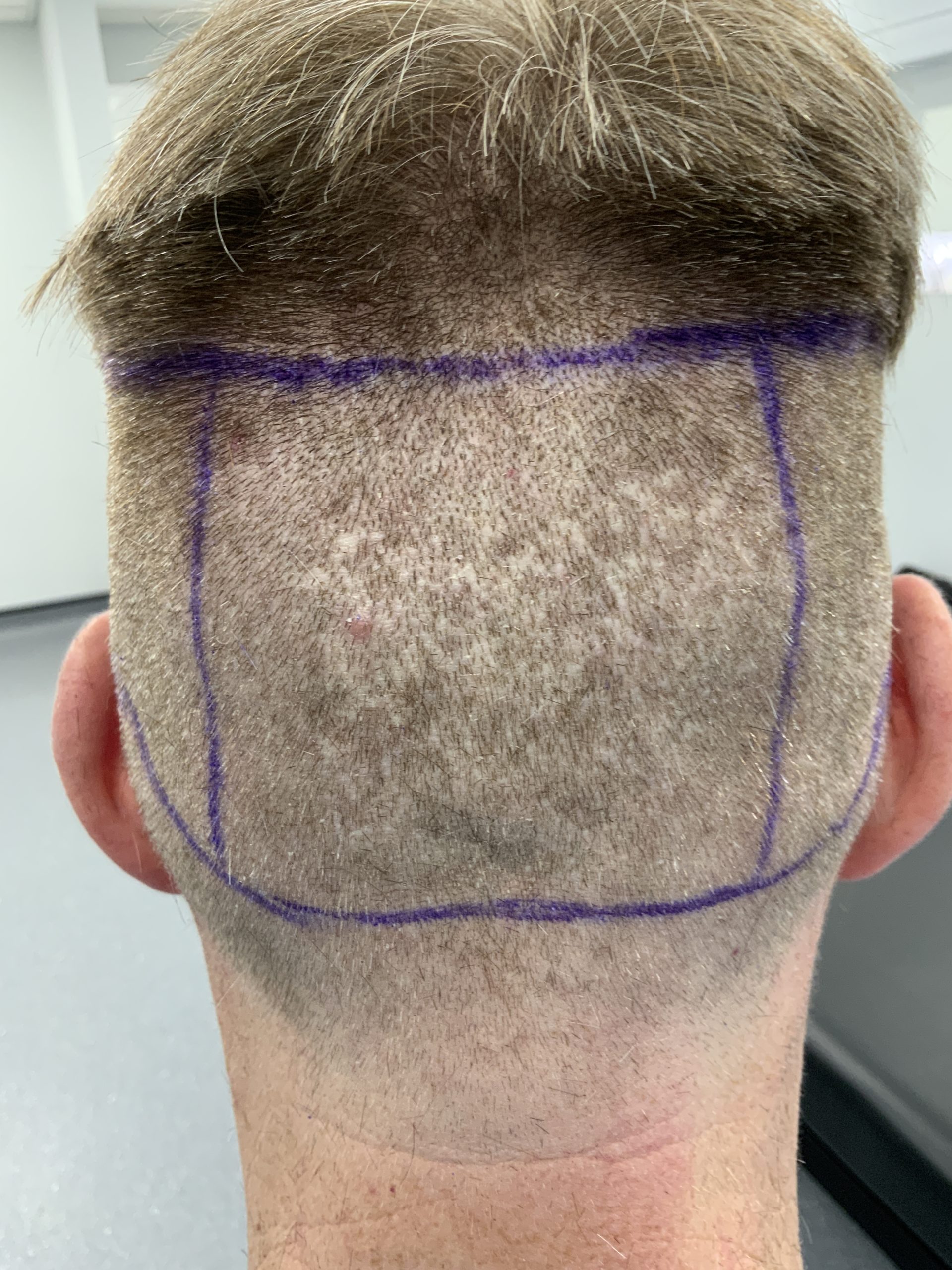 Before the surgery
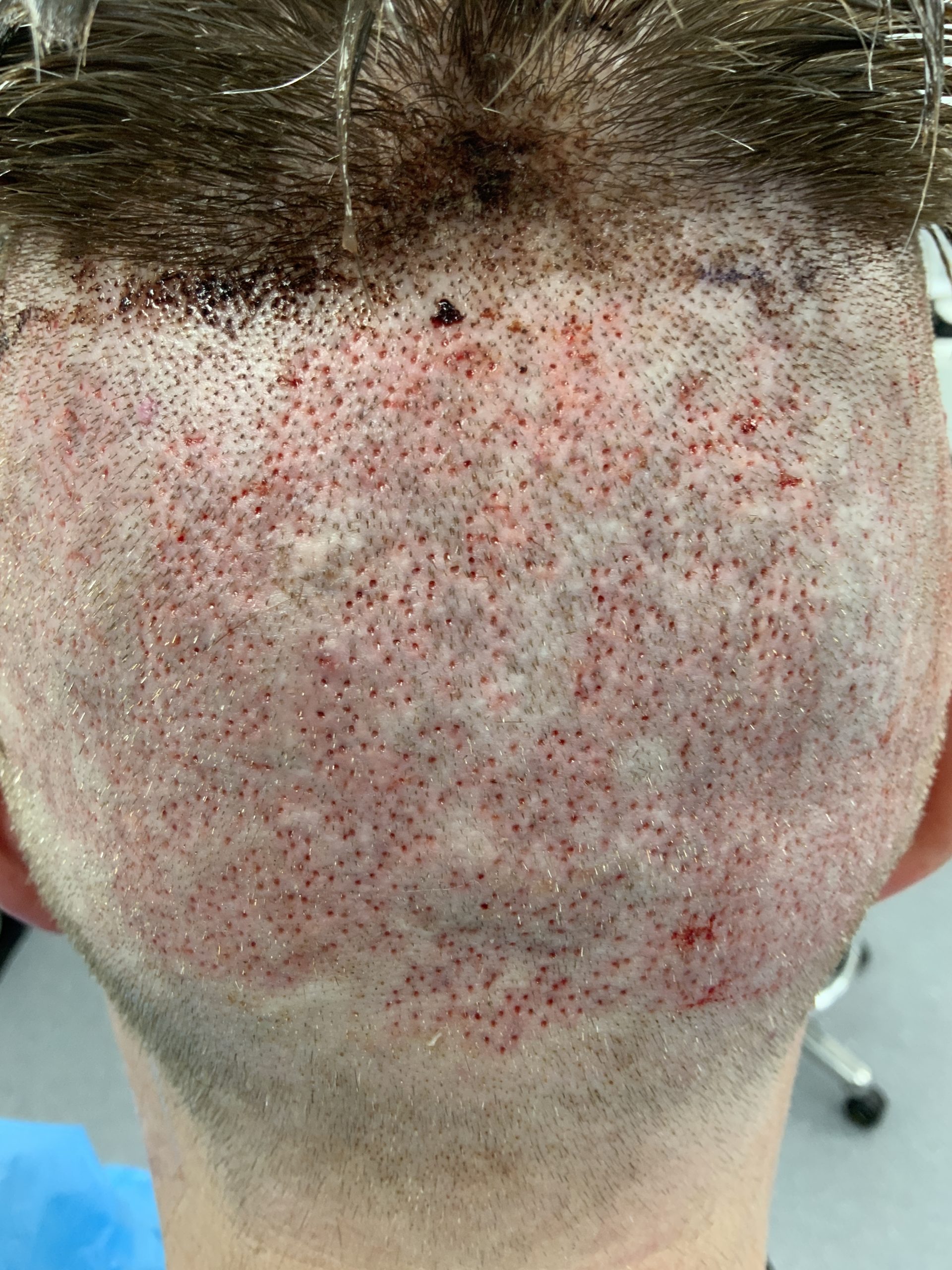 On the day of the surgery
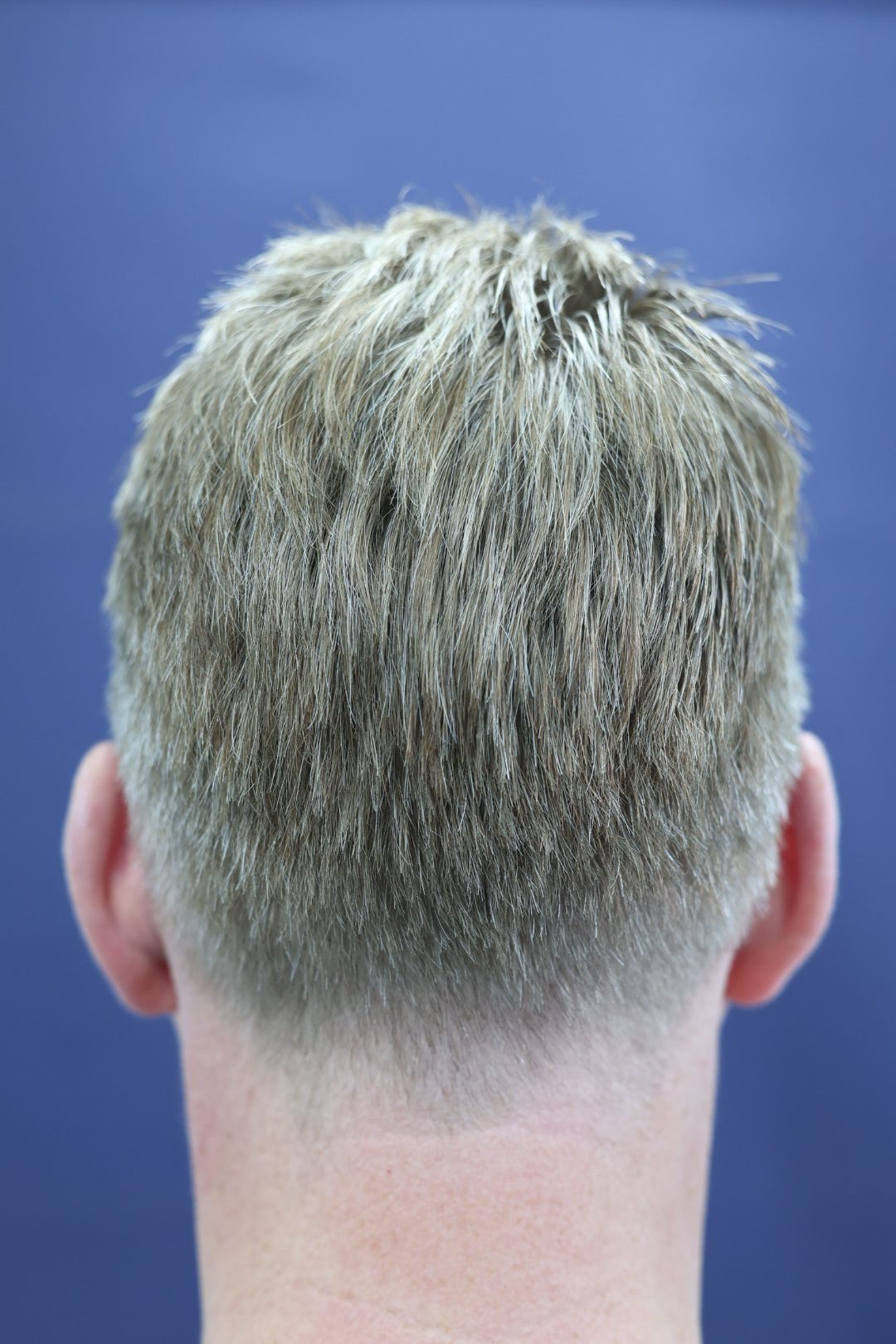 10 Months after the surgery
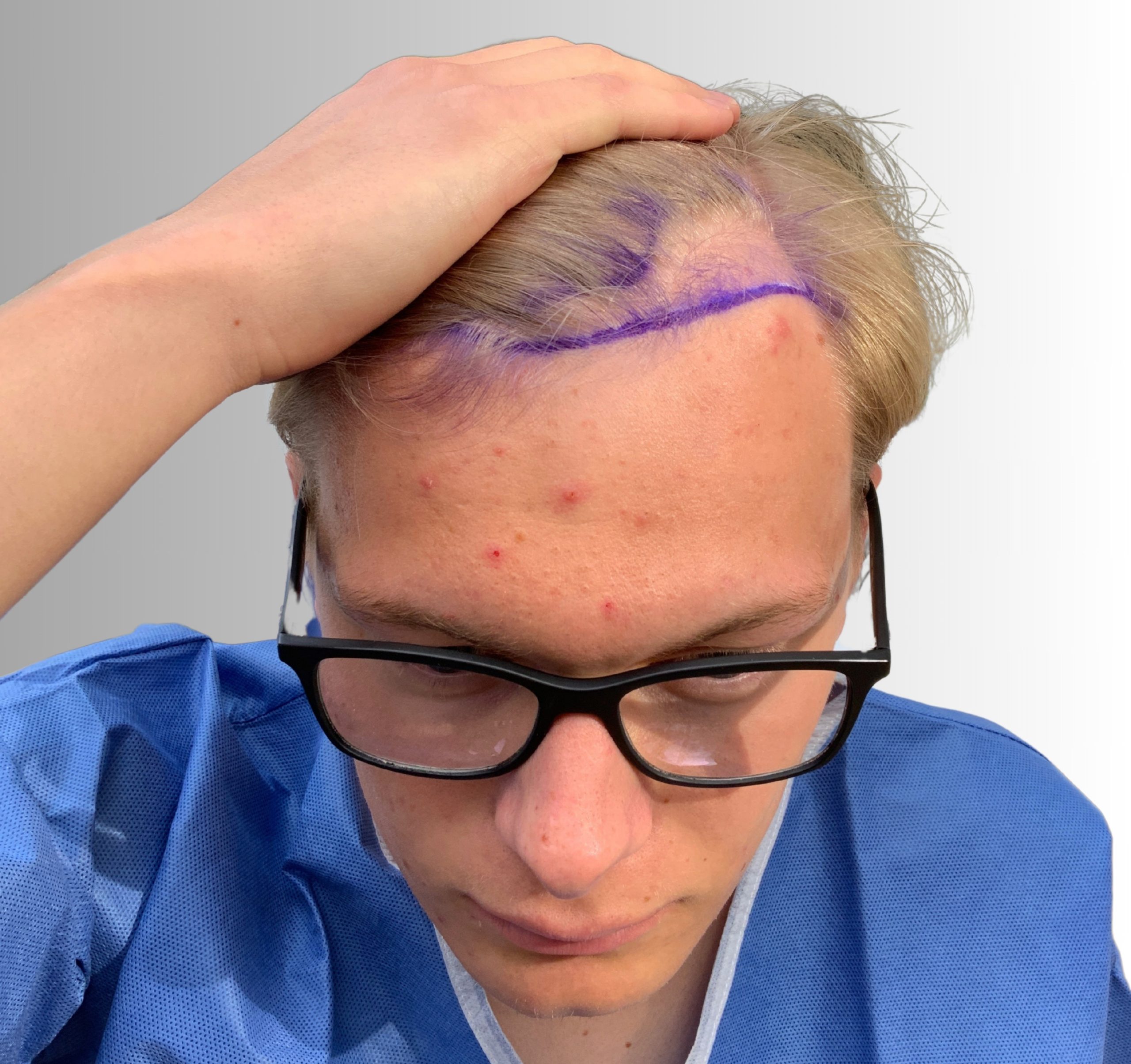 Before the surgery
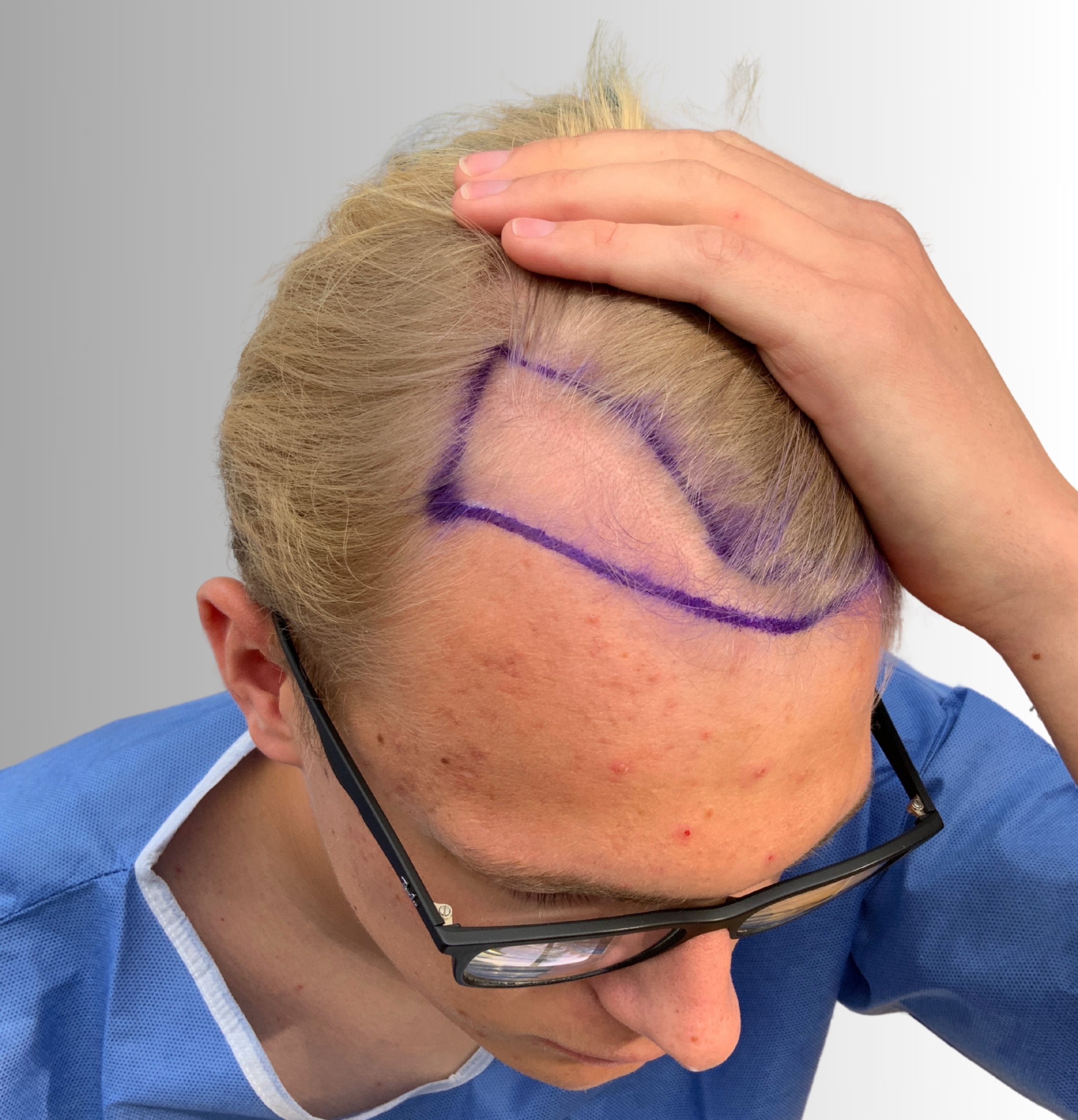 Before the surgery
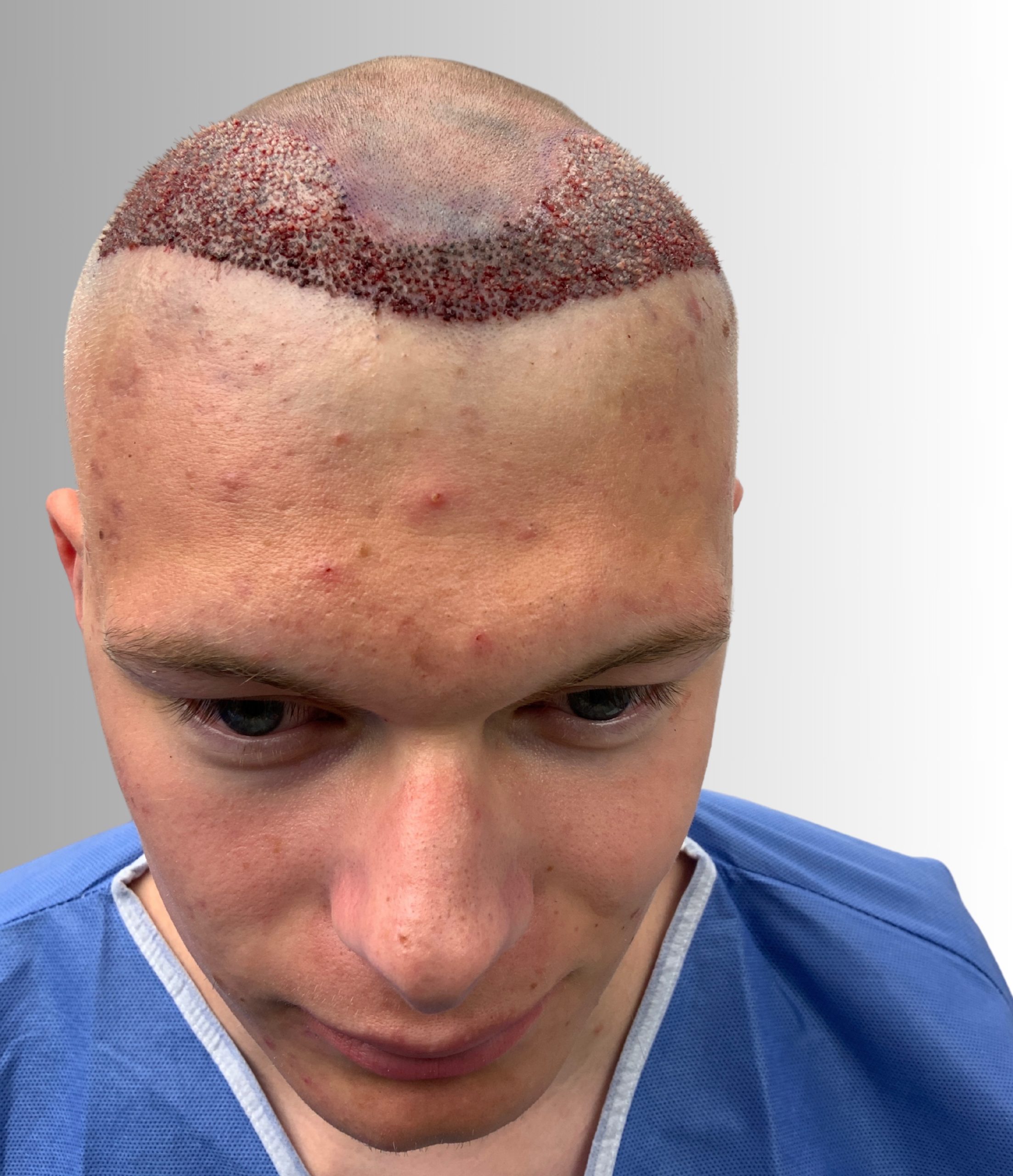 On the day of the surgery
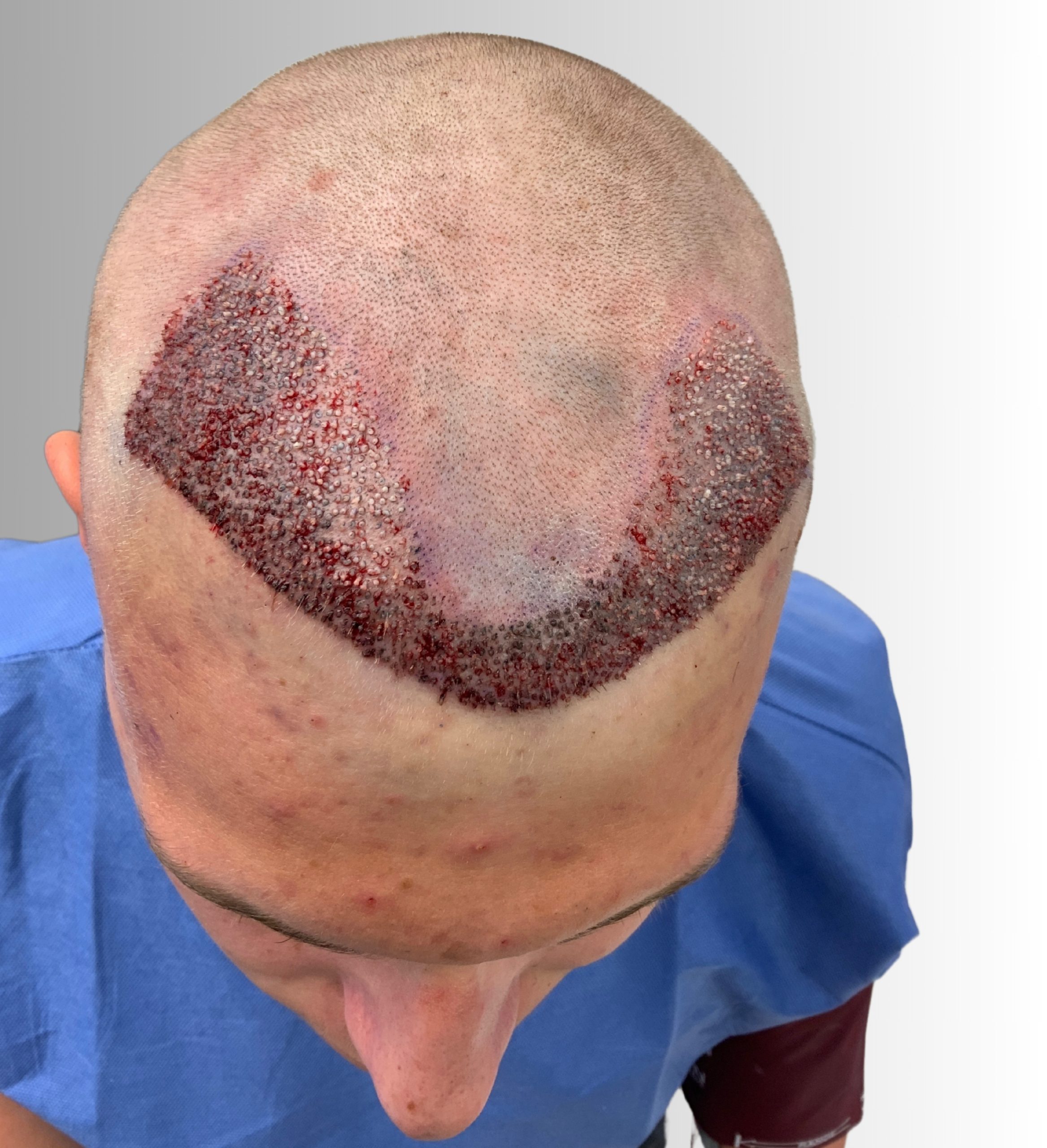 On the day of the surgery
 After 15 months
 After 15 months
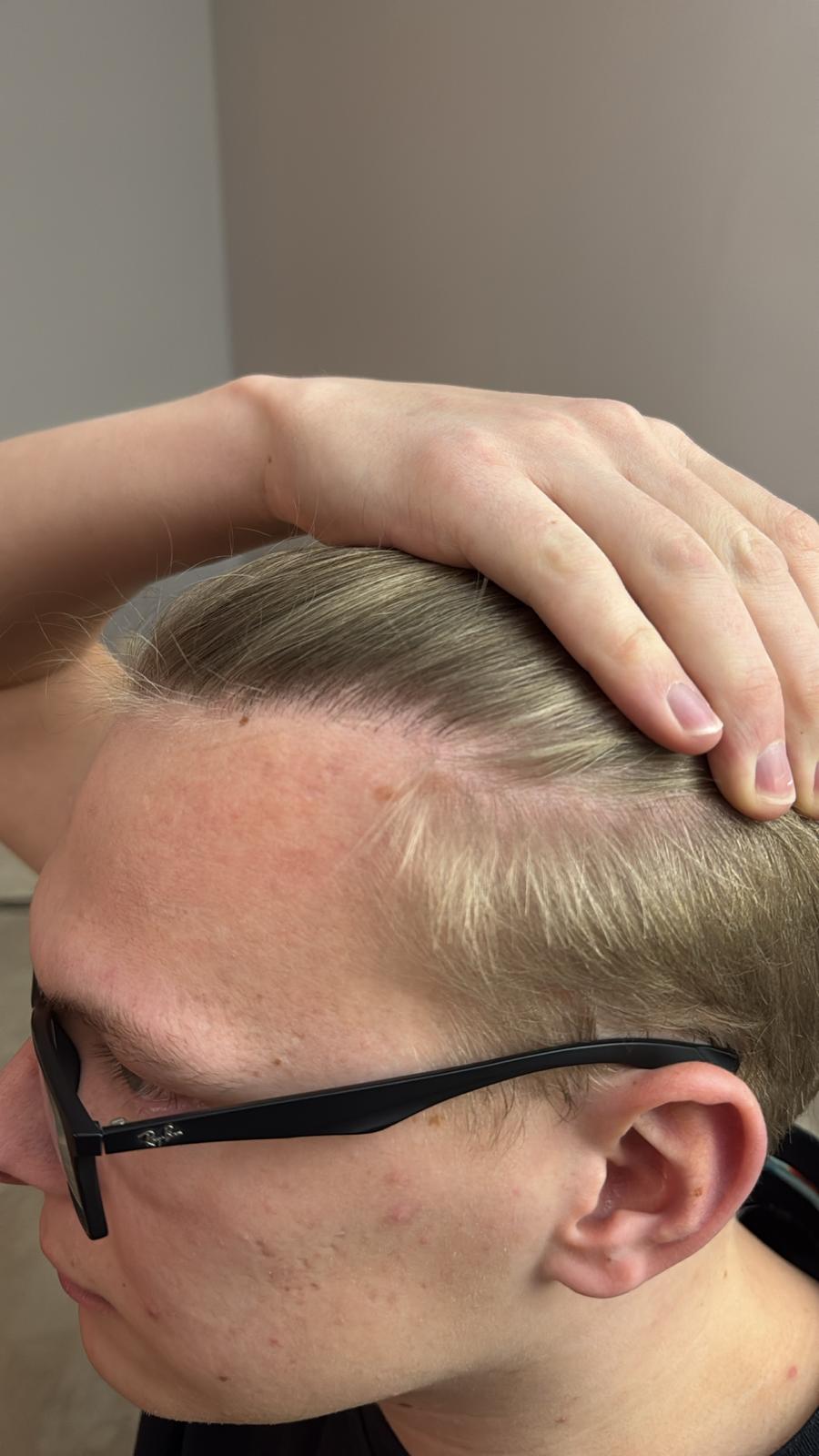 After 15 months
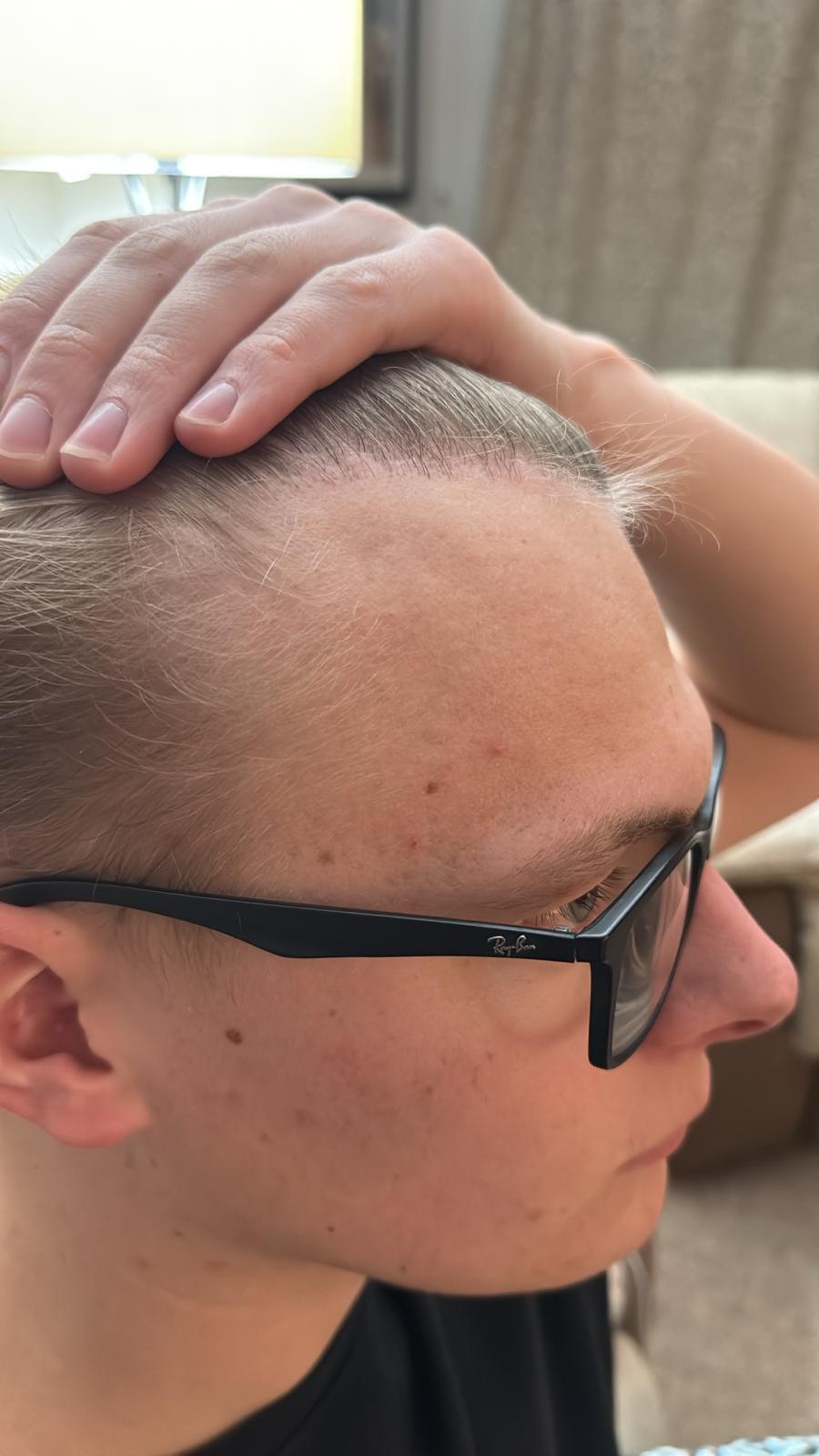 After 15 months
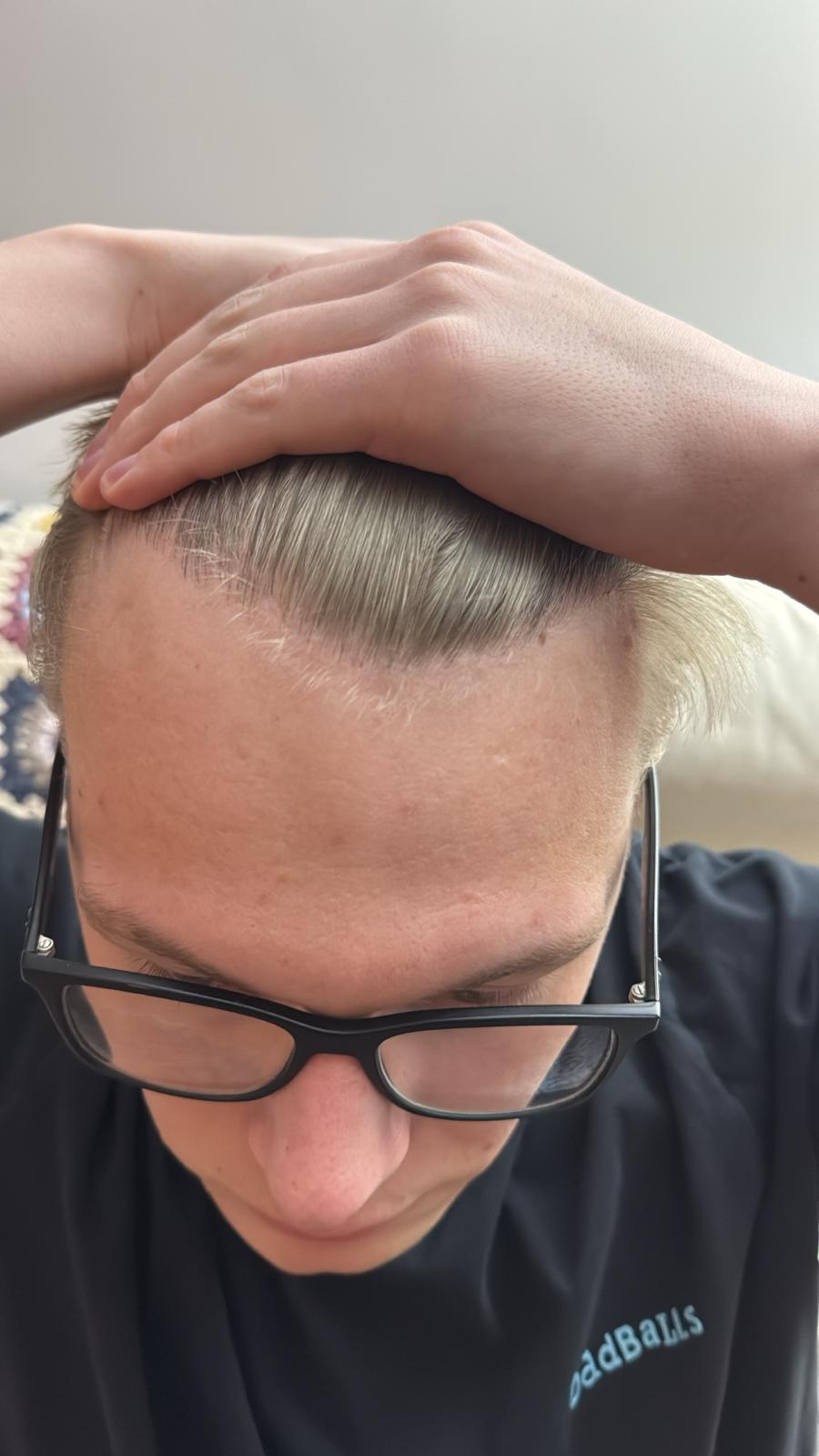 After 15 months
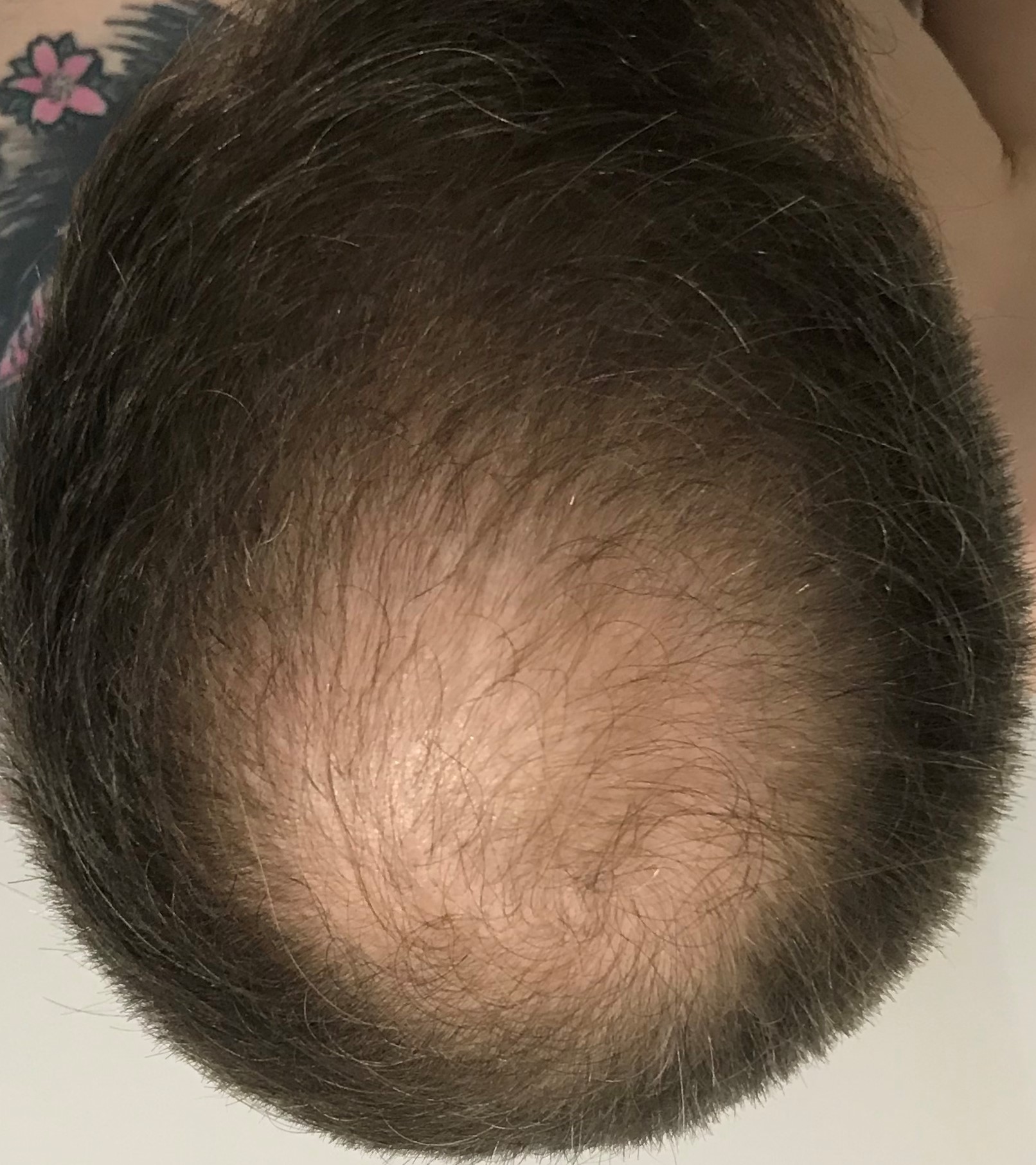 Before the surgery
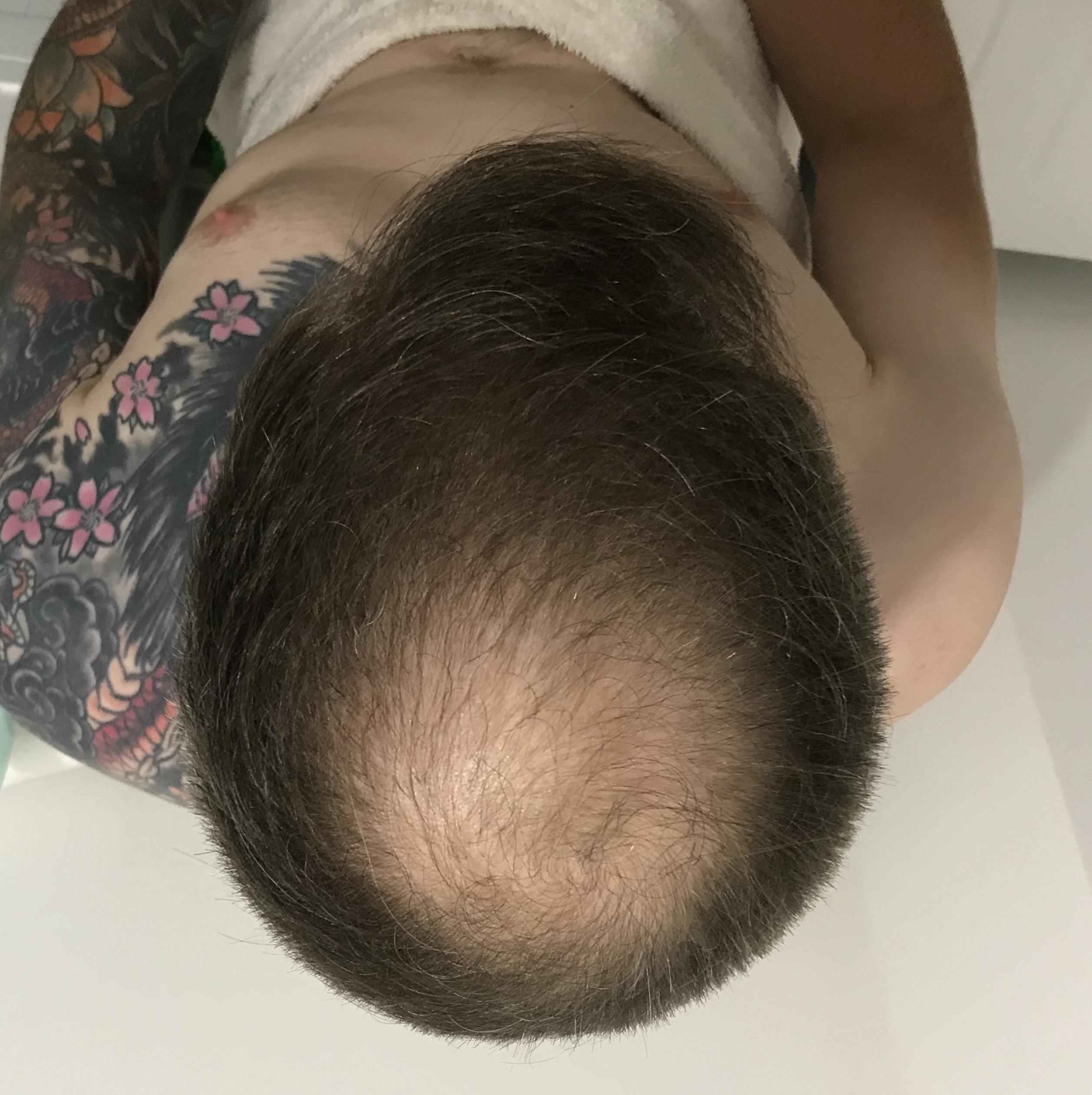 Before the surgery
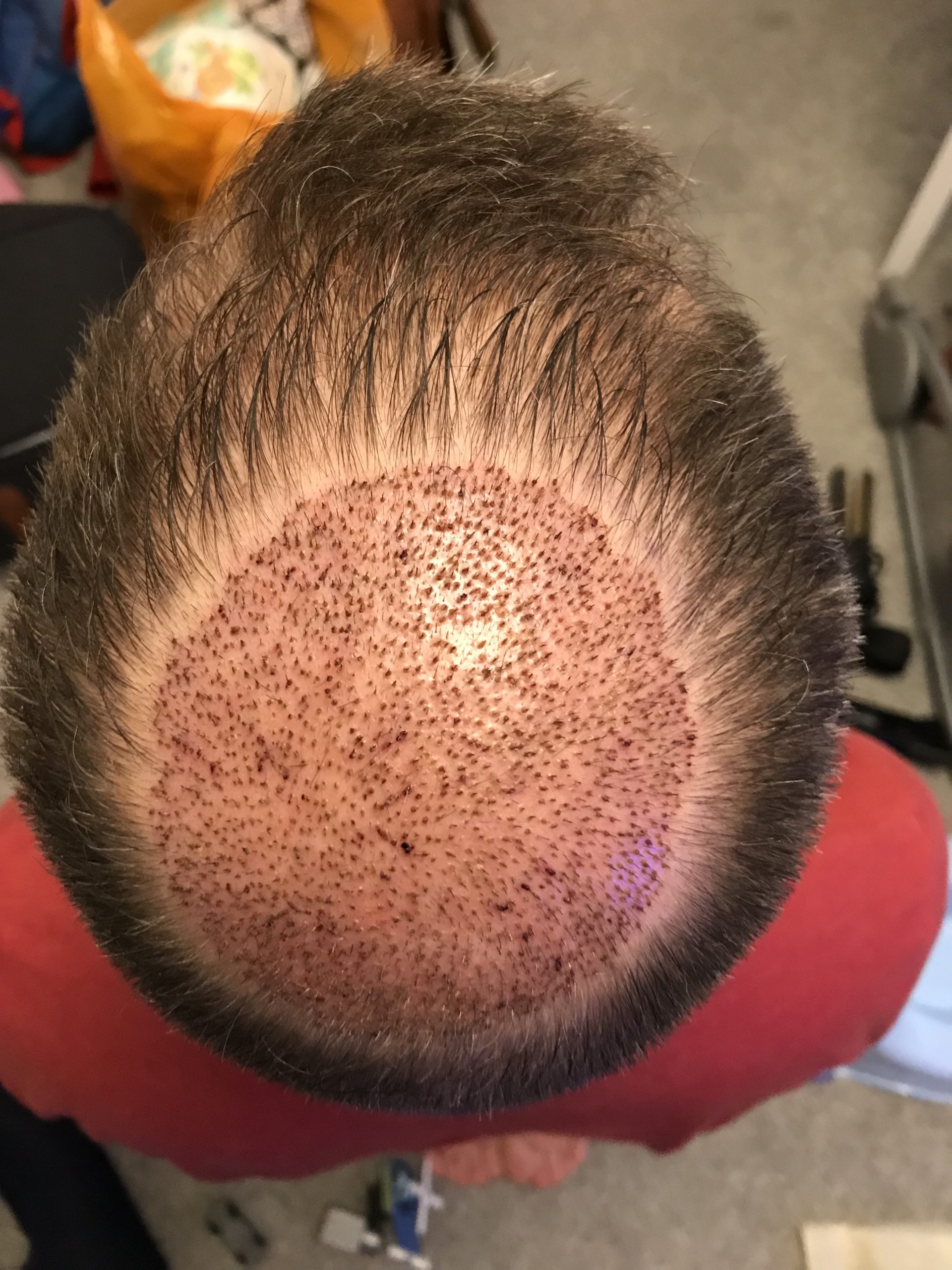 On the day of the surgery
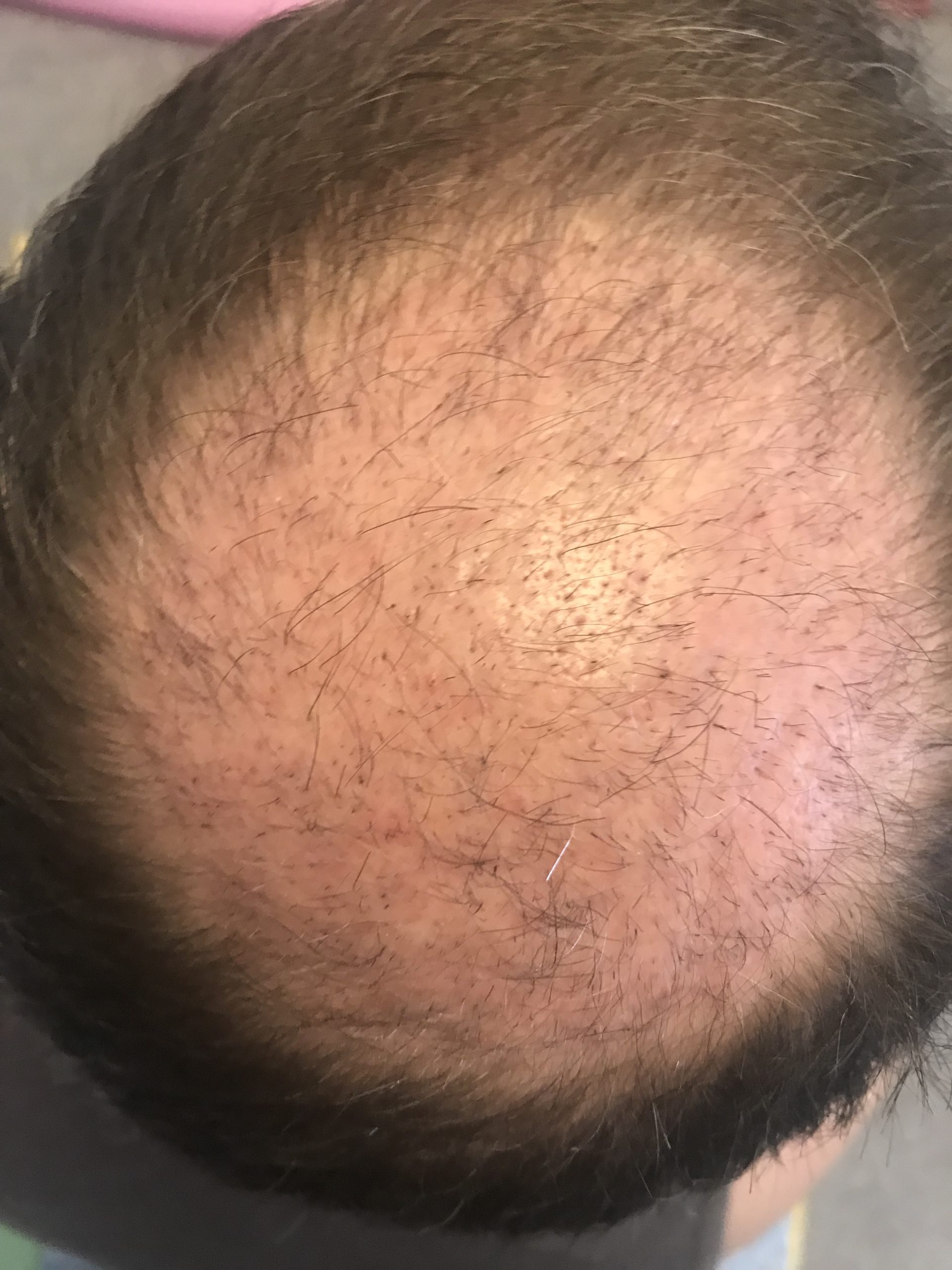 4 Months after the surgery.
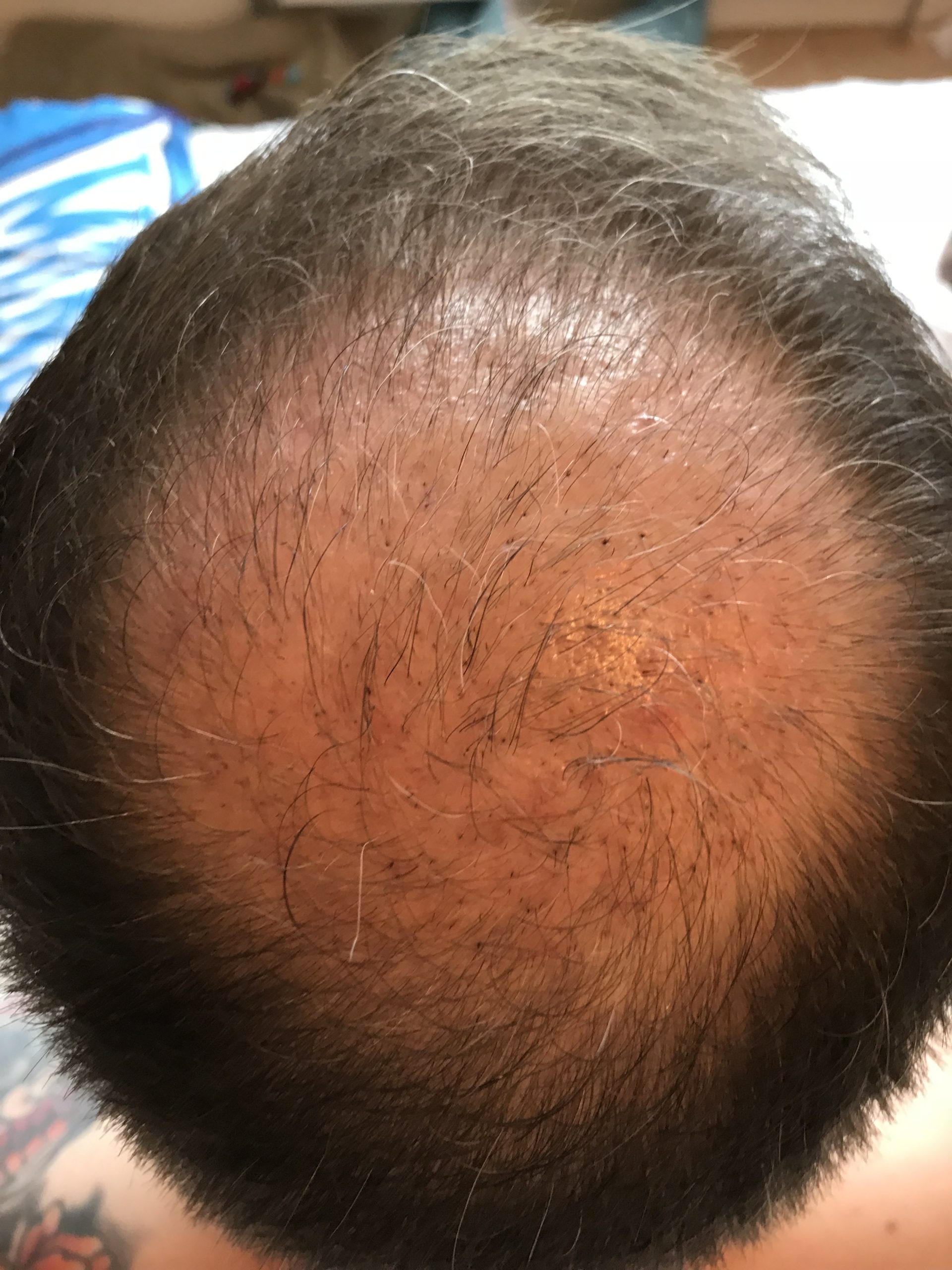 5 Months after the surgery.
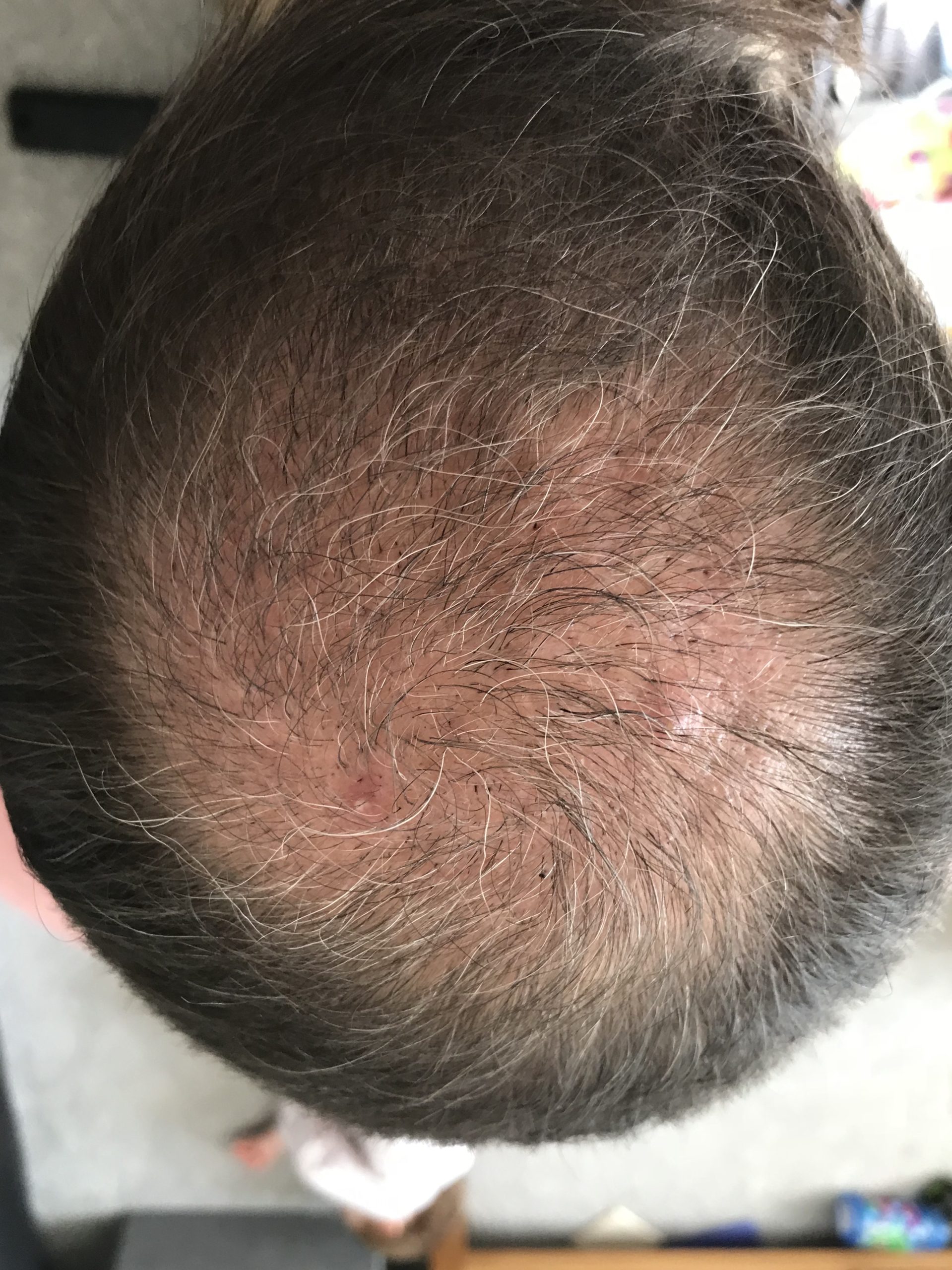 6 Months after the surgery.
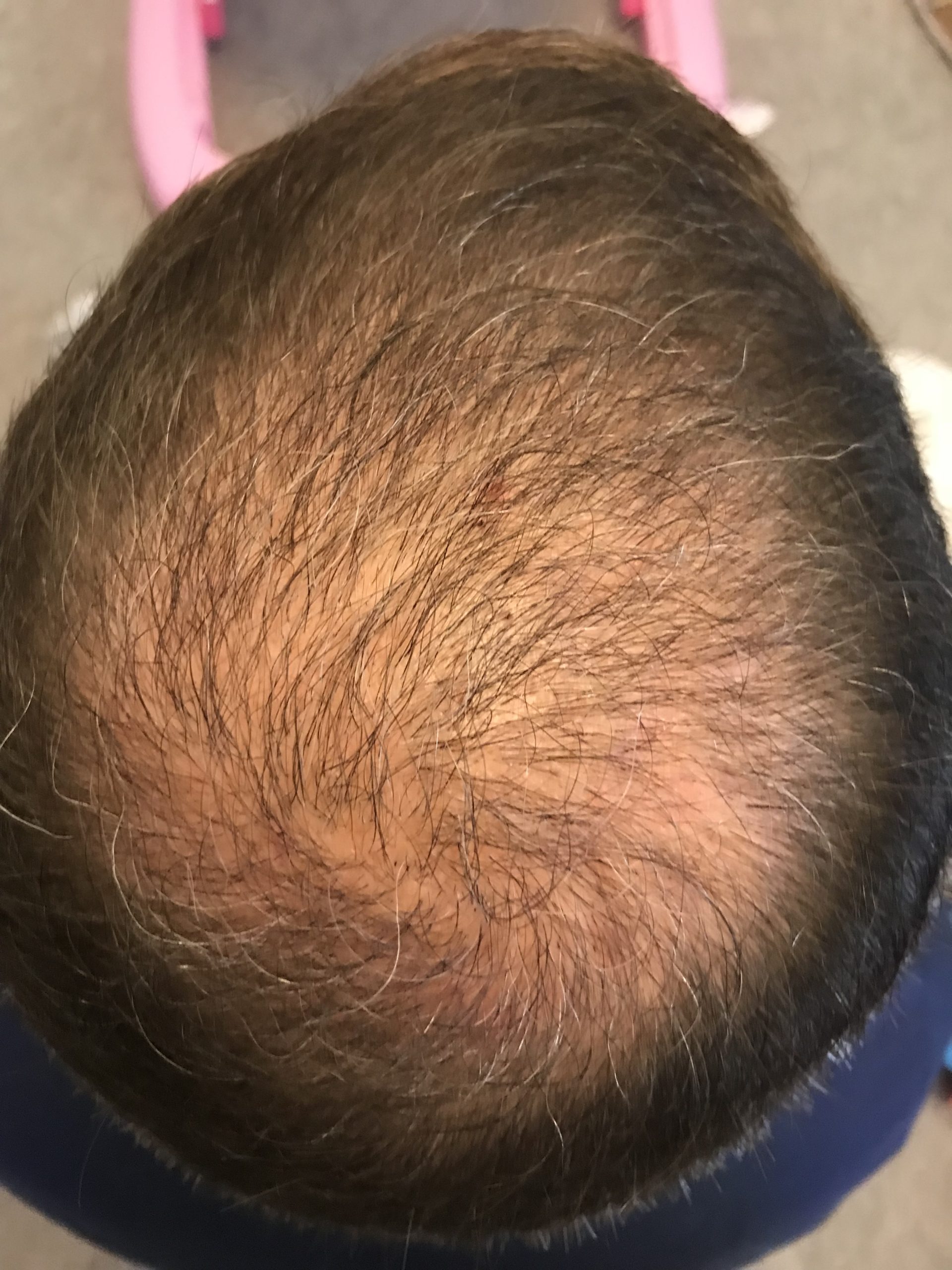 7 Months after the surgery.
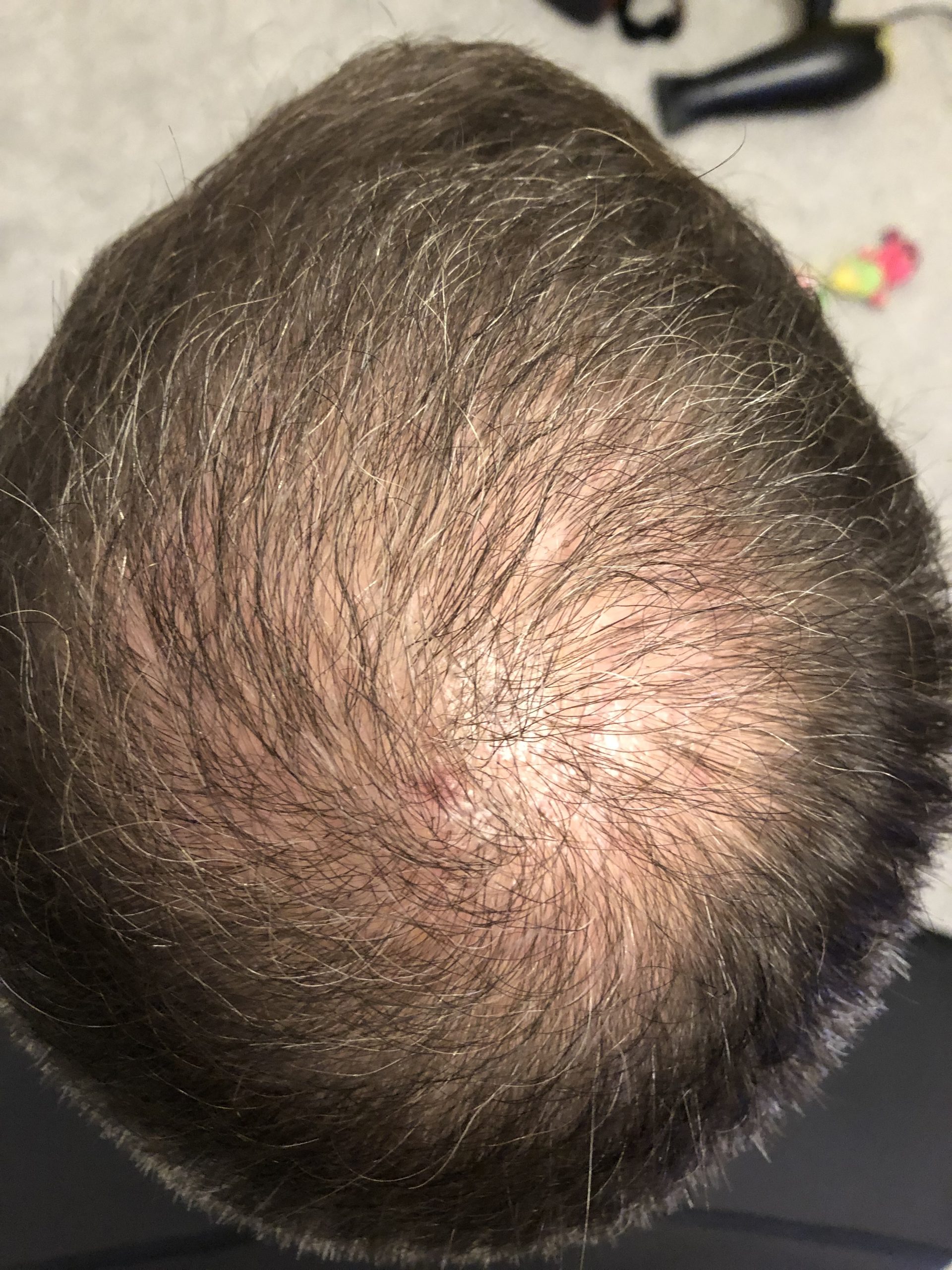 8 Months after the surgery.
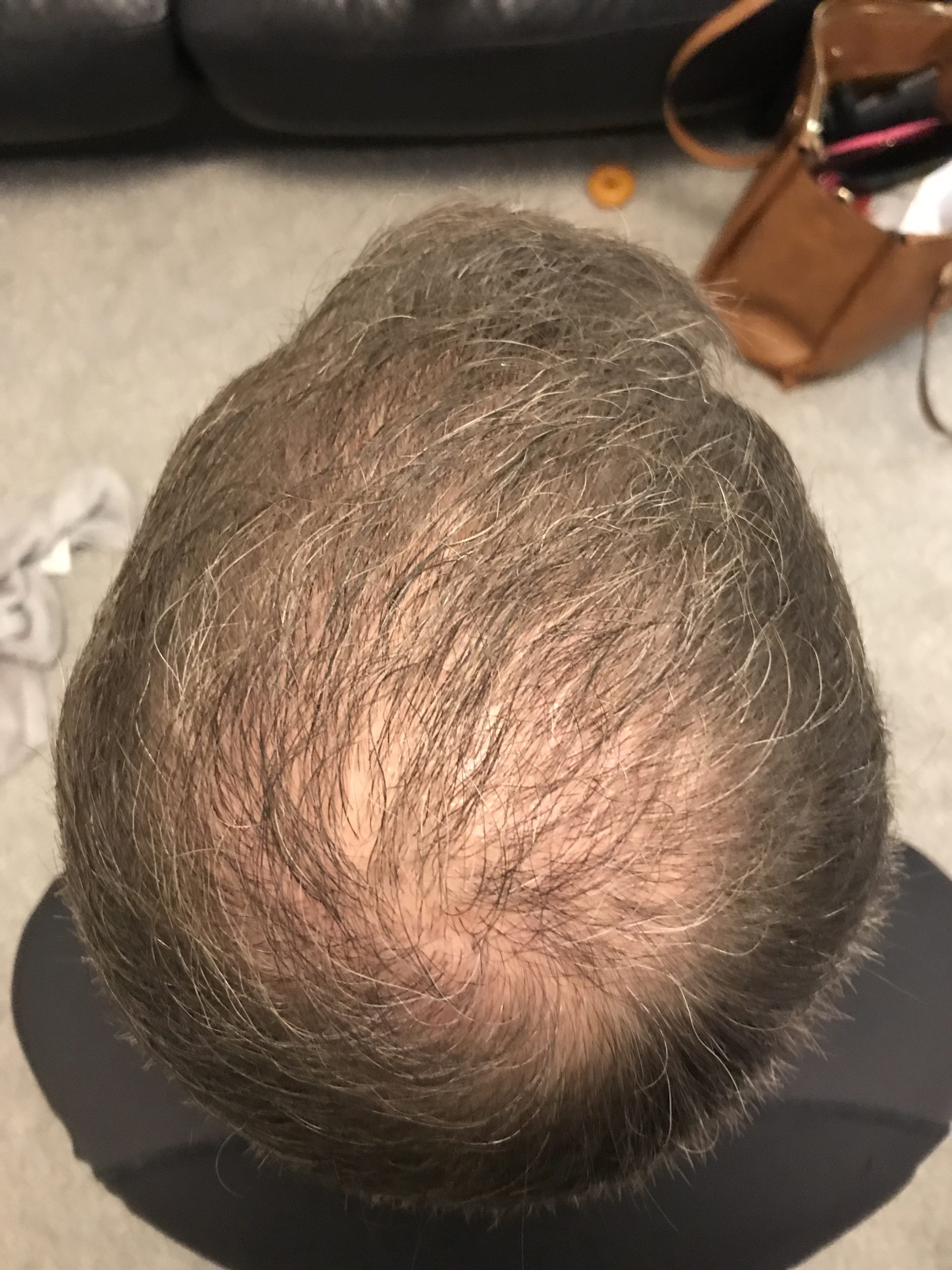 9 Months after the surgery.
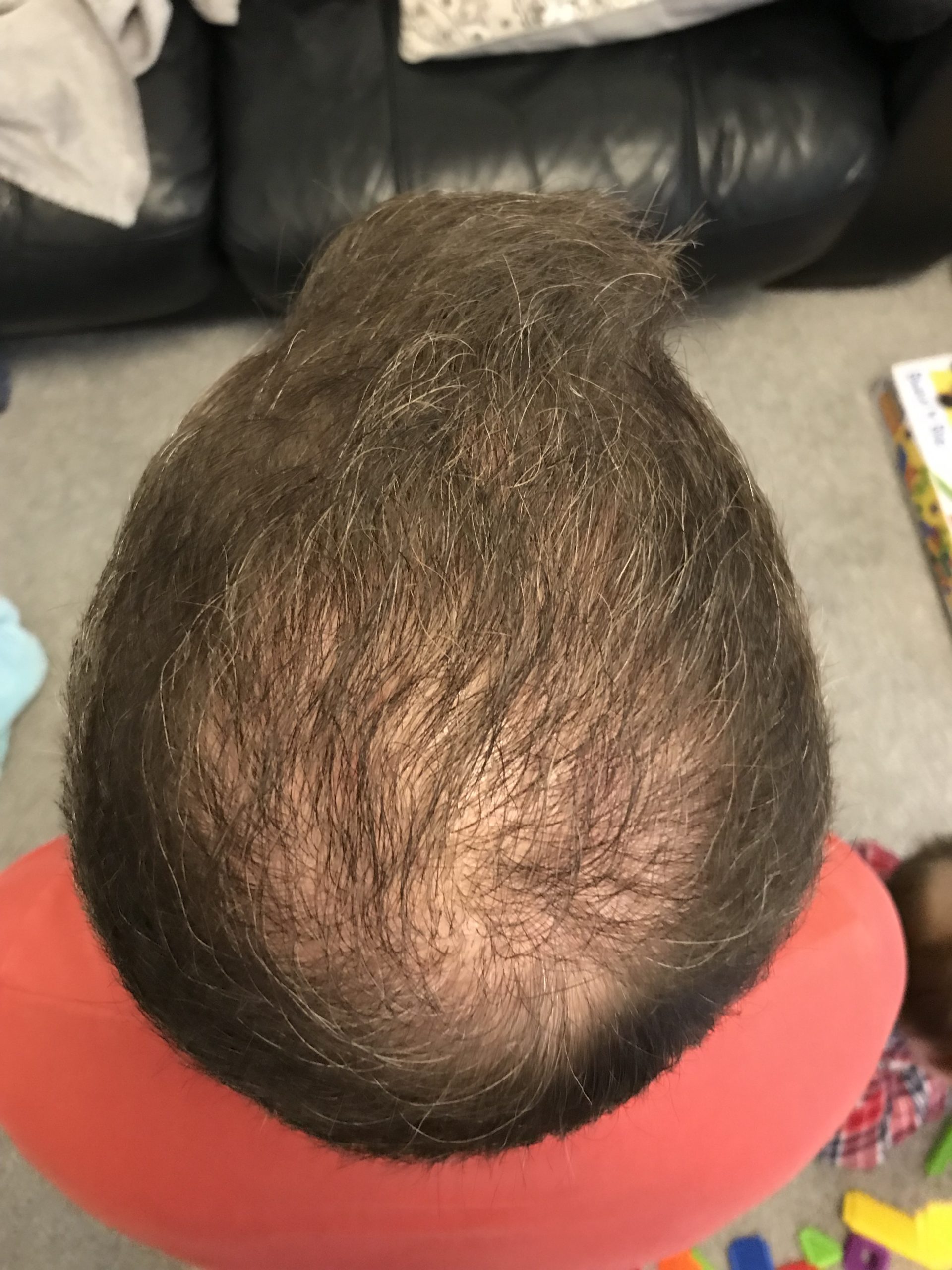 10 Months after the surgery.
 11 Months after the surgery.
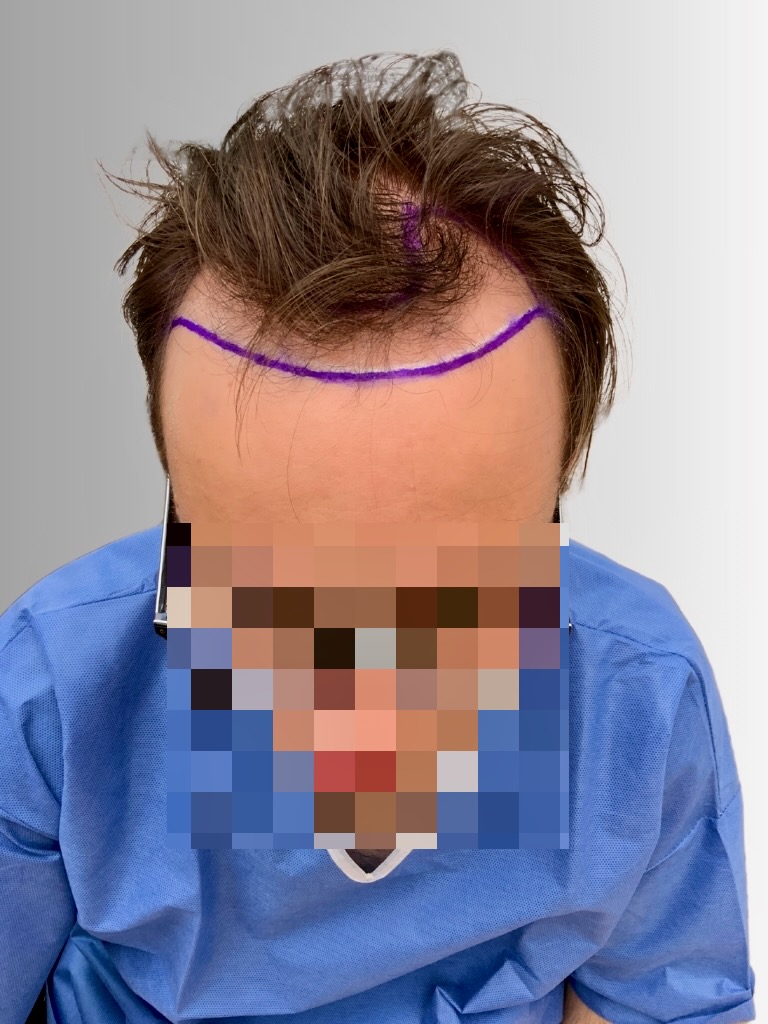 Before surgery
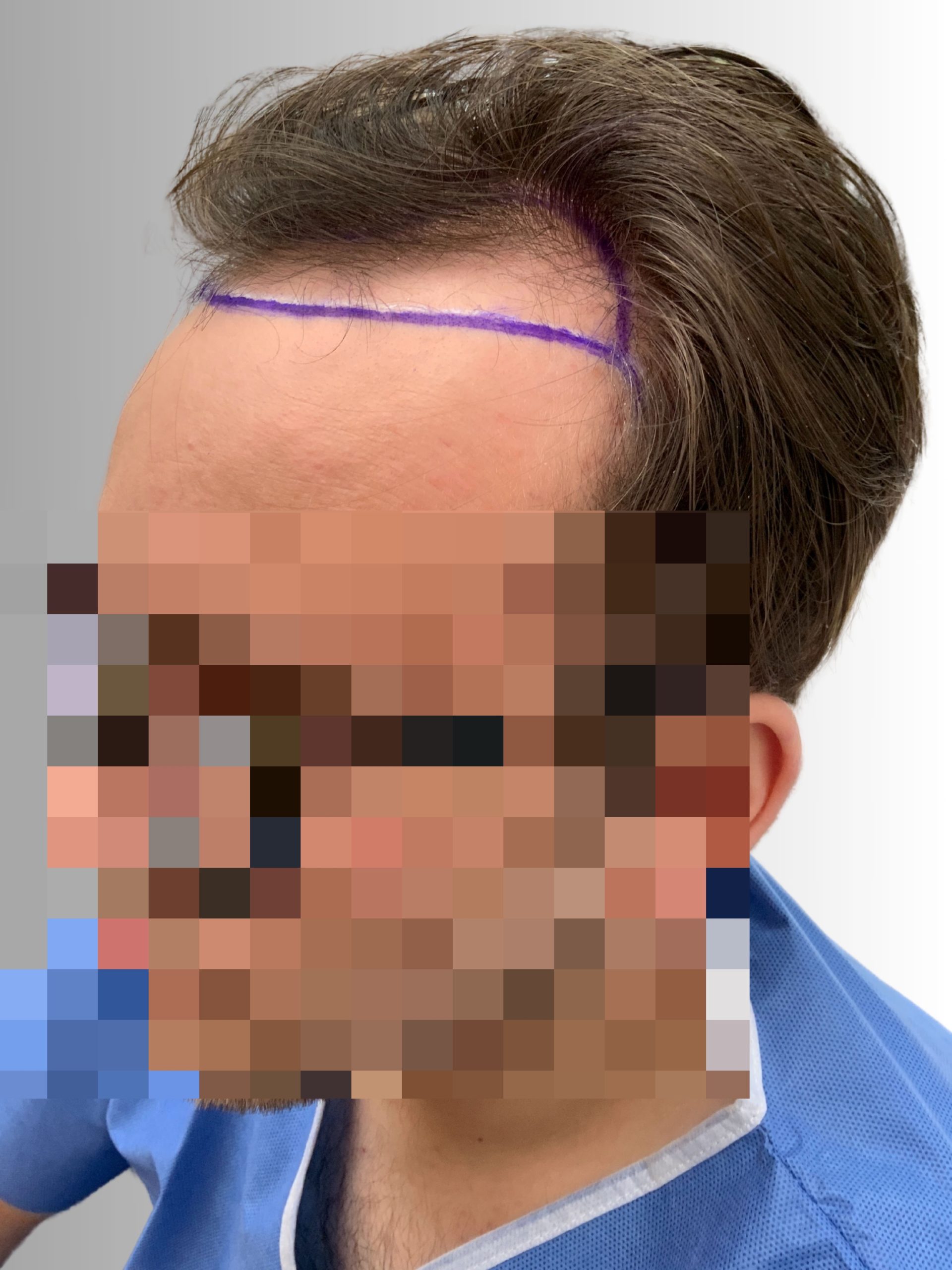 Before surgery
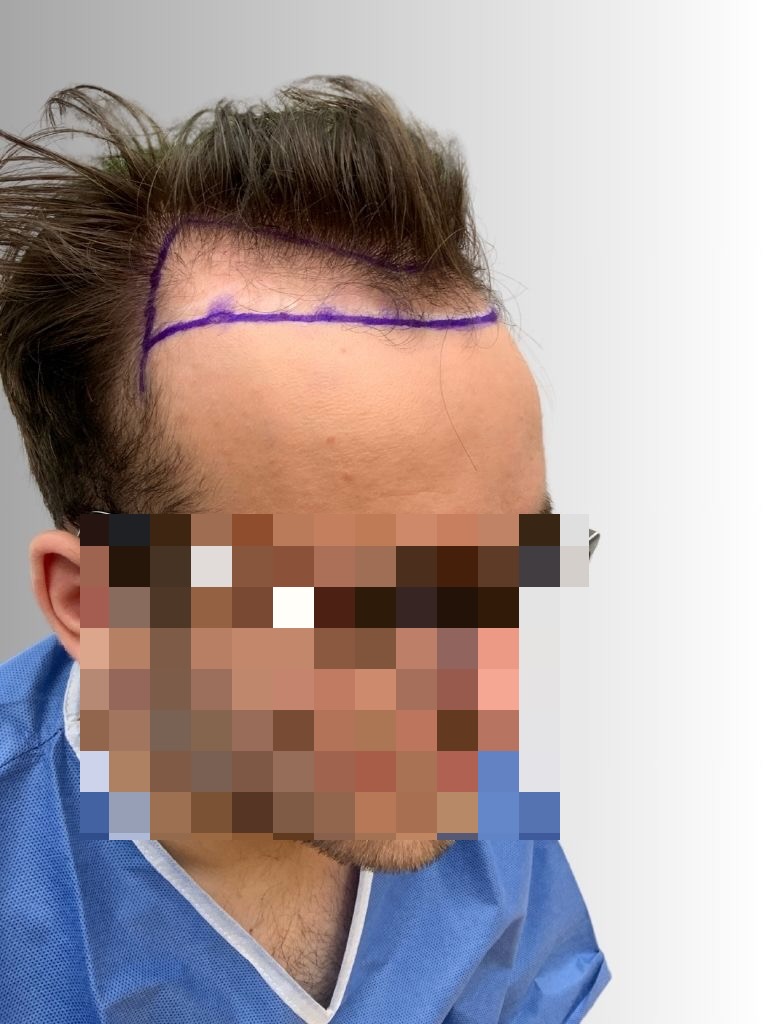 Before surgery
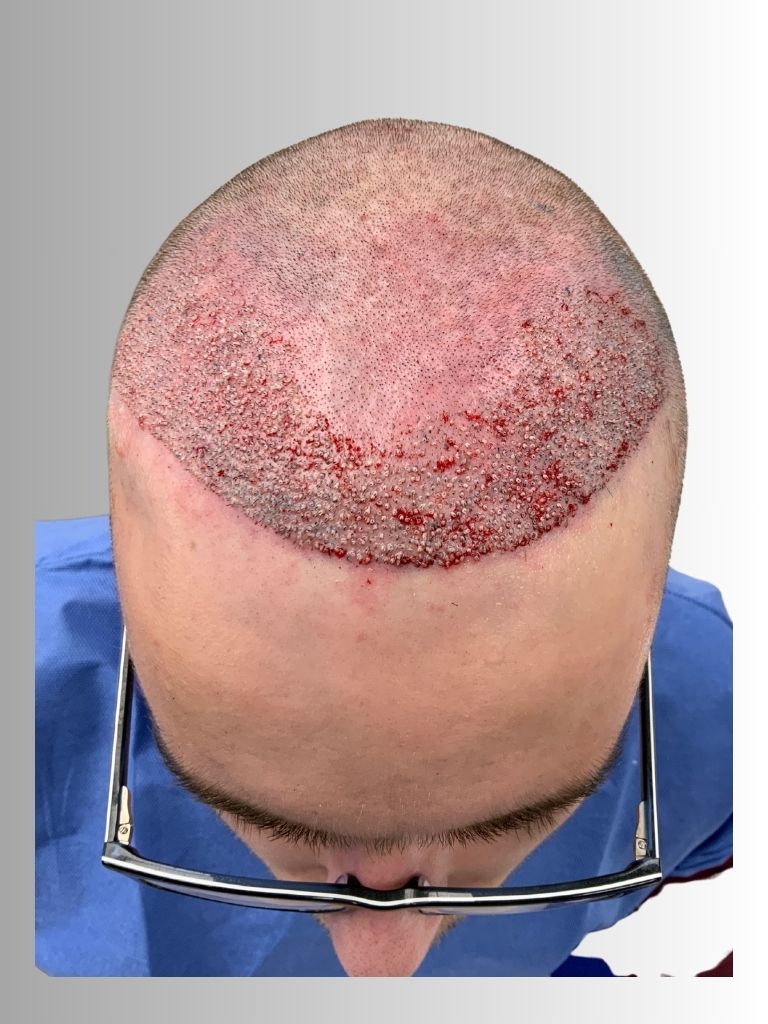 On the day of surgery
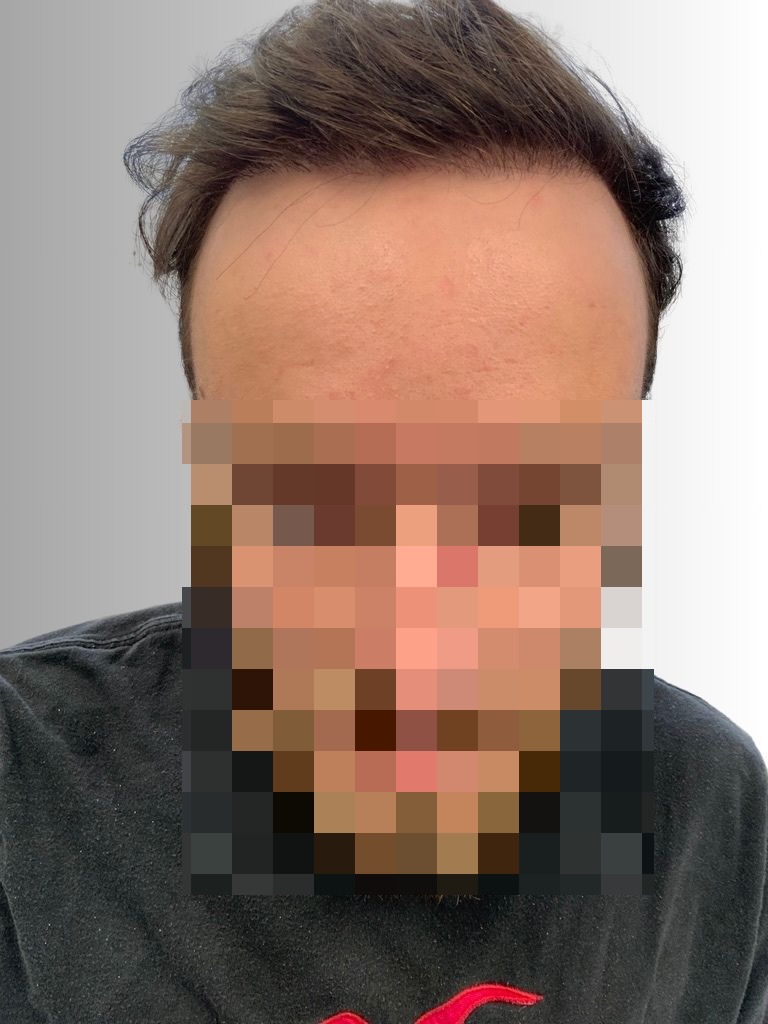 10 months after surgery.
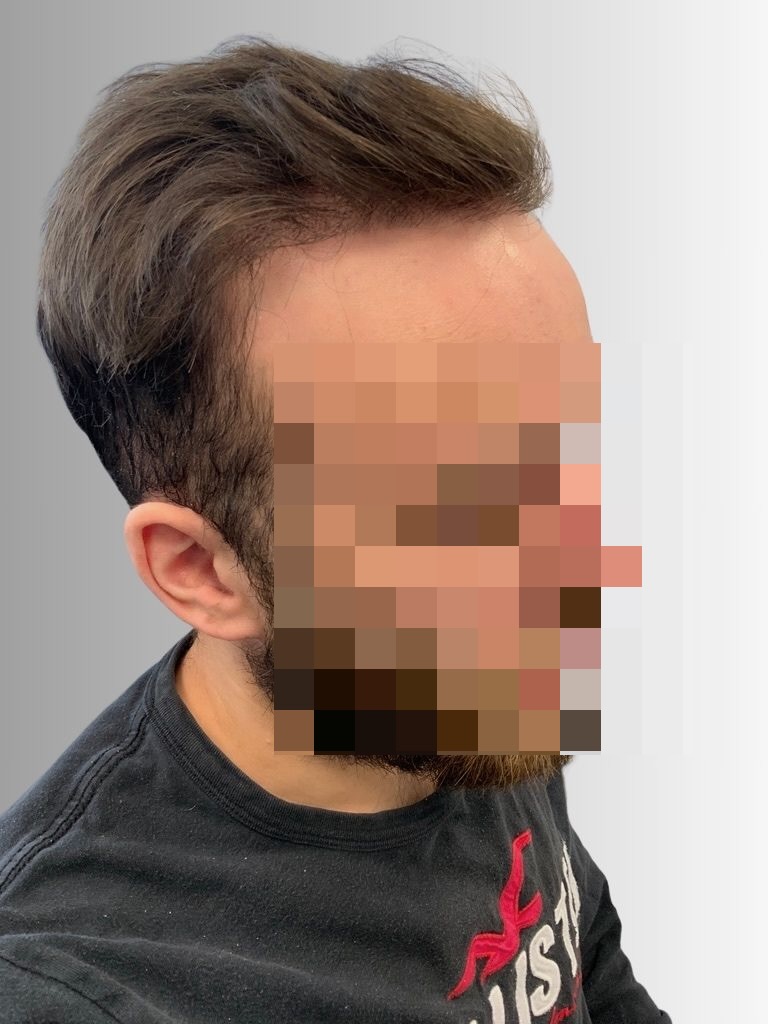 10 months after surgery.
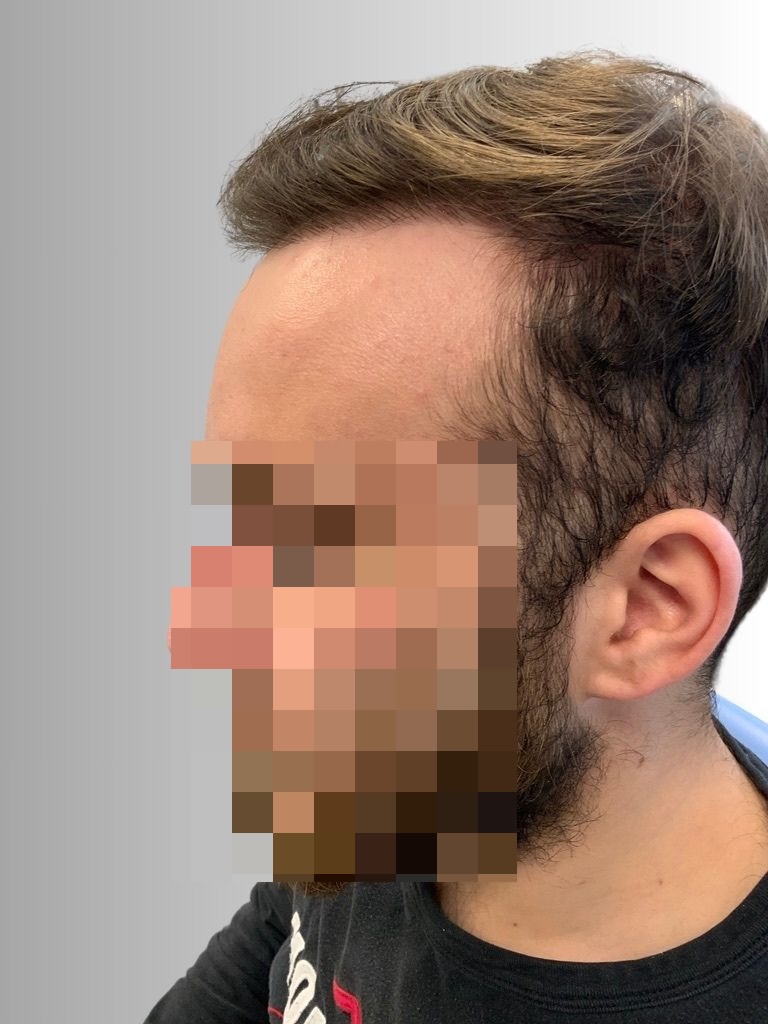 10 months after surgery.
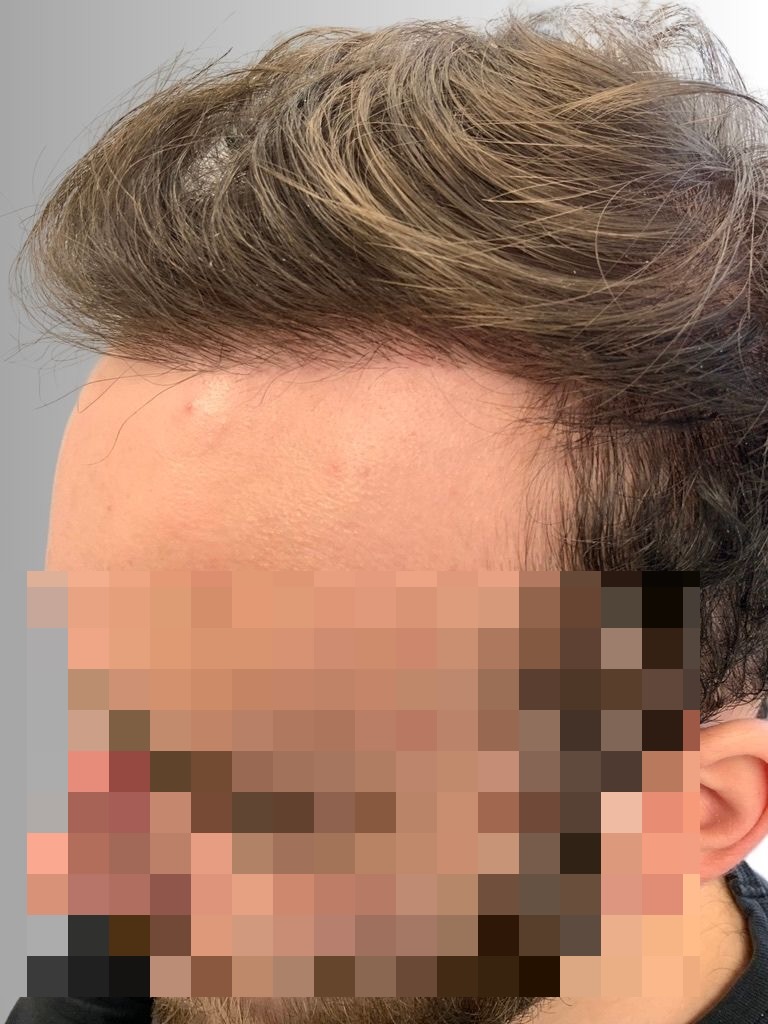 10 months after surgery.